

9 Best Clinical Genomics Workflow Platforms in 2026
Clinical genomics has moved from research curiosity to standard of care. But here’s the problem: most healthcare organizations are drowning in sequencing data they can’t actually use. Raw variant files pile up. Compliance requirements multiply. And the gap between generating genomic data and acting on it keeps widening.
A clinical genomics workflow platform closes that gap. It takes you from raw sequencing data to clinician-ready reports—with the compliance, scalability, and integration your organization actually needs.
This guide covers the platforms worth evaluating in 2026. We’ve prioritized solutions that handle real-world complexity: federated data, regulatory requirements, and the need to move fast without breaking compliance. Whether you’re building a national precision medicine program or accelerating biopharma R&D, these are the platforms that deliver.
1. Lifebit
Best for: Government health agencies and large-scale precision medicine programs requiring federated analysis without data movement.
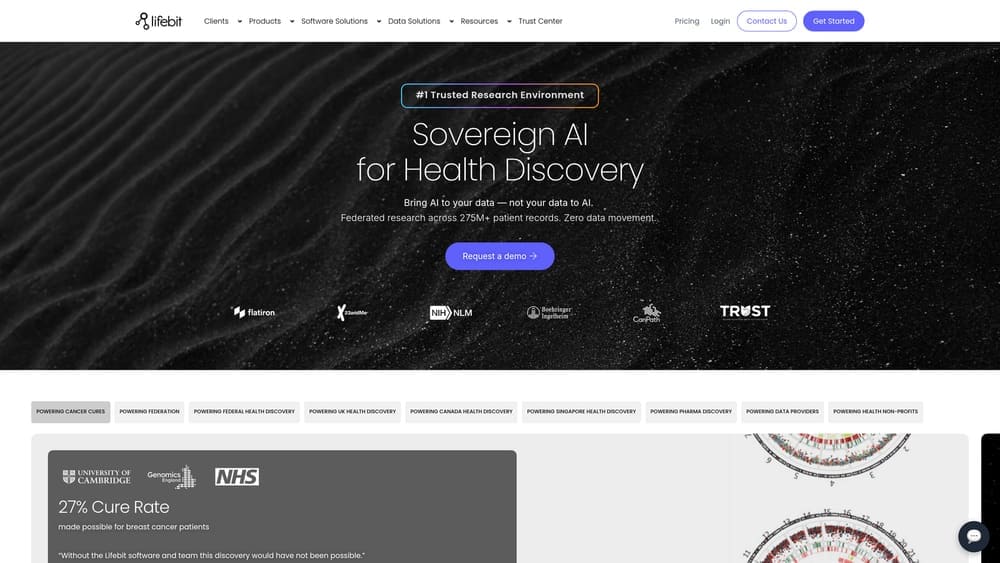
Lifebit is a federated clinical genomics platform enabling secure analysis across distributed datasets without moving sensitive data.
Where This Platform Shines
Lifebit solves the data sovereignty problem that kills most cross-border genomics initiatives. When you’re managing national health data or multi-site clinical trials, moving genomic datasets creates compliance nightmares and months of legal review. Lifebit’s federated approach means your data stays exactly where it lives—in your cloud, behind your firewall—while still enabling analysis across multiple sites.
The platform has proven itself at scale. Genomics England, NIH, and Singapore’s Ministry of Health use Lifebit to manage over 275 million records. That’s not pilot-scale validation—that’s production infrastructure handling real national precision medicine programs.
Key Features
Federated Data Platform: Analyze data across multiple sites without moving it, maintaining full data sovereignty while enabling collaborative research.
Trusted Data Factory: AI-powered data harmonization that completes in 48 hours instead of the typical 12-month manual process.
Trusted Research Environment: Secure, compliant cloud workspaces with granular access controls meeting FedRAMP, HIPAA, GDPR, and ISO 27001 requirements.
AI-Automated Airlock: First-of-its-kind governance system that automates secure data exports while maintaining audit trails and compliance.
Multi-Cloud Deployment: Deploy in AWS, Azure, or Google Cloud with no vendor lock-in—you own and control your infrastructure.
Best For
Government health agencies building national genomic medicine programs. Biopharma organizations running multi-country clinical trials with strict data residency requirements. Academic consortia coordinating research across institutions with varying compliance frameworks. Any organization where data movement creates more problems than it solves.
Pricing
Enterprise pricing based on deployment scale and data volume. Lifebit structures contracts around your specific use case rather than per-sample fees, which makes more sense for large-scale programs.
2. Illumina DRAGEN
Best for: High-throughput clinical labs requiring ultra-fast secondary analysis with FDA-cleared workflows.
Illumina DRAGEN is a hardware-accelerated genomics platform delivering secondary analysis in minutes instead of hours.
Where This Platform Shines
DRAGEN has fundamentally changed the speed equation in clinical genomics. What used to take 24 hours on traditional CPU-based pipelines now completes in under 30 minutes. That’s not marketing hyperbole—it’s FPGA acceleration doing what it does best.
The FDA clearance matters more than most people realize. When you’re running a CAP/CLIA lab, using FDA 510(k) cleared workflows removes significant validation burden. You’re not starting from zero every time you want to update your pipeline.
Key Features
FPGA-Accelerated Analysis: Hardware acceleration completes whole genome secondary analysis in minutes, not hours.
FDA-Cleared Workflows: Multiple FDA 510(k) cleared pipelines for germline and somatic variant calling reduce validation requirements.
Integrated Variant Calling: Single platform handles germline, somatic, RNA, and methylation analysis without switching tools.
Deployment Flexibility: Available as on-premises hardware or cloud-based service depending on your infrastructure preferences.
Native Illumina Integration: Seamless connection with Illumina sequencers and BaseSpace ecosystem.
Best For
Clinical labs processing high volumes of samples where turnaround time directly impacts patient care. Organizations already invested in Illumina sequencing infrastructure. Labs requiring FDA-cleared workflows for regulatory compliance.
Pricing
Per-sample pricing for cloud deployment or hardware purchase for on-premises installation. Cloud option typically makes sense for labs processing under 1,000 genomes annually, while hardware investment pays off at higher volumes.
3. DNAnexus
Best for: Biopharma organizations running multi-site clinical trials requiring regulatory-grade compliance and collaboration tools.
DNAnexus is a cloud-based platform designed for distributed teams conducting genomic research under strict regulatory requirements.
Where This Platform Shines
DNAnexus built their platform around the realities of biopharma R&D. When you’re coordinating genomic analysis across contract research organizations, academic partners, and internal teams, you need more than just compute infrastructure. You need audit trails that satisfy regulatory inspections, access controls that scale across organizations, and collaboration tools that don’t compromise data governance.
The Apollo platform represents their answer to the real-world data challenge. Integrating genomic data with electronic health records and claims data isn’t optional anymore—it’s how you actually validate therapeutic targets and measure clinical outcomes.
Key Features
Apollo Platform: Purpose-built infrastructure for integrating genomic data with real-world clinical and claims data.
Regulatory-Grade Audit Trails: Complete activity logging and access tracking that meets FDA 21 CFR Part 11 requirements.
Pre-Built Pipeline Library: Extensive collection of validated analysis workflows covering common genomic applications.
Multi-Cloud Architecture: Deploy on AWS or Azure based on your organization’s cloud strategy and data residency needs.
Collaboration Tools: Project-based access controls and data sharing designed for multi-organization research teams.
Best For
Biopharma companies managing genomic data across multiple clinical trial sites. Organizations integrating genomic analysis with real-world evidence studies. Teams requiring FDA-ready compliance documentation and audit capabilities.
Pricing
Subscription-based model with enterprise contracts available. Pricing typically includes platform access, storage, and compute resources, with volume discounts for larger deployments.
4. Seven Bridges
Best for: Population-scale genomic projects requiring FDA precertified pipelines and multi-cloud deployment flexibility.
Seven Bridges is an enterprise genomics platform powering some of the largest population health initiatives globally.
Where This Platform Shines
Seven Bridges has positioned itself at the intersection of scale and compliance. Their GRAF (GRaph-based Analysis Framework) technology handles population-aware variant calling in ways that traditional approaches miss. When you’re analyzing diverse populations, ancestry-aware analysis isn’t a nice-to-have—it’s essential for accurate variant interpretation.
The CAVATICA platform demonstrates their commitment to specialized use cases. Pediatric genomics has unique requirements around consent, data sensitivity, and analytical approaches. Building a dedicated platform rather than forcing pediatric researchers to adapt adult-focused tools shows real domain expertise.
Key Features
CAVATICA Platform: Specialized environment for pediatric genomic research with appropriate security and consent management.
FDA Precertified Pipelines: Multiple bioinformatics workflows with FDA precertification, reducing validation burden for clinical applications.
GRAF Population-Aware Calling: Advanced variant calling that accounts for population structure and ancestry.
Multi-Cloud Deployment: Run analyses on AWS, Google Cloud, or Azure depending on your data location and compliance needs.
Data Commons Integration: Native connectivity to major genomic data commons including NCI Genomic Data Commons and Kids First.
Best For
Population health programs analyzing diverse cohorts. Pediatric research institutions requiring specialized compliance and consent management. Organizations needing FDA precertified pipelines for clinical translation.
Pricing
Usage-based compute costs plus platform subscription fees. Enterprise agreements available for organizations with predictable analysis volumes. Seven Bridges typically structures pricing around your specific use case and scale.
5. Terra
Best for: Academic consortia and research organizations prioritizing open-source flexibility and GATK best practices.
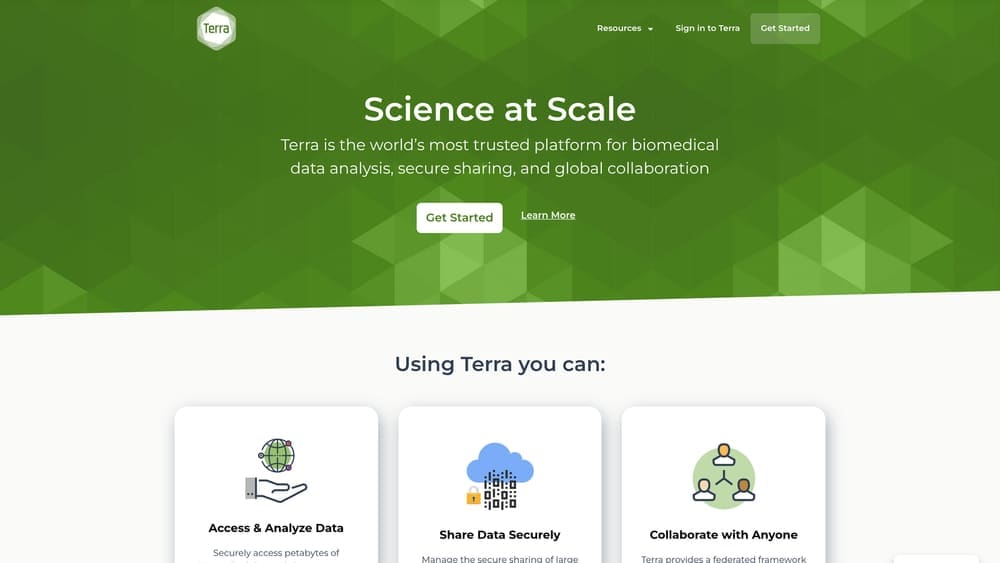
Terra is an open-source genomics platform built on Google Cloud, developed by the Broad Institute.
Where This Platform Shines
Terra represents the open-source approach to clinical genomics infrastructure. If you have a strong bioinformatics team that needs customization flexibility rather than turnkey solutions, Terra delivers. The platform gives you GATK best practices pipelines out of the box, but doesn’t lock you into rigid workflows.
The AnVIL integration matters for researchers working with NIH datasets. Direct access to TOPMed, GTEx, and other major genomic resources without data transfer overhead eliminates a major friction point in multi-dataset analysis.
Key Features
Open-Source Foundation: Community-driven development with full transparency and no vendor lock-in.
GATK Best Practices: Pre-configured pipelines implementing Broad Institute’s gold-standard variant calling workflows.
Interactive Analysis Environments: Integrated Jupyter notebooks and RStudio for custom analysis and visualization.
AnVIL Integration: Direct access to NIH datasets including TOPMed and GTEx without data movement.
WDL Workflow Support: Use Workflow Description Language for portable, reproducible pipeline development.
Best For
Academic research consortia with bioinformatics expertise. Organizations requiring maximum workflow customization. Teams analyzing NIH datasets through AnVIL. Budget-conscious institutions prioritizing open-source solutions.
Pricing
Platform access is free. You pay only for Google Cloud compute and storage resources consumed during analysis. This pay-as-you-go model works well for research projects with variable analysis volumes.
6. Fabric Genomics
Best for: Clinical labs focused on rapid variant interpretation and rare disease diagnosis.
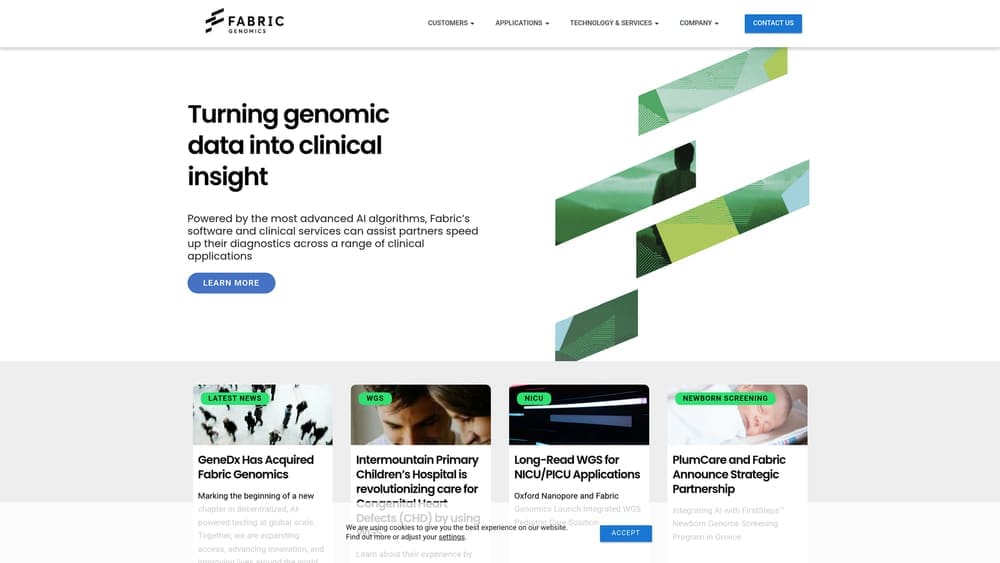
Fabric Genomics is an AI-powered clinical interpretation platform accelerating variant classification and clinical report generation.
Where This Platform Shines
Fabric Genomics recognized that for many clinical labs, the bottleneck isn’t secondary analysis—it’s variant interpretation. You can generate variant calls quickly, but turning those calls into clinically actionable reports still requires significant geneticist time. Their AI-driven prioritization focuses expert attention where it matters most.
The rare disease focus shows in their phenotype-to-genotype matching capabilities. When you’re evaluating a patient with a complex phenotype against thousands of candidate variants, intelligent filtering based on clinical presentation dramatically reduces time to diagnosis.
Key Features
AI-Driven Variant Classification: Machine learning models prioritize variants based on pathogenicity predictions and clinical relevance.
Rapid Report Generation: Automated clinical report templates compliant with ACMG/AMP guidelines reduce manual documentation time.
Rare Disease Specialization: Optimized workflows for rare genetic conditions and hereditary cancer syndromes.
ACMG/AMP Compliance: Built-in support for standardized variant classification guidelines.
EHR Integration: API connections to major electronic health record systems for seamless clinical workflow integration.
Best For
Clinical genetics labs diagnosing rare diseases. Medical centers running hereditary cancer screening programs. Organizations where variant interpretation speed directly impacts patient care decisions.
Pricing
Per-case pricing model with volume discounts for high-throughput labs. This approach aligns costs directly with clinical testing volume rather than infrastructure overhead.
7. Qiagen Clinical Insight
Best for: Oncology-focused clinical programs requiring treatment matching and clinical trial identification.
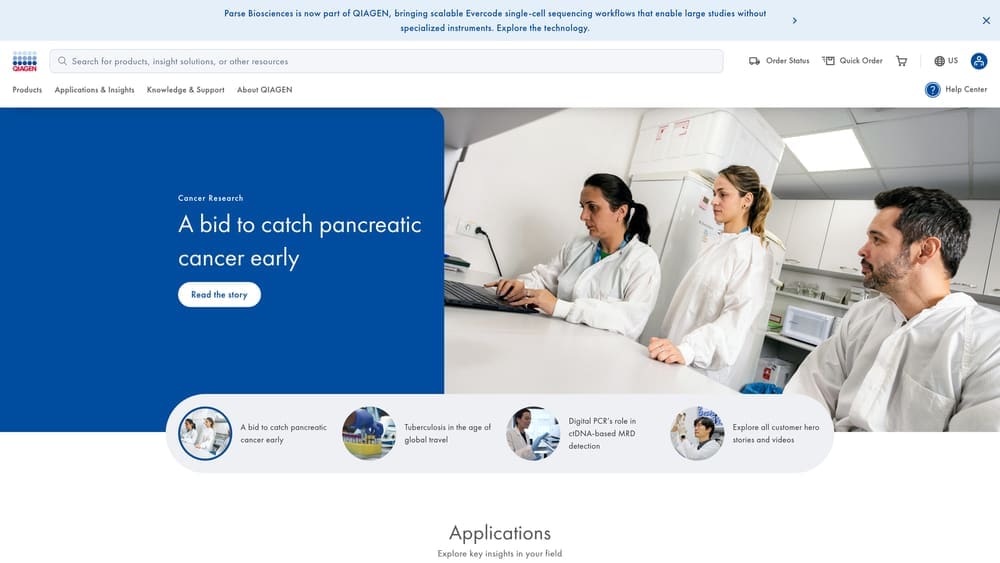
Qiagen Clinical Insight is a clinical decision support platform with deep oncology knowledge base integration.
Where This Platform Shines
Qiagen Clinical Insight addresses the specific needs of precision oncology programs. Identifying actionable mutations is only half the challenge—matching those mutations to available therapies and relevant clinical trials requires constantly updated knowledge bases. Qiagen’s curated oncology content means you’re not manually tracking FDA approvals and NCCN guideline updates.
The treatment and trial matching capabilities turn genomic findings into immediate clinical action. When you identify a targetable mutation, the platform surfaces available therapies and enrolling clinical trials, accelerating time from diagnosis to treatment.
Key Features
Curated Oncology Knowledge Base: Continuously updated database of cancer-related variants, therapies, and clinical evidence.
Treatment Matching: Automated identification of FDA-approved and investigational therapies relevant to detected variants.
Clinical Trial Matching: Integration with ClinicalTrials.gov to identify relevant enrolling studies.
Regulatory-Ready Reports: Templates meeting CAP/CLIA requirements for clinical oncology reporting.
LIMS Integration: API connectivity with laboratory information management systems for seamless workflow integration.
Best For
Oncology programs implementing precision medicine approaches. Cancer centers running molecular tumor boards. Clinical labs offering comprehensive genomic profiling for cancer patients.
Pricing
Annual subscription based on anticipated test volume. Qiagen typically structures contracts around your expected case load with tiered pricing for different volume levels.
8. Emedgene
Best for: Clinical genetics practices optimizing rare disease diagnostic workflows with AI-powered case prioritization.
Emedgene is an AI-powered rare disease platform designed to accelerate clinical geneticist productivity.
Where This Platform Shines
Emedgene focuses on the clinical geneticist’s actual workflow rather than just providing analysis tools. Their AI-driven case prioritization recognizes that not all cases require equal attention. When you’re managing a queue of exome cases, automatically surfacing the cases most likely to yield diagnoses means you solve more cases faster.
The HPO phenotype matching demonstrates sophisticated clinical reasoning. Human Phenotype Ontology integration enables the platform to connect patient phenotypes with candidate genetic variants in ways that pure sequence analysis misses. This phenotype-first approach often identifies diagnoses that variant-centric analysis overlooks.
Key Features
AI Case Prioritization: Machine learning ranks cases by likelihood of positive findings, optimizing geneticist time allocation.
HPO Phenotype Matching: Human Phenotype Ontology integration connects clinical presentations with candidate genetic variants.
Automated Interpretation: AI-assisted variant classification following ACMG guidelines reduces manual review burden.
Family Analysis: Integrated tools for segregation analysis and compound heterozygosity assessment.
Clinical Report Generation: Automated report templates customizable to your lab’s specific requirements.
Best For
Clinical genetics practices diagnosing rare diseases. Children’s hospitals with high volumes of pediatric exome cases. Medical centers where geneticist time is the primary constraint.
Pricing
Per-case pricing with enterprise licensing available for high-volume organizations. Illumina offers flexible contracts based on your anticipated case volumes and specific feature requirements.
9. Nextflow Tower
Best for: Bioinformatics teams building and managing custom genomics workflows across diverse infrastructure.
Nextflow Tower is a pipeline orchestration platform enabling teams to deploy and monitor Nextflow workflows at scale.
Where This Platform Shines
Nextflow Tower solves the infrastructure complexity problem for bioinformatics teams. When you’re running the same pipeline across on-premises clusters, AWS, Azure, and Google Cloud, managing execution environments becomes a nightmare. Tower abstracts that complexity, letting you focus on pipeline logic rather than infrastructure configuration.
The nf-core integration gives you immediate access to community-validated pipelines. Rather than building common workflows from scratch, you can deploy production-ready pipelines for RNA-seq, variant calling, and other standard analyses, then customize as needed.
Key Features
Pipeline Orchestration: Centralized management and monitoring of Nextflow workflows across any infrastructure.
Multi-Cloud Support: Deploy identical pipelines on AWS, Azure, Google Cloud, or on-premises clusters without reconfiguration.
nf-core Integration: Direct access to community-curated, production-ready bioinformatics pipelines.
Resource Optimization: Automatic scaling and cost tracking to minimize compute expenses.
Team Collaboration: Project-based access controls and shared pipeline libraries for distributed bioinformatics teams.
Best For
Bioinformatics teams maintaining custom analysis pipelines. Organizations running workflows across multiple cloud providers. Research groups requiring reproducible, portable pipeline execution. Teams leveraging nf-core community pipelines.
Pricing
Free tier available for individual users and small teams. Pro and Enterprise tiers add features like advanced monitoring, priority support, and enhanced collaboration tools. Pricing scales with team size and usage requirements.
Making the Right Choice
Choosing the right clinical genomics workflow platform depends on your specific constraints. If you’re a government agency or large health system managing sensitive data across borders, Lifebit’s federated approach eliminates data movement risks while accelerating time-to-insight. The platform’s proven track record with national precision medicine programs means you’re not betting on unproven technology.
For high-throughput clinical labs already invested in Illumina infrastructure, DRAGEN delivers unmatched speed. When turnaround time directly impacts patient care, the difference between 30 minutes and 24 hours matters. The FDA clearance removes validation headaches that slow down other platforms.
Biopharma teams running multi-site trials often find DNAnexus or Seven Bridges provide the collaboration and compliance features they need. These platforms understand that regulatory requirements aren’t optional—they’re the foundation everything else builds on. Their audit trails and access controls reflect real-world regulatory experience, not theoretical compliance.
Academic consortia with budget constraints should evaluate Terra’s open-source foundation. When you have strong bioinformatics expertise and need customization flexibility, paying only for compute resources makes economic sense. The AnVIL integration eliminates data transfer overhead for NIH dataset analysis.
If your primary bottleneck is variant interpretation rather than pipeline execution, Fabric Genomics or Qiagen Clinical Insight may be the better fit. These platforms recognize that generating variant calls quickly doesn’t help if those calls sit in a queue waiting for clinical interpretation. Their AI-assisted prioritization and curated knowledge bases address the actual constraint.
The platform that works best is the one that matches your data governance requirements, team capabilities, and clinical use case. Start with compliance requirements—they’re non-negotiable. If you can’t meet regulatory standards, speed and features don’t matter. Then evaluate speed, scalability, and integration with your existing infrastructure.
Most organizations benefit from starting with a pilot project rather than full deployment. Test the platform against your actual data and workflows. Compliance documentation looks great until you try to implement it with your specific data governance policies. Speed benchmarks matter less than how the platform handles your particular variant calling requirements.
Ready to see how federated analysis handles your specific use case? Get started for free and discover how to accelerate genomic insights without compromising data security.