











In short
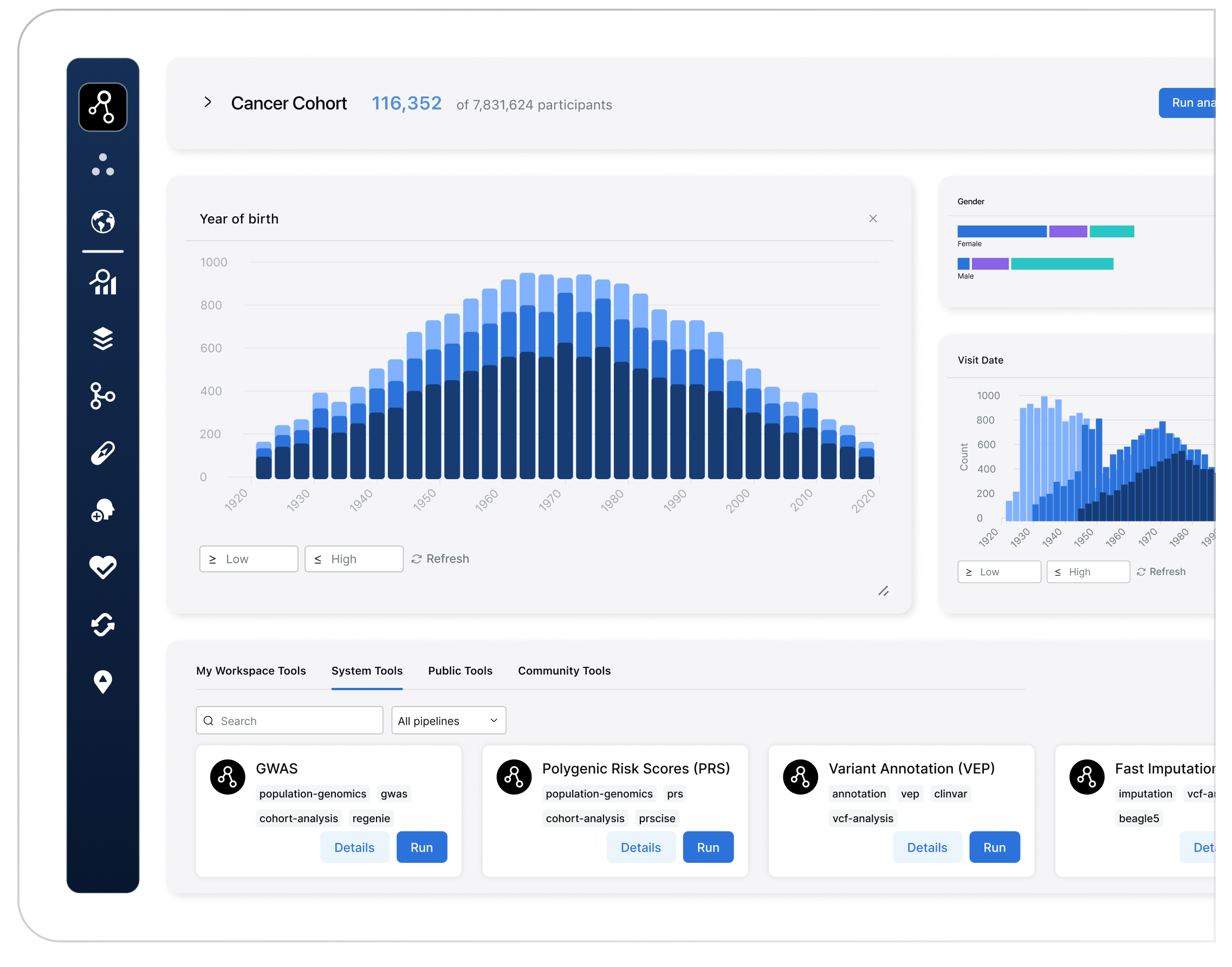
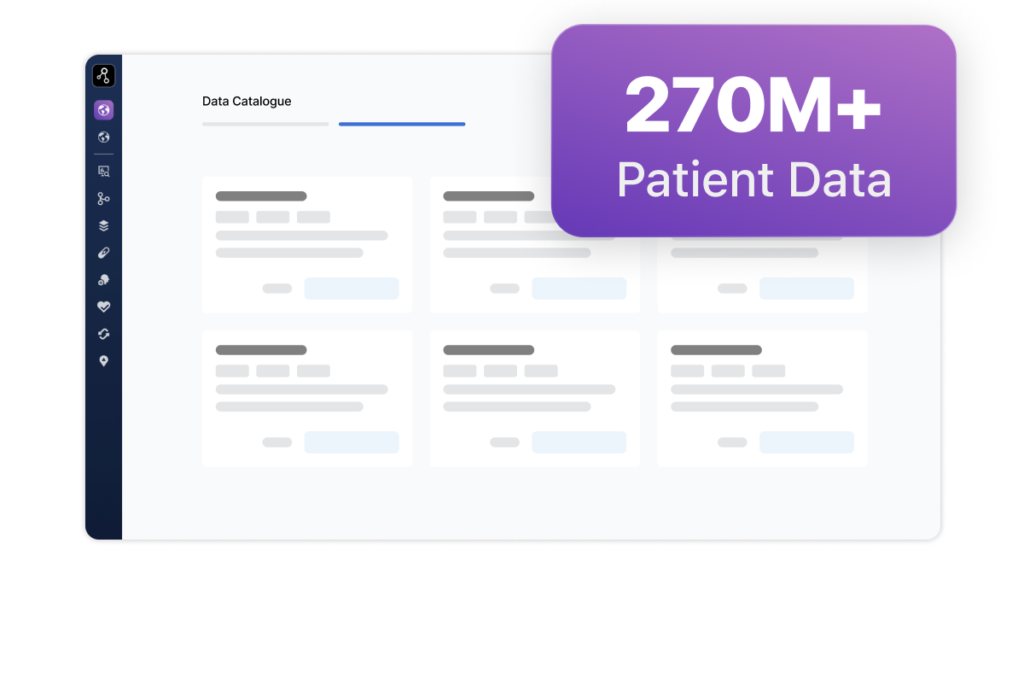
The Lifebit Federated Platform lets approved researchers find, harmonize and analyze sensitive health data where it sits, across institutions and countries. It is built on the Federated Trusted Research Environment: data never leaves the source, and only results that pass an automated airlock come out.
Centralized data platform
Federated Trusted Research Environment
Where patient data sits
Copied into one central environment
Stays in each custodian's own infrastructure
Who controls access
The platform operator
The data custodian
What can leave
Downloads, as the platform allows
Only aggregate results approved by the airlock
Studies across countries
Data has to move across borders
The analysis moves; the data stays























FAQ
Common questions
What is a Federated Trusted Research Environment?
A secure environment where approved researchers analyze sensitive health data by sending their analysis to each data custodian's infrastructure. Patient-level data never moves; only aggregate results that pass an automated airlock leave.
Does patient data ever leave our servers?
No. Patient-level data stays inside each custodian's own infrastructure. Researchers, and AI agents acting for them, send their analysis to the data, and every output is checked by an airlock the data custodian controls before it leaves.
Which data standards does Lifebit use?
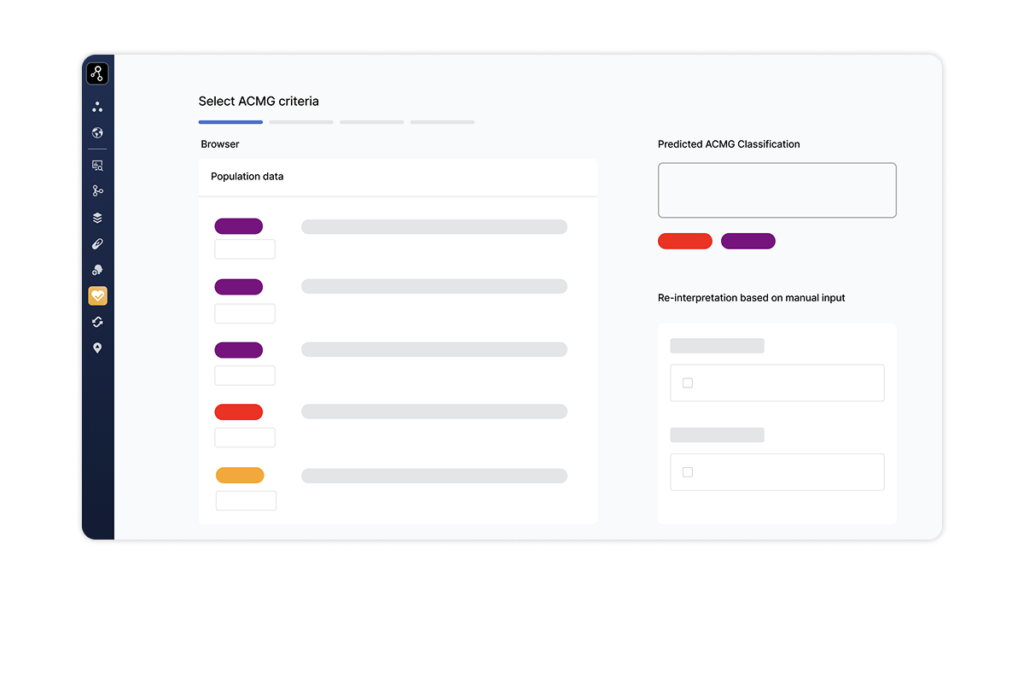
Lifebit maps data to OMOP CDM v5.4 and FHIR with AI-assisted harmonization, so the same analysis can run on records from different sources.
Who uses Lifebit?
Genomics England, Synapxe and the Singapore Ministry of Health, the Canadian Partnership for Tomorrow's Health (CanPath), Flatiron Health and the Lupus Research Alliance, among others. See customer stories.
Is Lifebit FedRAMP authorized?
No. Lifebit runs on FedRAMP Moderate controls (NIST SP 800-53) and is deployed inside the client's own authorization; it does not hold its own FedRAMP authorization.