

Customers › Population genomics

Case study · Population genomics
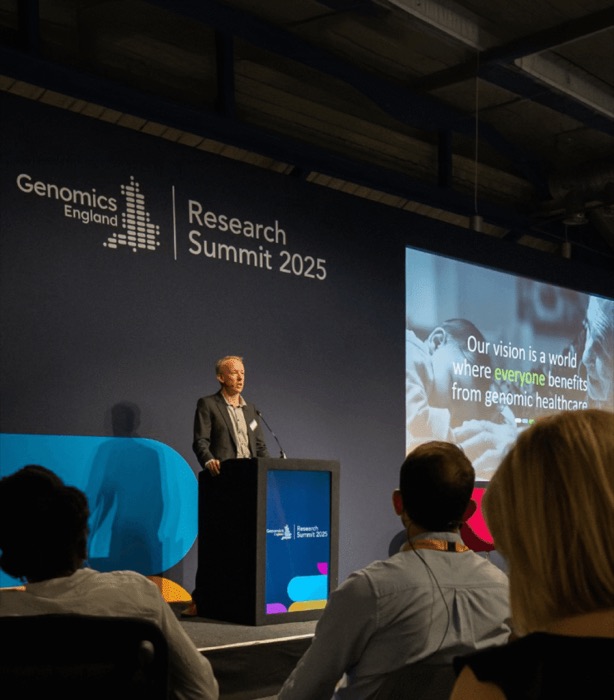
Genomics England chose Lifebit in 2020, and again in 2026
In 2020, Genomics England launched its cloud Research Environment with Lifebit and AWS, and Lifebit’s platform has run inside it since. In July 2026, after a formal procurement, Genomics England chose Lifebit again to build its next research environment, planned to open in 2027. The data never leaves the source.
01 · The challenge
Analyze national genomic data without moving it
Genomics England holds one of the world’s largest clinico-genomic datasets, linked to NHS records, under strict privacy and governance rules. Researchers from academia, the NHS, and industry need access to it without copies leaving the perimeter.
Strict privacy and governance requirements
High cost and risk of transferring datasets
Limited ability to analyze large distributed cohorts
02 · What we deployed
A Trusted Research Environment inside Genomics England’s own cloud
Lifebit runs CloudOS inside Genomics England’s own AWS environment in the UK, alongside Genomics England’s desktop and HPC tools. The data stays in the AWS UK Region under Genomics England’s control, and approved researchers query, analyze, and collaborate on it in place.
Compute moves to the data
Analyses run inside Genomics England’s perimeter; researchers connect to the platform and the data does not move to them.
Airlock-controlled outputs
Summary outputs leave only after Genomics England reviews them in Airlock; participant-level records stay inside.
Familiar research tools
JupyterLab, RStudio, Nextflow pipelines, and a shared GWAS pipeline run inside the environment.
How it works
From connected data to approved results
Genomes and linked NHS clinical data stay in Genomics England’s own AWS tenancy in the UK; researchers never receive copies.
Approved researchers sign in to private, audited workspaces that run under Genomics England’s information governance rules.
They explore cohorts, use notebooks, or launch Nextflow pipelines on Lifebit CloudOS, which runs the compute on AWS next to the data.
Summary results leave only through Airlock, where Genomics England reviews each export before release.
What’s in the stack
Lifebit products used: Trusted Research Environment · Airlock
03 · The results
Chosen in 2020, chosen again in 2026
Since the 2020 launch, accredited researchers from academia, the NHS, and industry have used Lifebit’s platform under Genomics England’s governance. In 2022, with NIHR Cambridge, it ran the UK’s first multi-party federated analysis between two TREs, under DARE UK. Studies run in the Research Environment include a Lancet Oncology analysis of 2,445 breast cancer genomes and a University of Southampton gene-burden workflow on CloudOS. In July 2026, after a formal procurement, Genomics England chose Lifebit to build its next research environment for rare disease and cancer, planned to open in 2027. CEO Professor Rich Scott called it “a significant investment in the future of genomic research.”
Timeline
About this use case
Population genomics
Population genomics links whole genomes to health records for a whole country’s patients, so researchers can find the genetic causes of rare disease and cancer. The data is too sensitive and too large to copy, so analysis has to run where it is stored. The output is approved summary results, such as variant associations and diagnoses, never participant-level records.
Who uses it here: Approved Genomics England researchers from academia, the NHS, and industry who register for CloudOS, plus Genomics England’s governance team, which approves every export.
See how population genomics worksMore customer stories
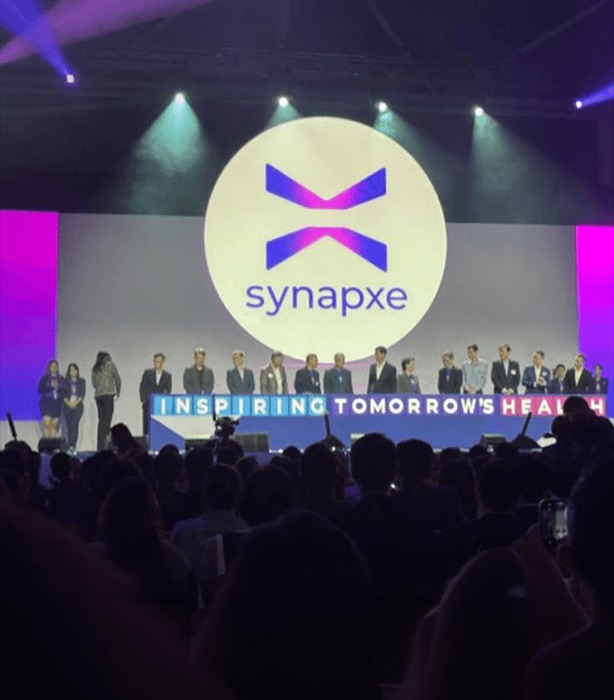
 100,000
participants in PRECISE-SG100K, Singapore’s national genome study (Chinese, Malay, and Indian)
Read the story →
100,000
participants in PRECISE-SG100K, Singapore’s national genome study (Chinese, Malay, and Indian)
Read the story →
 5
funded NIH intramural research projects in 2026
Read the story →
5
funded NIH intramural research projects in 2026
Read the story →
 59 min
for some target identification analyses that took months
Read the story →
59 min
for some target identification analyses that took months
Read the story →