

9 Best Real World Data Analytics Platforms in 2026

Updated for 2026
Real-world data (RWD) analytics platforms in 2026 have standardized around three substrate decisions: OMOP CDM v5.4 as the analytic model, FHIR R4 as the exchange format, and federated execution so analysis runs where the data lives instead of copying it into a central lake. The practical consequence for real-world evidence (RWE) teams: cohort discovery and feasibility counts run across multiple health systems in minutes, with only aggregate results leaving each site while identifiers never move. That matters for regulatory-grade RWE, where provenance and disclosure control (HIPAA Expert Determination, NIST SP 800-188) must hold across every contributing source. When comparing RWD analytics platforms, the questions that separate them are simple: does it federate or centralize, is it OMOP and FHIR native, and can AI models run in-environment without exfiltrating patient data?
Real world data (RWD) is reshaping how drugs get developed, how health policy gets made, and how precision medicine moves from concept to clinic. Electronic health records, claims databases, genomic registries, patient-reported outcomes — the data exists. The problem is that it’s messy, siloed, and subject to regulations that make sharing it genuinely complicated.
The right analytics platform doesn’t just process data. It harmonizes disparate sources, enforces compliance across jurisdictions, and delivers insights fast enough to influence actual decisions. That’s a high bar, and not every platform clears it.
This guide evaluates the top real world data analytics platforms available in 2026. Each was assessed on data harmonization capabilities, regulatory compliance (HIPAA, GDPR, FedRAMP, ISO 27001), scalability for multi-site and multinational deployments, support for federated or privacy-preserving analytics, and realistic time-to-insight. Whether you’re a government health agency building a national data asset, a biopharma team running HEOR studies, or a health system trying to unlock value from clinical data, here are the platforms worth evaluating.
1. Lifebit
Best for: Government agencies, biopharma, and research consortia needing federated, compliant RWD analytics without moving data
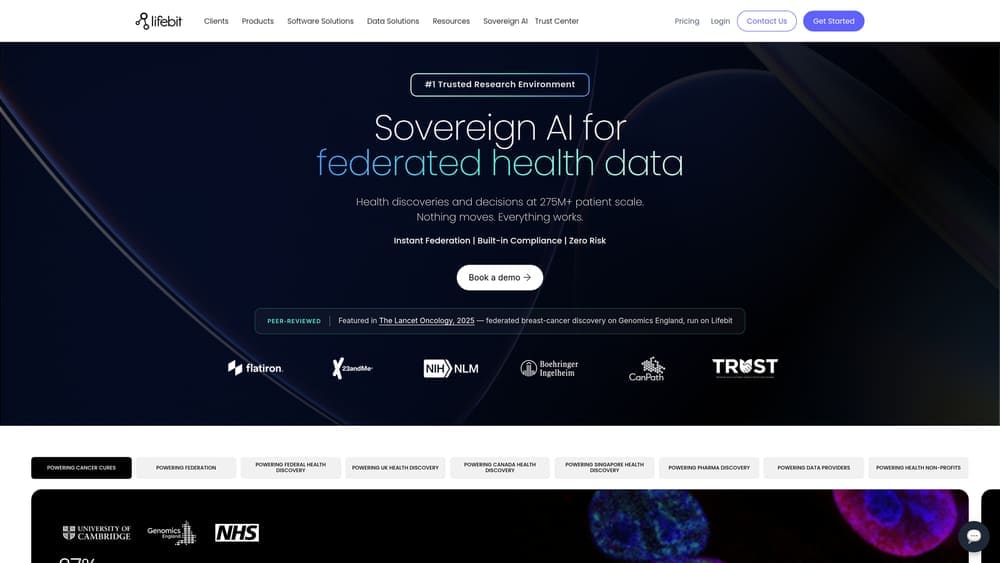
Lifebit is a federated data platform with AI-powered harmonization built for secure, compliant real world data analytics, deployed in your own cloud environment, across borders, without ever moving the underlying data.
Where This Tool Shines
Lifebit’s core architectural decision sets it apart: data never moves. Instead of copying sensitive records into a central repository, Lifebit runs analytics where the data already lives. For government programs and multinational research consortia, this isn’t a nice-to-have. It’s often the only architecture that satisfies data sovereignty requirements.
The Trusted Data Factory takes raw, heterogeneous data and maps it to OMOP CDM in 48 hours using AI, compared to the months-long manual harmonization cycles that most organizations still endure. Lifebit is trusted by NIH, Genomics England, and Singapore’s Ministry of Health, managing over 275 million records across 30+ countries. That deployment footprint is a meaningful signal about what the platform can handle at scale.
Key Features
Federated Analytics: Analyze data across institutions and borders without copying or centralizing it, preserving data sovereignty and minimizing compliance exposure.
Trusted Data Factory (TDF): AI-powered harmonization maps raw EHR, genomic, and claims data to OMOP CDM in 48 hours, not 12 months.
Trusted Research Environments (TRE): Secure, compliant cloud workspaces with built-in HIPAA, GDPR, FedRAMP, and ISO 27001 controls from day one.
AI-Automated Airlock: A first-of-its-kind governance system that manages secure, audited data exports without manual intervention or compliance gaps.
Trusted TargetID (TTID): AI-driven target identification and validation across linked genomic and clinical datasets, purpose-built for biopharma R&D acceleration.
Best For
Lifebit is best suited for government health agencies building national precision medicine infrastructure, biopharma R&D and translational research teams working with genomic and clinical data, and academic consortia or health systems that need to collaborate across institutions without centralizing sensitive records. Organizations where data sovereignty is non-negotiable will find the federated architecture especially relevant.
Pricing
Custom pricing based on deployment scale and use case. Contact Lifebit directly for a quote. Pricing typically reflects the scope of the national or enterprise deployment.
2. Aetion Evidence Platform
Best for: Biopharma and HEOR teams generating regulatory-grade real world evidence for FDA and EMA submissions
Aetion is a purpose-built platform for generating scientifically rigorous, regulatory-grade real world evidence using transparent, validated causal inference methods.
Where This Tool Shines
Aetion was designed specifically for the regulatory context. The platform’s causal inference methodology is validated and transparent, which matters enormously when submissions need to hold up to FDA or EMA scrutiny. This isn’t a general-purpose analytics tool retrofitted for health. It was built from the ground up for observational data analysis that regulators can trust.
The audit trail and methodology documentation built into every analysis reduces the back-and-forth with regulatory bodies that typically slows evidence packages. For HEOR teams under pressure to produce defensible evidence quickly, that’s a significant operational advantage.
Key Features
Validated Causal Inference: Scientifically reviewed analytical methods for drawing causal conclusions from observational RWD, designed to meet regulatory standards.
Regulatory Submission Support: Purpose-built for FDA and EMA submissions, with documentation and audit trails aligned to regulatory expectations.
Multi-Source Data Connectivity: Connects to claims, EHR, and registry data sources, enabling analysis across diverse real world datasets.
Full Audit Trails: Every analytical decision is logged and explainable, supporting reproducibility and regulatory review.
Cross-Functional Collaboration Tools: Built-in workflows for HEOR, medical affairs, and regulatory teams to collaborate within a single environment.
Best For
Biopharma companies preparing regulatory submissions, HEOR teams conducting comparative effectiveness research, and medical affairs functions that need defensible, reproducible evidence from observational data sources.
Pricing
Custom enterprise pricing. Not publicly listed. Contact Aetion directly for a quote based on use case and data access needs.
3. Flatiron Health
Best for: Oncology drug development teams needing deeply curated, research-grade clinical datasets from real cancer care settings
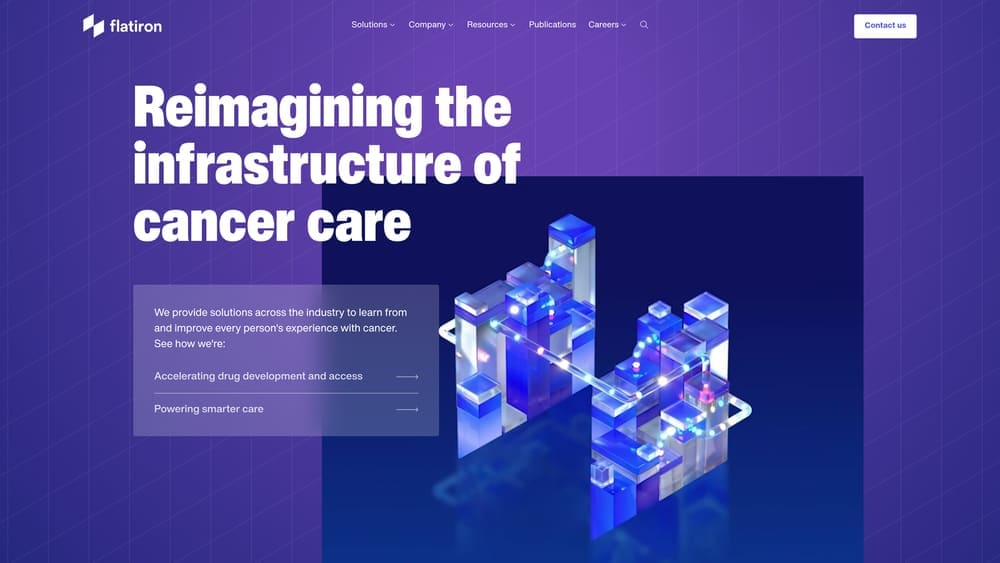
Flatiron Health is an oncology-specific RWD platform with curated, EHR-derived datasets sourced from one of the largest networks of community cancer clinics in the US.
Where This Tool Shines
Flatiron’s differentiation is depth of curation, not breadth of coverage. The platform uses technology-enabled chart abstraction to extract structured, research-grade data from unstructured clinical notes, which is where most of the clinically meaningful information in oncology actually lives. The result is datasets that are genuinely usable for drug development without months of additional cleaning.
The clinico-genomic datasets, which link clinical outcomes to genomic profiles, are particularly valuable for oncology R&D teams working on biomarker-driven indications. Flatiron’s integration with the Roche/Genentech ecosystem also makes it a natural fit for organizations already operating within that network.
Key Features
Curated Oncology Datasets: Research-grade data from 280+ community cancer clinics, covering a broad and representative patient population.
Technology-Enabled Chart Abstraction: Structured data extraction from unstructured clinical notes, producing analytics-ready datasets without manual curation at scale.
Clinico-Genomic Datasets: Linked clinical outcomes and genomic profiles enabling biomarker and precision medicine research.
Regulatory-Grade Evidence Generation: Designed to support oncology drug development programs requiring defensible real world evidence.
Roche/Genentech Integration: Deep ecosystem alignment for organizations working within or alongside Roche’s drug development infrastructure.
Best For
Oncology-focused biopharma and biotech companies, clinical development teams working on tumor-specific indications, and researchers needing clinico-genomic data linkage for precision oncology programs.
Pricing
Data licensing and platform access are structured through custom agreements. Contact Flatiron directly for pricing based on dataset scope and research use case.
4. Palantir Foundry (Health)
Best for: Government health agencies and large health systems managing complex, heterogeneous data environments at national scale
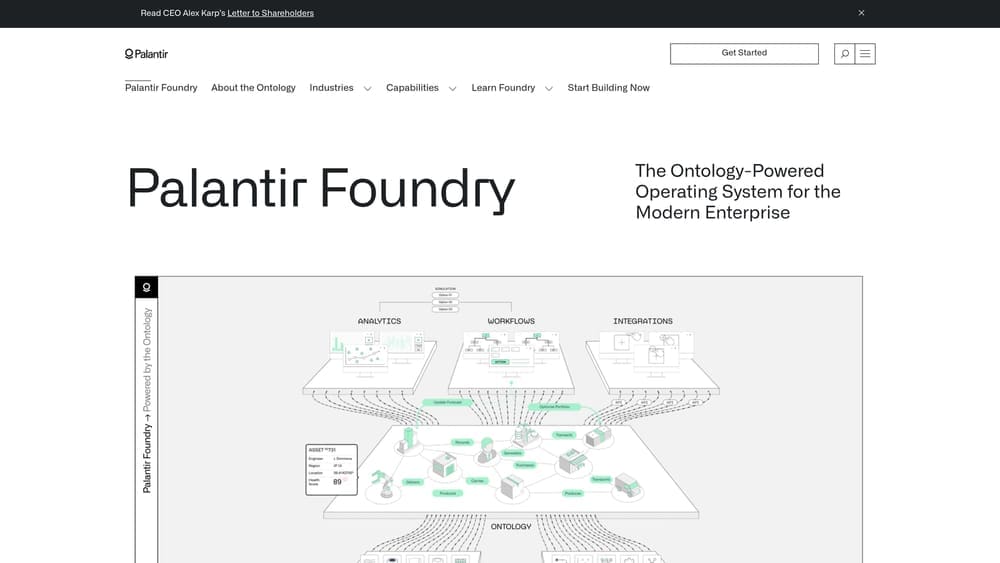
Palantir Foundry is an enterprise data integration and analytics platform adapted for complex, large-scale health data environments, including government, defense health, and national health systems.
Where This Tool Shines
Palantir’s strength is in taming genuinely complex data environments. The ontology-based integration layer can connect heterogeneous data sources that have no common schema, which is exactly the problem facing most large health systems and government agencies. It’s less a purpose-built health analytics tool and more a powerful data operating system that has been deployed effectively in health contexts.
The platform’s track record with NHS England and HHS during pandemic response demonstrates its ability to operate at national scale under pressure. For organizations dealing with data complexity that goes beyond what purpose-built health platforms can handle, Foundry is worth serious consideration.
Key Features
Ontology-Based Data Integration: Connects heterogeneous health data sources without requiring a pre-existing common schema, enabling flexible integration at scale.
Granular Access Controls: Fine-grained permissions and comprehensive audit logging for sensitive health data environments.
Custom Application Building: Enables teams to build operational applications directly on top of integrated data, not just run analyses.
FedRAMP Authorization: Approved for US government deployments, meeting federal security and compliance requirements.
Proven Government Scale: Deployed by NHS England, HHS, and other national health bodies for large-scale health operations and analytics.
Best For
Government health agencies, defense health organizations, and large national health systems dealing with highly heterogeneous data environments that require both analytics and operational application development on the same platform.
Pricing
Custom enterprise pricing, typically structured as large-scale contracts. Palantir engagements tend to be significant investments. Contact directly for scoping.
5. TriNetX
Best for: Clinical trial teams and HEOR researchers needing real-time cohort identification and feasibility analysis across a global federated network
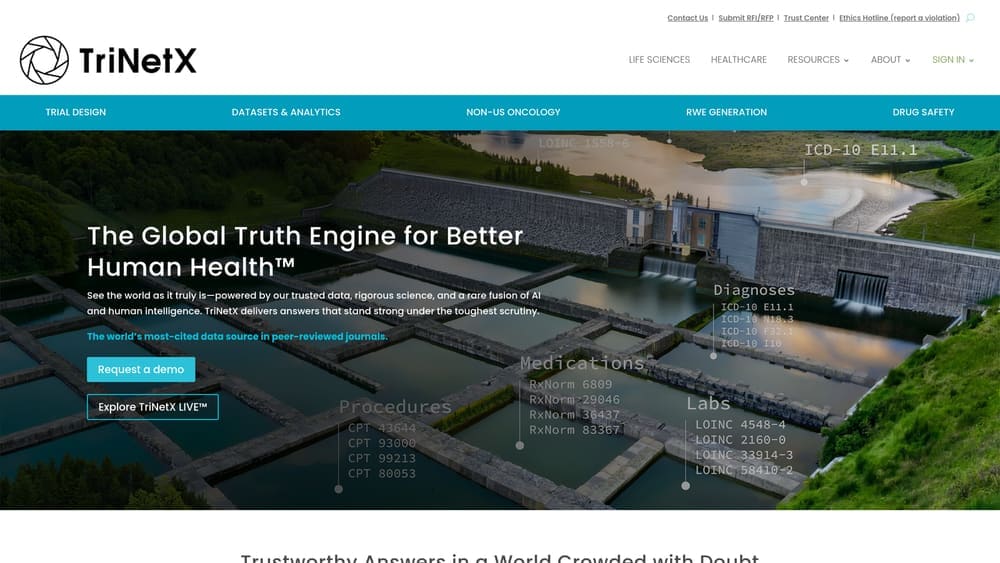
TriNetX is a global federated health research network providing real-time access to patient-level data for feasibility analysis, protocol optimization, and real world evidence studies.
Where This Tool Shines
TriNetX solves a specific and painful problem in clinical research: knowing whether a trial is feasible before you commit to a protocol. The platform’s federated network allows researchers to query patient populations across health systems in real time, without any data leaving the source institution. That’s a fundamentally different model from purchasing a static dataset and hoping it covers your population of interest.
The self-service analytics layer means clinical operations and HEOR teams can run cohort queries without waiting on data vendors or IT teams. For organizations running multiple trials or protocol designs simultaneously, the speed advantage compounds quickly.
Key Features
Global Federated Network: Spans health systems worldwide with EHR and claims data, enabling cross-institutional queries without data centralization.
Real-Time Cohort Identification: Query patient populations across the network instantly for feasibility analysis and protocol design.
No Data Movement: Source institutions retain full control; data never leaves their environment during analysis.
Protocol Optimization Tools: Analytical tools specifically designed to refine inclusion/exclusion criteria and improve trial design before site activation.
Regulatory-Grade RWE Datasets: Supports post-market surveillance, comparative effectiveness, and HEOR studies with appropriate data quality controls.
Best For
Clinical operations teams optimizing trial protocols, HEOR researchers conducting feasibility and comparative effectiveness studies, and biopharma companies needing rapid cohort identification across a global health data network.
Pricing
Subscription-based with custom pricing by use case and network access tier. Contact TriNetX for a quote tailored to your research volume and geographic scope.
6. Veeva Crossix
Best for: Commercial pharma teams measuring the real world impact of marketing campaigns on patient treatment behavior and prescription starts
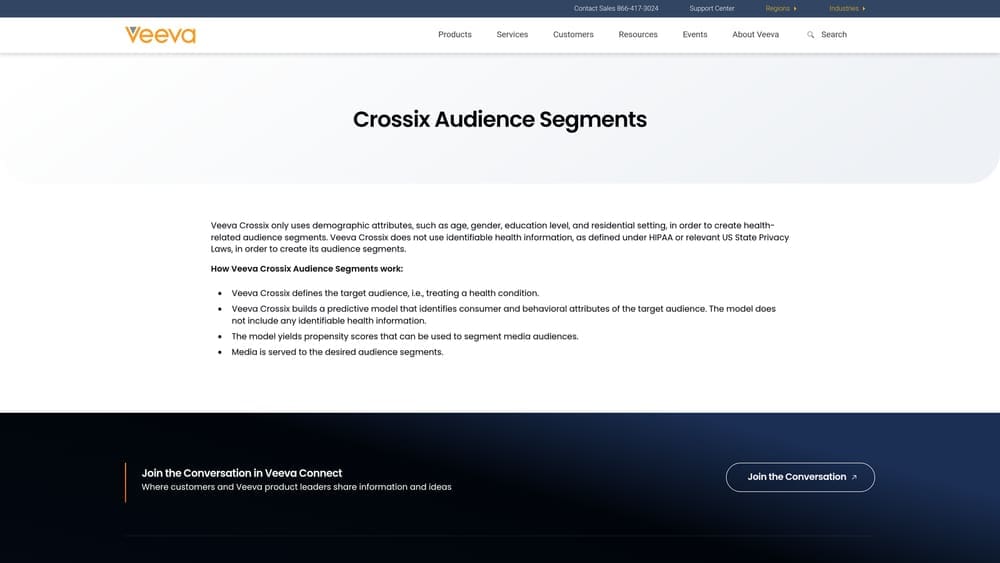
Veeva Crossix is a privacy-safe analytics platform that links real world health data to media and marketing exposure, enabling commercial pharma to measure campaign impact on patient outcomes.
Where This Tool Shines
Crossix occupies a distinct niche in the RWD landscape: it connects what patients see in marketing to what they actually do in the healthcare system. That linkage, done in a HIPAA-compliant, privacy-safe way, gives commercial teams something genuinely hard to get elsewhere: closed-loop measurement from media exposure to treatment initiation.
For pharma brands investing significantly in direct-to-consumer or HCP-targeted campaigns, the ability to measure actual script lift rather than proxy engagement metrics is a meaningful shift in how marketing ROI gets calculated. The integration with Veeva’s broader commercial suite makes it especially useful for teams already operating within that ecosystem.
Key Features
Privacy-Safe Data Linkage: HIPAA-compliant tokenized matching connects health outcomes data to media exposure without exposing individual patient identities.
Campaign Impact Measurement: Measures the effect of marketing campaigns on patient behavior, including treatment starts and prescription fills.
Audience Targeting: Health data signals inform audience segmentation and media optimization for pharma marketing programs.
Veeva Ecosystem Integration: Works natively with Veeva CRM, Vault, and other commercial cloud products for unified commercial operations.
HCP and DTC Analytics: Supports both healthcare professional and direct-to-consumer campaign measurement in a single platform.
Best For
Commercial pharma teams managing brand campaigns, market access functions measuring treatment adoption, and marketing analytics leaders who need to connect media investment to real world patient behavior.
Pricing
Custom pricing as part of Veeva’s commercial cloud suite. Typically bundled with broader Veeva commercial agreements. Contact Veeva for a scoped quote.
7. Databricks Lakehouse for Healthcare and Life Sciences
Best for: Data engineering and ML teams building custom analytics pipelines on large-scale genomic, multi-omic, or EHR datasets
Databricks Lakehouse is a unified data platform with native support for healthcare data standards, genomic workloads, and custom machine learning pipelines on real world data.
Where This Tool Shines
Databricks isn’t a purpose-built health analytics platform, and it doesn’t pretend to be. What it offers instead is a highly capable, flexible data infrastructure that can handle the scale and complexity of genomic and multi-omic workloads that purpose-built health tools often struggle with. For organizations with strong data engineering capabilities, it’s a powerful foundation for building exactly what you need.
The solution accelerators for OMOP CDM, FHIR, and genomic data processing lower the barrier to standardization without locking teams into a rigid analytical framework. The Delta Lake architecture provides ACID compliance and data versioning, which matters for regulated health data environments where auditability is required.
Key Features
Lakehouse Architecture: Unifies data engineering, analytics, and ML in a single platform, eliminating the data movement between separate systems that typically introduces latency and risk.
Healthcare Solution Accelerators: Pre-built frameworks for OMOP CDM, FHIR, and genomic data processing that accelerate standardization without starting from scratch.
Delta Lake Storage: ACID-compliant, versioned data storage for health datasets requiring auditability and reproducibility.
Scalable Genomic Compute: Handles large-scale genomic and multi-omic analyses that exceed the capacity of traditional health analytics tools.
Multi-Cloud HIPAA Support: Runs on AWS, Azure, and GCP with HIPAA Business Associate Agreement support across all major cloud providers.
Best For
Life sciences and health organizations with mature data engineering teams, academic research groups running large-scale genomic analyses, and biopharma companies building custom ML pipelines on top of harmonized real world datasets.
Pricing
Pay-as-you-go compute and storage pricing with enterprise agreements available for predictable-scale workloads. Costs scale with compute usage, so budgeting requires careful workload estimation.
8. Medidata Rave Real World Data
Best for: Clinical development teams running hybrid or decentralized trials that need to integrate RWD directly into trial workflows
Medidata Rave Real World Data is a platform designed to bridge clinical trial data with real world data sources, enabling hybrid trial designs and post-market evidence generation within the Rave ecosystem.
Where This Tool Shines
The core value proposition here is integration, not standalone analytics. For organizations already running trials on Medidata Rave, the ability to pull RWD directly into those workflows, whether for synthetic control arms, external comparators, or post-market follow-up, removes significant friction from hybrid trial design. You’re not connecting two separate systems. You’re extending one you already use.
The synthetic control arm capability is particularly relevant for rare disease programs and oncology trials where randomized controls are difficult or ethically problematic to recruit. Using RWD to construct external comparators within a validated, regulatory-aligned framework is an increasingly accepted approach, and Medidata has built infrastructure specifically for that use case.
Key Features
RWD Integration in Trial Workflows: Connects real world data sources directly into Medidata Rave’s clinical trial management environment without requiring separate analytical infrastructure.
Synthetic Control Arms: Supports construction of external comparators from RWD for trials where traditional randomized controls are not feasible.
Patient-Level Data Linkage: Links claims, EHR, and trial data at the patient level for longitudinal outcome tracking across care settings.
Decentralized Trial Support: Designed for hybrid and decentralized trial models that blend site-based and remote data collection.
Dassault Systèmes Ecosystem: Part of a broader life sciences portfolio enabling integration with digital twin and simulation capabilities.
Best For
Clinical development teams already operating within the Medidata Rave ecosystem, rare disease and oncology programs exploring synthetic control arms, and organizations designing hybrid or decentralized trials that require seamless RWD integration.
Pricing
Custom pricing, typically bundled with existing Medidata Rave clinical suite agreements. Contact Medidata for a quote based on trial scope and RWD access requirements.
9. IQVIA Real World Data and Analytics
Best for: Global biopharma and HEOR teams needing the broadest possible RWD coverage across countries, data types, and therapeutic areas
IQVIA is the largest global RWD provider, offering proprietary datasets spanning claims, EMR, prescriptions, and patient-level data across more than 100 countries, alongside analytics and managed services.
Where This Tool Shines
IQVIA’s primary advantage is scale and coverage. No other single vendor offers comparable global breadth across data types and geographies. For multinational HEOR studies, global epidemiology, or market access strategies that need consistent data across regions, IQVIA’s proprietary network is often the only option that can cover the required scope without assembling data from a dozen different regional vendors.
The managed analytics and consulting layer is a meaningful differentiator for organizations that want outcomes, not just data access. IQVIA can function as an analytical partner rather than a pure platform vendor, which suits teams that lack the internal data science capacity to fully exploit raw RWD independently.
Key Features
Proprietary Global Datasets: Claims, EMR, prescription, and consumer health data covering 100+ countries, representing one of the largest RWD assets in the world.
IQVIA Connected Intelligence: Analytics platform for querying and linking across IQVIA’s proprietary datasets with built-in visualization and reporting.
AI and NLP Capabilities: Machine learning and natural language processing tools for extracting insights from unstructured clinical data sources.
Managed Analytics Services: Full-service HEOR and regulatory analytics delivery for organizations that need results, not just platform access.
Regulatory Submission Support: Consulting and analytical services aligned to FDA, EMA, and other regulatory body requirements for real world evidence packages.
Best For
Global biopharma companies conducting multinational HEOR or epidemiology studies, market access teams needing consistent cross-country data, and organizations without large internal data science teams that benefit from IQVIA’s managed services model.
Pricing
Custom pricing with data licensing, platform access, and consulting services sold separately or bundled. Costs vary significantly by dataset scope, geography, and service level. Contact IQVIA for a scoped engagement.
Choosing the Right RWD Platform for Your Use Case
The right platform depends almost entirely on what you’re trying to accomplish, and with what data, in what regulatory context. There is no single winner here. The platforms above serve meaningfully different needs.
If data sovereignty and cross-border compliance are your primary constraints, federated architecture is not optional. Lifebit’s approach of analyzing data where it lives, combined with AI-powered harmonization that compresses months of data preparation into days, addresses the two problems that most commonly stall national and multinational programs before they produce a single insight. For government agencies and research consortia operating across jurisdictions, that combination is hard to find elsewhere.
If regulatory-grade evidence generation is your core need, Aetion is the most purpose-built option for FDA and EMA submissions. If your work is oncology-specific, Flatiron’s curated datasets offer depth that general RWD platforms can’t match. If you need global coverage across therapeutic areas and geographies, IQVIA’s breadth is unmatched, particularly when paired with their managed services for teams that need analytical support alongside data access.
For clinical development teams, TriNetX accelerates feasibility and protocol design through real-time federated queries, while Medidata Rave RWD is the natural choice for organizations already embedded in that clinical trial ecosystem. Commercial pharma teams focused on measuring marketing impact will find Veeva Crossix purpose-built for exactly that problem.
Organizations with strong internal data engineering capabilities should evaluate Databricks Lakehouse seriously. It requires more technical investment upfront but offers flexibility that purpose-built platforms often can’t match for custom ML workloads. Palantir Foundry occupies a similar position for government-scale data complexity, particularly where operational applications need to be built alongside analytics.
The clearest signal for making your decision: start with your compliance requirements and your data architecture constraints. Those two factors will eliminate most of the list before you get to feature comparisons. Then evaluate the remaining options on time-to-insight and total cost of ownership for your specific use case.
If federated analytics, AI-powered harmonization, and deployment within your own cloud environment align with your requirements, explore Lifebit’s platform and get started to see how it maps to your program’s needs.