

9 Best Biobank Data Management Systems for Precision Medicine in 2026
Managing biobank data at scale is a compliance nightmare waiting to happen. You’re juggling genomic sequences, clinical phenotypes, sample inventories, and consent records—often across multiple institutions with different regulatory requirements. One wrong move and you’re facing GDPR fines, failed audits, or worse: unusable data that cost millions to collect.
The right biobank data management system doesn’t just organize samples. It harmonizes multi-modal data, enforces governance automatically, and lets researchers access what they need without moving sensitive information across borders.
Here are the top platforms that actually deliver—ranked by their ability to handle the complexity of modern precision medicine programs.
1. Lifebit
Best for: National precision medicine programs requiring federated data analysis without cross-border data movement
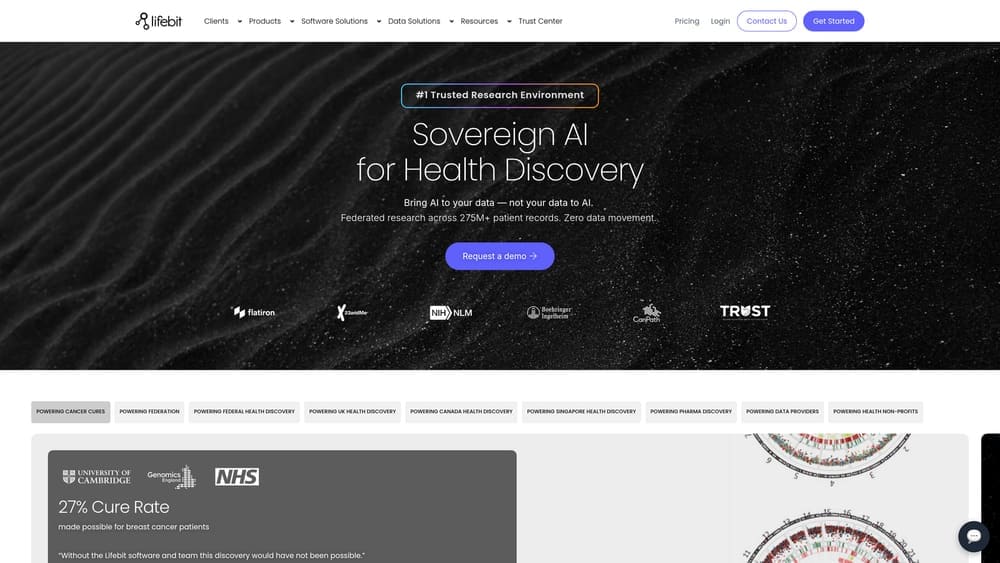
Lifebit is a federated data platform that enables biobank analysis without moving sensitive data from your infrastructure.
Where This Platform Shines
Lifebit solves the data sovereignty problem that kills most international biobank collaborations. Your genomic and clinical data stays exactly where it lives—in your cloud, under your control—while researchers run analyses across multiple institutions as if everything were centralized.
The platform’s AI-powered harmonization turns what normally takes 12 months of manual data wrangling into a 48-hour automated process. This matters when you’re managing national programs where data arrives in dozens of incompatible formats.
Key Features
Federated Analysis Architecture: Data never leaves your infrastructure—analysis comes to the data, not the other way around.
AI-Powered Harmonization: Automatically standardizes multi-modal data (genomics, clinical, imaging) in 48 hours instead of months.
Pre-Built Compliance: Ships with FedRAMP, HIPAA, GDPR, and ISO27001 certifications already configured—no lengthy security audits.
Trusted Research Environment: Provides secure workspaces with full audit trails, automated governance, and controlled data export via AI-powered airlock.
Proven Scale: Currently manages 275M+ records across 30+ countries, supporting programs like NIH All of Us and Genomics England.
Best For
Government health agencies building national precision medicine programs where data sovereignty is non-negotiable. Academic consortia needing to collaborate across borders without moving regulated data. Research institutions that want compliance built-in from day one rather than bolted on later.
Pricing
Custom enterprise pricing based on deployment scale and number of records. Contact Lifebit for detailed quotes tailored to your program size.
2. LabVantage Biobanking
Best for: Enterprise biobanks needing comprehensive sample lifecycle management with deep lab automation integration
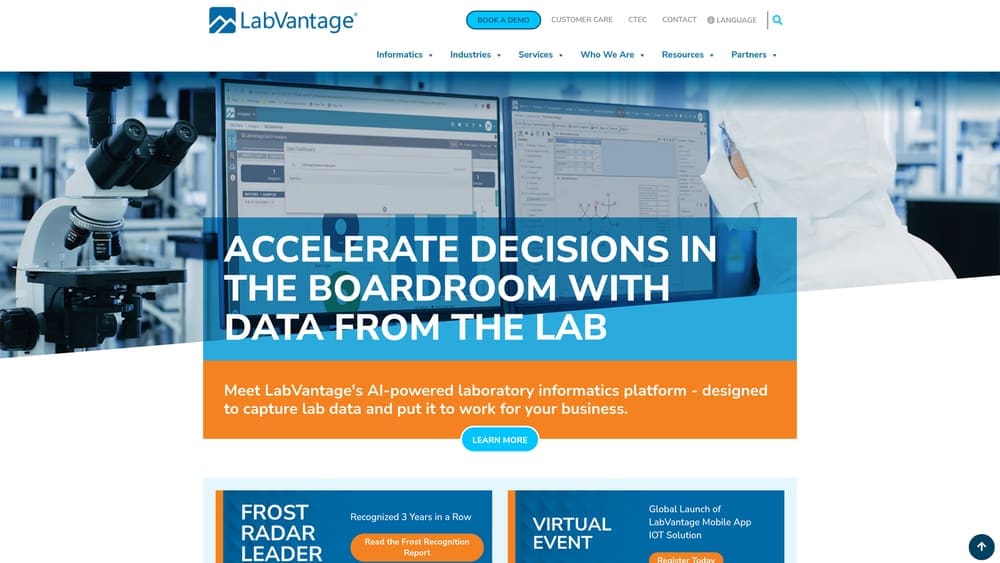
LabVantage Biobanking is an enterprise LIMS platform with dedicated modules for biobank sample management and regulatory compliance.
Where This Platform Shines
LabVantage excels at chain-of-custody tracking for biobanks that face frequent regulatory audits. Every sample movement, temperature excursion, and access event gets logged automatically with full audit trails that satisfy FDA and CAP inspections.
The platform’s strength is its configurability—you can model complex workflows for different sample types without writing custom code. This flexibility matters when your biobank handles everything from blood samples to organoids.
Key Features
Complete Sample Lifecycle Management: Tracks samples from collection through processing, storage, distribution, and disposal with full documentation.
Chain-of-Custody Tracking: Automated logging of every sample interaction with timestamps, user IDs, and environmental conditions for regulatory compliance.
Lab Instrument Integration: Direct connections to analyzers, freezers, and automation systems eliminate manual data entry and transcription errors.
Consent Management: Links samples to participant consent status, tracks protocol adherence, and flags samples when consent is withdrawn.
Configurable Workflows: Build custom processing workflows for different sample types without requiring developer resources.
Best For
Large hospital biobanks with existing lab automation infrastructure. Clinical trial biobanks that need 21 CFR Part 11 compliance. Organizations running multiple biobank protocols simultaneously with different processing requirements.
Pricing
Enterprise licensing model with pricing based on number of users and modules. Contact LabVantage for detailed quotes—expect significant implementation costs for full deployment.
3. Freezerworks
Best for: Biobanks prioritizing visual inventory management and straightforward sample tracking over complex data integration
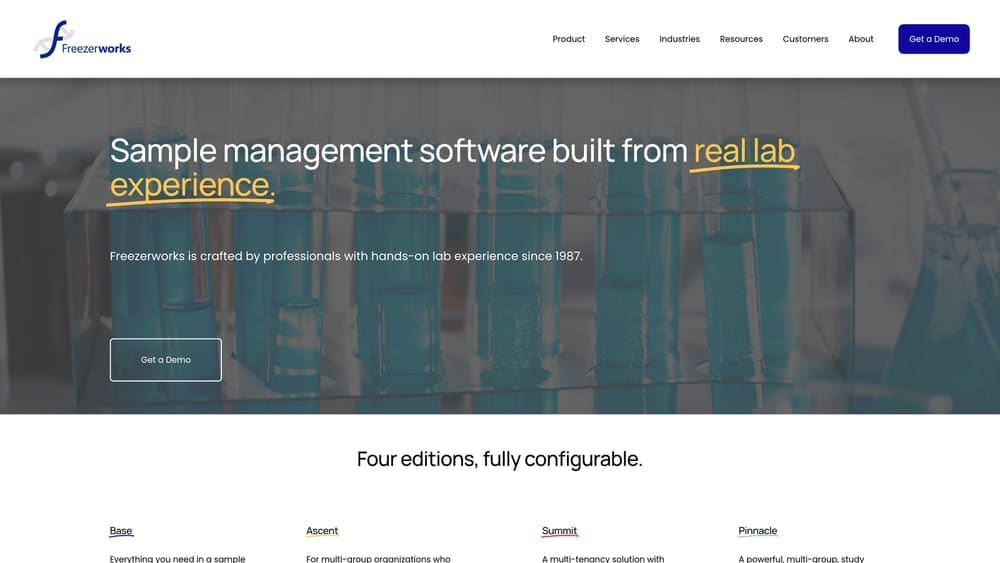
Freezerworks is sample management software focused on inventory tracking, storage mapping, and sample retrieval workflows.
Where This Platform Shines
Freezerworks nails the basics that cause daily headaches: finding samples quickly and knowing exactly what’s in each freezer. The visual storage mapping interface lets lab staff locate specific vials in seconds rather than digging through spreadsheets.
The platform’s simplicity is its strength. You can get a new biobank operational in weeks rather than months because there’s minimal configuration required. This matters for institutions without dedicated IT resources.
Key Features
Visual Freezer Mapping: Graphical interface shows exact sample locations in racks, boxes, and freezers—eliminates guesswork during retrieval.
Barcode and RFID Integration: Supports automated sample identification to reduce manual entry errors and speed up processing.
Flexible Data Fields: Customize sample attributes without database programming—adapts to your specific sample types and metadata needs.
Web-Based Access: Distributed teams can access inventory data from anywhere, supporting multi-site biobank networks.
Legacy Data Migration: Import/export tools help transition from spreadsheets or older systems without losing historical data.
Best For
Small to medium biobanks focused on sample inventory rather than complex data harmonization. Academic labs with limited IT support. Organizations transitioning from spreadsheet-based tracking to proper database systems.
Pricing
Starts at $3,000 per year for small biobanks with basic needs. Pricing scales with number of users and advanced features—significantly more affordable than enterprise LIMS platforms.
4. OpenSpecimen
Best for: Academic biobanks with technical resources to customize an open-source platform for specific research workflows
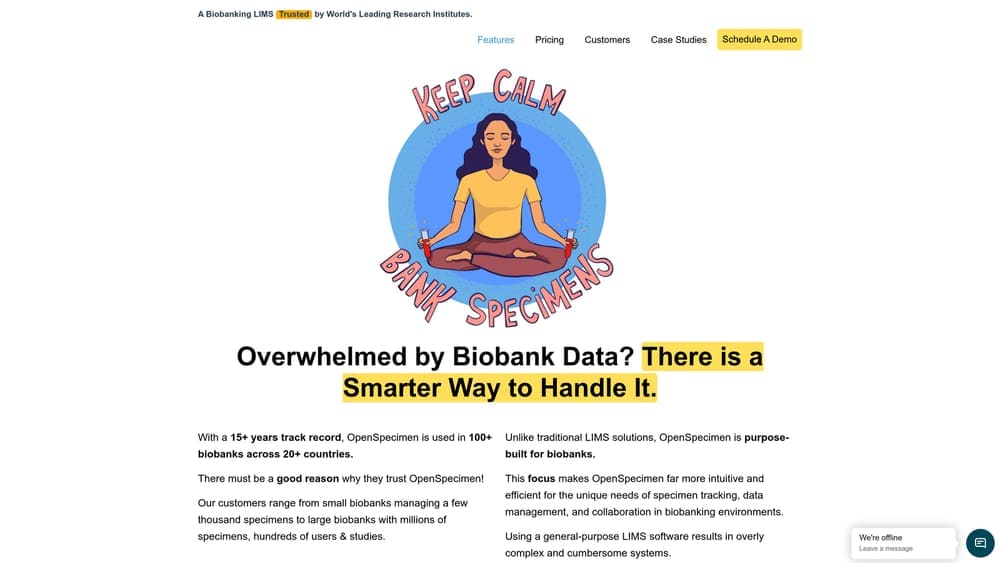
OpenSpecimen is an open-source biobanking informatics platform widely adopted by universities for specimen tracking and research coordination.
Where This Platform Shines
OpenSpecimen eliminates licensing costs that cripple academic biobank budgets. You get enterprise-grade functionality—participant consent tracking, specimen workflows, cohort queries—without paying per-user fees that scale with your research program.
The active open-source community means continuous development driven by actual biobank needs rather than vendor roadmaps. When academic institutions need specific features, they contribute code that benefits everyone.
Key Features
Open-Source Foundation: No licensing fees, full source code access, and active community development with regular feature updates.
Participant Consent Management: Tracks consent status, protocol adherence, and automatically flags samples when participants withdraw consent.
Specimen Collection Workflows: Configurable workflows for different collection protocols, processing steps, and quality control checkpoints.
Cohort Identification Tools: Query interface lets researchers identify sample sets matching specific clinical or demographic criteria.
REST APIs: Integration endpoints connect OpenSpecimen to EHR systems, genomic pipelines, and other research infrastructure.
Best For
Academic medical centers with in-house IT teams capable of deploying and maintaining open-source software. Research consortia wanting to avoid vendor lock-in. Biobanks with limited budgets but strong technical capabilities.
Pricing
Free open-source software with no licensing costs. Paid support plans start at $15,000 per year for institutions needing guaranteed response times and professional assistance.
5. Thermo Fisher SampleManager
Best for: Biopharma biobanks already invested in Thermo Fisher lab infrastructure seeking seamless instrument integration
Thermo Fisher SampleManager is an enterprise LIMS with biobanking capabilities designed for organizations with existing Thermo Fisher ecosystems.
Where This Platform Shines
SampleManager’s deep integration with Thermo Fisher instruments eliminates the middleware layer that causes data sync headaches. Results from mass spectrometers, sequencers, and analyzers flow directly into sample records without manual intervention.
The platform’s 21 CFR Part 11 compliance is battle-tested across thousands of FDA-regulated labs. If you’re running GLP or GCP studies, SampleManager already speaks the regulatory language auditors expect.
Key Features
Thermo Instrument Integration: Native connections to Thermo Fisher analyzers, sequencers, and lab automation eliminate data transcription errors.
21 CFR Part 11 Compliance: Built-in electronic signatures, audit trails, and data integrity controls satisfy FDA requirements without custom development.
Configurable Business Rules: Define custom workflows, calculations, and validation rules that match your specific biobanking protocols.
Electronic Signatures: Multi-level approval workflows with full audit trails for regulated environments requiring documented review.
Enterprise Scalability: Architecture supports thousands of concurrent users across multiple sites with centralized data management.
Best For
Large biopharma companies with significant Thermo Fisher infrastructure investments. Clinical trial biobanks requiring FDA-compliant data management. Organizations running regulated studies where audit readiness is critical.
Pricing
Enterprise licensing with typical deployments starting at $100,000+ including implementation, training, and first-year support. Pricing scales with number of users and sites.
6. STARLIMS Biobanking
Best for: Clinical trial biobanks requiring Abbott diagnostics integration and multi-site sample network coordination
STARLIMS Biobanking is Abbott’s laboratory informatics platform with specialized modules for clinical trial sample management.
Where This Platform Shines
STARLIMS excels at managing biobanks distributed across multiple clinical trial sites. The platform coordinates sample collection, shipping, and analysis across dozens of locations while maintaining complete chain-of-custody documentation for regulatory submissions.
If your biobank supports clinical trials using Abbott diagnostics, STARLIMS eliminates integration headaches. Test results from Abbott instruments automatically link to sample records without middleware or custom coding.
Key Features
Clinical Trial Sample Tracking: Purpose-built workflows for multi-site trial sample collection, shipment tracking, and protocol compliance monitoring.
21 CFR Part 11 Built-In: Electronic signatures, audit trails, and data integrity controls satisfy FDA requirements without additional configuration.
Abbott Diagnostics Integration: Native connections to Abbott testing platforms eliminate manual result entry and reduce transcription errors.
Consent and IRB Tracking: Links samples to participant consent status and protocol approvals, flagging compliance issues automatically.
Multi-Site Network Support: Centralized management of biobank networks spanning multiple institutions with role-based access control.
Best For
Pharmaceutical companies running global clinical trials with distributed sample collection. Contract research organizations managing samples across multiple sponsors. Hospital networks coordinating biobank activities across affiliated institutions.
Pricing
Enterprise licensing model with pricing based on deployment scope and number of sites. Contact Abbott for detailed quotes—expect significant investment for multi-site deployments.
7. Brooks Life Sciences BIMS
Best for: High-throughput biobanks with automated storage systems requiring seamless robotics integration
Brooks Life Sciences BIMS is a biobank information management system designed specifically for integration with automated sample storage and retrieval.
Where This Platform Shines
Brooks BIMS is purpose-built for biobanks processing thousands of samples daily with robotic automation. The system controls automated storage units, coordinates sample picking workflows, and tracks every movement without human intervention.
Temperature monitoring and alerting happen in real-time. When a freezer malfunctions, BIMS automatically logs the event, calculates sample exposure time, and triggers protocols for sample integrity assessment—critical for preserving million-dollar sample collections.
Key Features
Native Robotic Integration: Direct control of Brooks automated storage systems for hands-free sample storage and retrieval workflows.
Automated Sample Picking: System coordinates robotic retrieval of specific samples based on researcher queries, eliminating manual freezer searching.
Temperature Monitoring: Real-time tracking of storage conditions with automated alerting when temperatures exceed acceptable ranges.
High-Throughput Processing: Optimized workflows handle thousands of daily sample transactions without performance degradation.
Chain-of-Custody Documentation: Complete audit trails for every sample movement, access event, and environmental condition change.
Best For
Large biobanks processing high sample volumes with automated storage infrastructure. Biorepositories supporting multiple research programs requiring frequent sample retrieval. Institutions prioritizing sample integrity through automated environmental monitoring.
Pricing
Typically bundled with Brooks automation systems as integrated solutions. Standalone BIMS pricing varies based on biobank size and feature requirements—contact Brooks for detailed quotes.
8. Saphetor
Best for: Clinical genomics programs linking variant interpretation to sample tracking for precision medicine applications
Saphetor is a genomic data management platform combining variant interpretation with sample tracking for clinical genomics workflows.
Where This Platform Shines
Saphetor bridges the gap between biobank sample management and clinical genomic interpretation. The platform links patient samples to sequencing results and variant classifications in a single system—eliminating the disconnected tools that create data silos.
ACMG/AMP guideline compliance is built into the variant interpretation workflow. Clinical geneticists can classify variants according to standard guidelines while maintaining full traceability back to the original sample.
Key Features
Variant Interpretation Tools: Clinical-grade variant classification following ACMG/AMP guidelines with evidence tracking and review workflows.
Genomic-Clinical Data Integration: Links sequencing results to clinical phenotypes, family history, and sample metadata in unified records.
ACMG/AMP Guideline Compliance: Built-in classification frameworks ensure variant interpretations meet clinical genetics standards.
Secure Cloud Architecture: HIPAA-compliant cloud deployment eliminates on-premises infrastructure requirements for clinical genomics programs.
Clinical Collaboration Tools: Multi-user review workflows support tumor boards and variant classification committees with full audit trails.
Best For
Clinical genomics laboratories offering diagnostic testing services. Academic medical centers building precision medicine programs. Hospital biobanks focused on translational research linking genomics to patient outcomes.
Pricing
Per-sample pricing model with volume discounts for high-throughput programs. Contact Saphetor for quotes based on expected sample volumes and feature requirements.
9. Geneious Biologics
Best for: Biopharma biologics discovery programs tracking antibody sequences alongside sample metadata
Geneious Biologics is a sequence management platform combining antibody and protein sequence data with sample tracking for drug discovery.
Where This Platform Shines
Geneious Biologics solves the sample-to-sequence linkage problem that plagues antibody discovery programs. The platform maintains connections between physical samples, sequencing data, and functional characterization results—preventing the data fragmentation that loses promising candidates.
NGS data analysis tools are integrated directly into the sample management workflow. Teams can analyze next-generation sequencing runs and link results to specific samples without exporting data to separate bioinformatics pipelines.
Key Features
Antibody Sequence Management: Purpose-built tools for tracking antibody and protein sequences with lineage tracking and variant analysis.
NGS Data Analysis: Integrated analysis pipelines for next-generation sequencing data from biologics discovery campaigns.
Sample-to-Sequence Linking: Maintains connections between physical samples, sequencing data, and functional assay results in unified records.
Collaboration Tools: Multi-user access with role-based permissions supports distributed drug discovery teams across multiple sites.
Lab Automation Integration: Connects to liquid handlers and sequencers to automate data capture from high-throughput workflows.
Best For
Biopharma companies running antibody discovery programs. Biologics-focused biotech startups needing integrated sequence and sample management. Academic groups developing therapeutic antibodies or engineered proteins.
Pricing
Starts at $1,995 per user per year for basic access. Enterprise pricing available for large teams with advanced integration requirements—contact Geneious for volume quotes.
Making the Right Choice
Government health agencies building national programs should prioritize federated architectures like Lifebit that eliminate data sovereignty issues entirely. When you’re coordinating biobanks across multiple countries, the ability to analyze data without moving it isn’t a nice-to-have—it’s the only way to get international collaboration approved.
Academic biobanks with limited budgets get solid functionality from OpenSpecimen without licensing costs that scale with your research program. The tradeoff is needing technical resources to deploy and maintain the system, but many universities already have IT teams capable of supporting open-source software.
Biopharma organizations with existing Thermo Fisher or Abbott infrastructure should stick with SampleManager or STARLIMS respectively. The seamless instrument integration eliminates middleware complexity that causes ongoing maintenance headaches and data sync issues.
High-throughput automated facilities need platforms like Brooks BIMS that were purpose-built for robotic storage systems. Generic LIMS platforms can be adapted for automation, but you’ll spend years customizing what Brooks delivers out of the box.
The real question isn’t which system has the most features. It’s which one matches how your data actually flows—and whether it can scale when your biobank grows from thousands to millions of samples. Most biobanks underestimate future scale by an order of magnitude. Choose a platform that won’t require complete replacement when your precision medicine program succeeds.
Ready to see how federated data management eliminates compliance barriers? Get started for free and discover how leading national programs analyze biobank data without moving it.