

9 Best Clinical Trial Data Management Systems in 2026
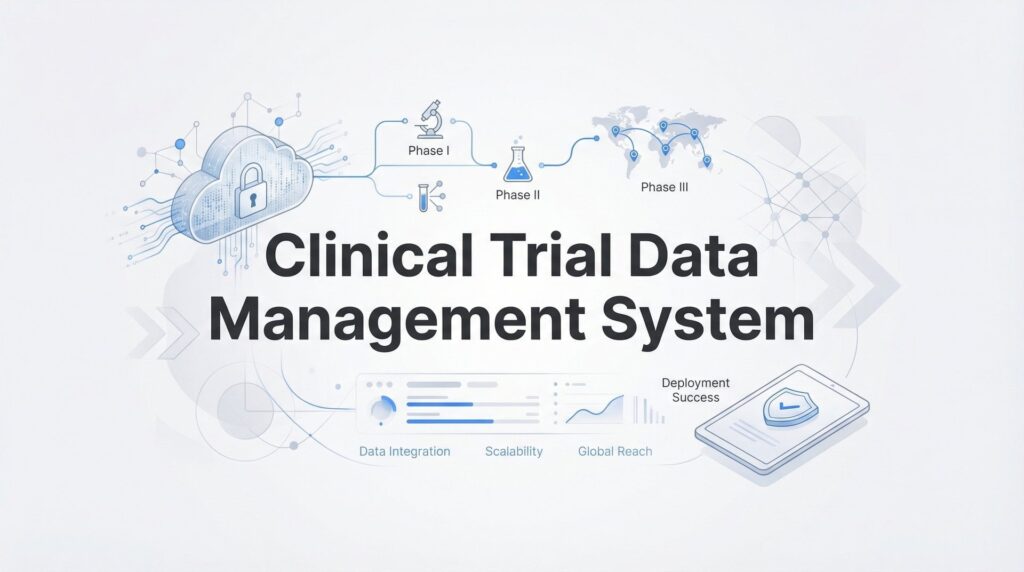
Clinical trials generate massive volumes of data—patient records, lab results, adverse events, genomic profiles, imaging files. Managing this data poorly means delayed submissions, compliance failures, and millions in wasted resources. Managing it well means faster approvals, cleaner audits, and actionable insights that actually move drug development forward.
This guide breaks down the top clinical trial data management systems available today. We evaluated each platform on regulatory compliance capabilities, data integration depth, scalability for multi-site trials, and real-world deployment track records. Whether you’re running a single-site Phase I or a global Phase III with federated data across 40 countries, you’ll find the right fit here.
1. Lifebit Trusted Research Environment
Best for: Multi-site trials requiring federated analysis of genomic and clinical data across jurisdictions
Lifebit Trusted Research Environment is a federated clinical data platform that enables secure analysis of sensitive trial data without moving it from source locations.
Where This Tool Shines
The fundamental challenge in modern clinical trials is analyzing data that legally cannot be centralized. When your Phase III spans 40 sites across Europe, Asia, and North America—each with different data protection laws—traditional CTDMS platforms force impossible choices between compliance and analysis speed.
Lifebit solves this by bringing computation to the data instead of moving data to computation. Your genomic data stays in Singapore. Your clinical records stay in Germany. Your real-world evidence stays in the UK. Yet you can run unified analyses across all of it as if it were in one place. This matters when regulatory timelines are measured in months and data transfer agreements take years.
Key Features
Federated Analysis Architecture: Data never leaves source systems—computation happens locally with only aggregated results shared, eliminating data transfer bottlenecks.
Trusted Data Factory: AI-powered harmonization transforms heterogeneous clinical and genomic data into analysis-ready formats in 48 hours instead of 12 months.
Comprehensive Compliance Framework: FedRAMP, HIPAA, GDPR, and ISO27001 certified out of the box, with continuous compliance monitoring built into the platform.
AI-Automated Airlock: First-of-its-kind governance system for secure data exports with automated disclosure risk assessment and audit trails.
Cloud-Agnostic Deployment: Deploy in your own cloud environment with full control—no vendor lock-in, no data custody concerns.
Best For
Government-sponsored precision medicine programs managing national-scale health data. Biopharma R&D teams running global trials with genomic endpoints. Academic consortia handling multi-institutional sensitive data. Any organization where data sovereignty requirements make traditional centralized CTDMS platforms legally impossible.
Pricing
Custom enterprise pricing based on deployment scale and data volume. Contact Lifebit for quotes tailored to trial complexity and regulatory requirements.
2. Medidata Rave
Best for: Large pharmaceutical companies running global Phase I-IV trials with complex regulatory requirements
Medidata Rave is the industry-leading EDC and clinical data management platform used by top pharmaceutical companies and CROs worldwide.
Where This Tool Shines
When you’re running 50 concurrent trials across 200 sites, you need a platform that won’t break. Medidata Rave has become the de facto standard in enterprise pharma because it handles scale without compromising on regulatory rigor. The platform processes billions of data points annually for companies like Pfizer, Novartis, and Johnson & Johnson.
What sets Rave apart is the depth of its integration ecosystem. Your lab data flows in automatically. Your interactive response technology connects seamlessly. Your safety database syncs in real-time. This eliminates the manual data reconciliation that typically consumes 30-40% of clinical operations time.
Key Features
Comprehensive EDC System: Built-in edit checks, validation rules, and query management with configurable workflows for any trial design.
Medidata Acorn AI: Clinical analytics engine that identifies protocol deviations, enrollment risks, and data quality issues before they impact timelines.
Extensive Integration Network: Pre-built connectors to labs, IRT systems, safety databases, and imaging platforms—reducing custom integration costs by 60-70%.
Patient Cloud Platform: Decentralized trial support including eConsent, ePRO, telemedicine, and wearable device integration.
Regulatory Submission Tools: Automated SDTM mapping and CDISC compliance with direct export to regulatory submission formats.
Best For
Enterprise pharmaceutical companies with dedicated clinical operations teams. Large CROs managing portfolios of sponsored trials. Organizations prioritizing vendor stability and regulatory track record over cost optimization.
Pricing
Enterprise pricing with per-study licensing models. Costs vary significantly based on trial complexity, patient volume, and module selection. Expect six-figure annual commitments for comprehensive deployments.
3. Veeva Vault CDMS
Best for: Organizations wanting unified clinical operations across data management, regulatory, and quality systems
Veeva Vault CDMS is a cloud-based clinical data management system within Veeva’s unified clinical operations suite.
Where This Tool Shines
The typical clinical operations stack involves 8-12 disconnected systems that don’t talk to each other. Your CTDMS lives in one silo. Your eTMF in another. Your regulatory submission system somewhere else entirely. Every handoff creates delay and error risk.
Veeva Vault eliminates this fragmentation by putting everything on one platform. Your clinical data, trial master file, regulatory submissions, and quality documents share the same underlying architecture. When a protocol amendment happens, it propagates automatically across all connected modules. This unified approach reduces submission preparation time by 40-50% according to Veeva’s published customer data.
Key Features
Unified Platform Architecture: Seamless integration with Veeva Vault eTMF, CTMS, and regulatory submission modules on shared infrastructure.
Continuous Cloud Updates: Modern SaaS architecture with quarterly feature releases and zero-downtime upgrades—no version lock-in.
Advanced Data Review Workflows: Configurable cleaning and validation processes with role-based access and automated query generation.
Native CRM Integration: Direct connection to Veeva CRM and Vault Quality for end-to-end commercial and compliance visibility.
Risk-Based Monitoring: Built-in analytics for identifying high-risk sites and data patterns requiring focused oversight.
Best For
Mid-to-large pharmaceutical companies already using Veeva’s commercial or regulatory products. Organizations prioritizing platform consolidation over best-of-breed point solutions. Teams wanting to reduce IT overhead from managing multiple vendor relationships.
Pricing
Subscription-based pricing that scales with module selection and trial volume. Bundled pricing available for organizations adopting multiple Vault products. Contact Veeva for custom quotes based on your clinical operations scope.
4. Oracle Clinical One
Best for: Complex adaptive trials and decentralized studies requiring real-time protocol flexibility
Oracle Clinical One is a unified clinical trial platform combining EDC, randomization, trial supply management, and analytics.
Where This Tool Shines
Adaptive trial designs are becoming standard in oncology and rare disease development. You need to modify randomization ratios mid-trial based on interim efficacy data. You need to add new arms without locking the database. You need supply chain adjustments to happen automatically when protocols change.
Oracle Clinical One handles this complexity by treating the protocol as dynamic rather than static. Real-time amendments propagate across EDC, randomization, and supply systems without the database locks that typically halt enrollment for weeks. This matters when every month of delay costs millions in extended trial operations.
Key Features
Integrated Platform Design: Single system for EDC, RTSM (randomization and trial supply management), and analytics—eliminating integration gaps.
Real-Time Protocol Amendments: Modify study design, randomization logic, and data collection forms without database locks or enrollment pauses.
Decentralized Trial Capabilities: Built-in eConsent, ePRO, telemedicine, and home health integration for hybrid trial models.
Advanced Analytics Engine: AI-driven insights for enrollment prediction, site performance, and data quality monitoring with predictive alerts.
Oracle Cloud Infrastructure: Global scalability with regional data residency options and enterprise-grade security controls.
Best For
Biopharma companies running adaptive or platform trials in oncology and rare diseases. Organizations conducting decentralized trials at scale. Teams needing tight integration between clinical operations and supply chain management.
Pricing
Enterprise licensing with pricing based on trial complexity and platform modules deployed. Oracle typically structures deals as multi-year commitments with volume discounts. Contact Oracle for custom quotes.
5. Clario
Best for: Trials with complex endpoints requiring cardiac safety, imaging, or patient-reported outcomes expertise
Clario is a specialized clinical trial platform focused on endpoint technology including cardiac safety, medical imaging, eCOA, and respiratory endpoints.
Where This Tool Shines
Not all clinical trials are created equal. If your primary endpoint is a simple lab value, generic EDC works fine. But when your endpoint is left ventricular ejection fraction measured via cardiac MRI, or QT interval prolongation requiring expert adjudication, you need specialized capabilities that general-purpose platforms don’t offer.
Clario built its platform specifically for these complex endpoint scenarios. Their cardiac safety service processes over 1.5 million ECGs annually with cardiologist oversight. Their imaging core lab handles everything from brain MRIs to retinal scans with regulatory-grade quality control. This specialization matters when endpoint adjudication quality directly determines regulatory approval.
Key Features
Cardiac Safety Excellence: Industry-leading ECG analysis with expert cardiologist oversight and regulatory-grade QT interval assessment.
Medical Imaging Core Lab: Comprehensive imaging capabilities across modalities with blinded independent central review and DICOM integration.
eCOA Platform: Patient-reported outcomes and clinical outcomes assessment with multi-language support and validated instruments.
Endpoint Adjudication: Independent expert committees with secure data review workflows and comprehensive audit trails.
Global Site Network: Established relationships with clinical sites worldwide for rapid deployment of endpoint technology.
Best For
Cardiovascular trials requiring rigorous cardiac safety monitoring. Oncology and neurology studies with imaging-based endpoints. Any trial where endpoint adjudication quality is regulatory-critical. Organizations wanting to outsource complex endpoint management to specialists.
Pricing
Service-based pricing that varies by endpoint complexity, patient volume, and adjudication requirements. Typically structured as per-patient or per-procedure fees. Contact Clario for quotes based on trial-specific endpoint needs.
6. Castor EDC
Best for: Academic medical centers and emerging biopharma needing rapid deployment and cost-effective solutions
Castor EDC is a user-friendly electronic data capture platform designed for rapid deployment and ease of use.
Where This Tool Shines
Academic researchers and small biopharma teams face a common problem: enterprise CTDMS platforms cost more than their entire trial budget and require six months of setup. You need to start enrolling patients next month, not next year. You need a system your clinical coordinators can learn in an afternoon, not a week-long training program.
Castor EDC was built for this reality. The drag-and-drop form builder lets you design case report forms without touching code. Most studies go from concept to first patient enrolled in under two weeks. This speed matters when you’re running investigator-initiated trials with limited budgets and tight timelines.
Key Features
Intuitive Form Builder: Drag-and-drop interface for creating case report forms without programming knowledge or IT support.
Rapid Study Setup: Complete study deployment often achieved within days rather than months—critical for time-sensitive trials.
Integrated eConsent and ePRO: Built-in modules for electronic informed consent and patient-reported outcomes without additional licensing.
Regulatory Compliance: GDPR and 21 CFR Part 11 compliant with comprehensive audit trails and data validation rules.
Accessible Pricing: Transparent pricing model that makes the platform viable for academic institutions and smaller organizations.
Best For
Academic medical centers running investigator-initiated trials. Emerging biopharma companies in early-stage development. Clinical research organizations supporting smaller sponsors. Any team prioritizing speed and simplicity over enterprise-scale features.
Pricing
Starts at approximately €300 per month for basic studies, scaling with patient volume and advanced features. Transparent pricing calculator available on their website. Significantly more affordable than enterprise alternatives.
7. TrialMaster by Ennov
Best for: Mid-size pharmaceutical companies wanting configurability without heavy IT requirements
TrialMaster is a flexible clinical data management system offering strong configurability for mid-size pharmaceutical companies.
Where This Tool Shines
Mid-tier pharmaceutical companies occupy an awkward middle ground. You’re too large for simple academic EDC tools but too small to justify the cost and complexity of enterprise platforms designed for companies running 200 concurrent trials. You need real configurability but can’t afford a dedicated IT team to maintain custom code.
TrialMaster addresses this gap with configuration-based customization. You can adapt workflows, validation rules, and data structures to match your specific protocols without writing code or hiring developers. This approach gives you flexibility comparable to custom-built systems at a fraction of the cost and maintenance burden.
Key Features
Configuration Without Coding: Extensive customization capabilities through configuration interfaces rather than custom development—reducing IT dependency.
Comprehensive Audit Trail: Detailed compliance features with complete data lineage tracking and regulatory-grade documentation.
Ennov Suite Integration: Seamless connection to Ennov’s regulatory and quality management modules for unified clinical operations.
Multi-Language and Multi-Region: Built-in support for international trials with localization capabilities and regional regulatory compliance.
Cost-Effective Mid-Market Positioning: Pricing structured for mid-tier sponsors without the premium costs of top-tier enterprise platforms.
Best For
Mid-size pharmaceutical companies with 5-20 concurrent trials. Organizations wanting enterprise features without enterprise complexity. Teams needing configurability but lacking dedicated IT resources. European sponsors prioritizing regional vendor relationships.
Pricing
Subscription-based pricing competitive with mid-market alternatives. Typically more affordable than Medidata or Oracle while offering more capability than entry-level EDC tools. Contact Ennov for quotes based on trial portfolio size.
8. Climedo
Best for: Decentralized and hybrid trial designs with strong patient engagement requirements
Climedo is a European clinical trial platform specializing in decentralized and hybrid trial designs.
Where This Tool Shines
Decentralized trials sound great in theory but often fail in execution. Patients drop out because your mobile app is clunky. Sites struggle because your remote monitoring tools don’t integrate with their workflows. Regulators question your data quality because your architecture wasn’t designed for distributed collection.
Climedo built their platform specifically for patient-centric decentralized models. The mobile data capture interface was designed with actual patients, not just clinicians. The architecture assumes data comes from homes, pharmacies, and telemedicine visits—not just clinical sites. This patient-first approach reduces dropout rates and improves data completeness in hybrid trial designs.
Key Features
Patient-Centric Mobile Capture: Intuitive mobile interfaces designed for patient self-reporting with offline capability and automatic syncing.
Hybrid Trial Support: Flexible architecture supporting fully decentralized, hybrid, and traditional site-based trial models within the same platform.
GDPR-First Architecture: Built specifically for European data protection requirements with privacy-by-design principles and regional data residency.
Real-World Evidence Collection: Integration with wearables, pharmacy systems, and electronic health records for pragmatic trial designs.
Rapid Deployment: Fast study setup optimized for pragmatic and post-market surveillance trials with simplified configuration.
Best For
European pharmaceutical companies running decentralized trials. Post-market surveillance studies requiring real-world evidence. Patient advocacy organizations conducting patient-powered research. Any trial where patient engagement and retention are critical success factors.
Pricing
Modular pricing based on trial design complexity and patient volume. Contact Climedo for quotes tailored to decentralized trial requirements and geographic scope.
9. OpenClinica
Best for: Organizations wanting maximum control and deployment flexibility through open-source architecture
OpenClinica is open-source clinical trial software offering full deployment flexibility with enterprise support options.
Where This Tool Shines
Proprietary CTDMS platforms create vendor lock-in. You’re dependent on their release schedule for bug fixes. You can’t customize beyond what their configuration tools allow. You’re stuck with their pricing model even when your needs change. For some organizations, this lack of control is unacceptable.
OpenClinica gives you the source code. You can deploy on-premise or in your own cloud. You can customize anything—from data models to user interfaces. You can audit the security implementation yourself rather than trusting vendor claims. This transparency and control matters for government agencies, academic institutions, and organizations with unique regulatory requirements that commercial platforms don’t address.
Key Features
Open-Source Core: Transparent codebase with full access to source code—eliminating vendor lock-in and enabling unlimited customization.
Flexible Deployment Options: On-premise, private cloud, or public cloud deployment with complete infrastructure control.
21 CFR Part 11 Compliance: Configurable validation and audit trail capabilities meeting regulatory requirements for electronic records.
Active Community Support: Large user community with shared configurations, extensions, and troubleshooting resources.
Enterprise Support Tiers: Professional support options available for organizations needing guaranteed response times and dedicated assistance.
Best For
Government health agencies with data sovereignty requirements. Academic research networks wanting to share configurations across institutions. Organizations with strong IT capabilities and customization needs. Teams prioritizing long-term cost control and vendor independence.
Pricing
Free open-source version available for download and self-deployment. Enterprise support packages with custom pricing based on deployment scale and service level requirements. Significantly lower total cost of ownership for organizations with internal IT resources.
Making the Right Choice
Choosing the right clinical trial data management system depends on your trial complexity, regulatory requirements, and data architecture needs. The platforms covered here span the full spectrum from enterprise-scale to specialized to cost-effective solutions.
For global trials with federated sensitive data across multiple jurisdictions, Lifebit’s Trusted Research Environment offers unmatched security and compliance. The federated architecture solves problems that traditional centralized systems cannot address—particularly when genomic data and strict data protection laws are involved.
Enterprise pharmaceutical companies running traditional large-scale trials will find Medidata Rave or Oracle Clinical One well-suited to their needs. These platforms handle massive scale, complex integrations, and regulatory rigor that come with global Phase III programs.
Mid-size sponsors benefit from Veeva Vault CDMS or TrialMaster’s balance of capability and configurability. You get enterprise features without the complexity and cost premium of top-tier platforms.
Academic teams and smaller biopharma should consider Castor EDC or OpenClinica for cost-effective, rapid deployment. These platforms prioritize ease of use and transparent pricing over enterprise-scale features you may not need.
For decentralized trial designs, Climedo and Oracle Clinical One lead the pack with patient-centric mobile capabilities and hybrid trial support. If your endpoints require specialized expertise—cardiac safety, medical imaging, or complex adjudication—Clario’s focused platform delivers regulatory-grade quality.
The bottom line: your CTDMS should accelerate your timeline, not create bottlenecks. Evaluate based on your specific regulatory landscape, data integration requirements, and operational scale. The right platform handles your data complexity while staying out of your team’s way.
Ready to explore how federated data architecture can transform your clinical trial operations? Get started for free with Lifebit’s Trusted Research Environment and see how secure, compliant analysis works without moving sensitive data.