

9 Best Cloud-Based Genomic Analysis Platforms in 2026
Genomic data is exploding. A single whole-genome sequence generates 200GB of raw data. Multiply that across thousands of patients, and you’re looking at petabytes of sensitive information that needs secure storage, compliant processing, and fast analysis. On-premise infrastructure can’t keep up.
Cloud-based genomic analysis platforms solve this by offering scalable compute, built-in compliance frameworks, and collaborative environments that accelerate research from years to months. But not all platforms are equal. Some prioritize security. Others focus on pipeline flexibility. A few do both.
This guide breaks down the top cloud-based genomic analysis platforms for 2026—evaluated on security, scalability, compliance certifications, and real-world performance for government health programs, biopharma R&D, and academic research.
1. Lifebit
Best for: Government health programs and pharma teams requiring federated analysis without data movement
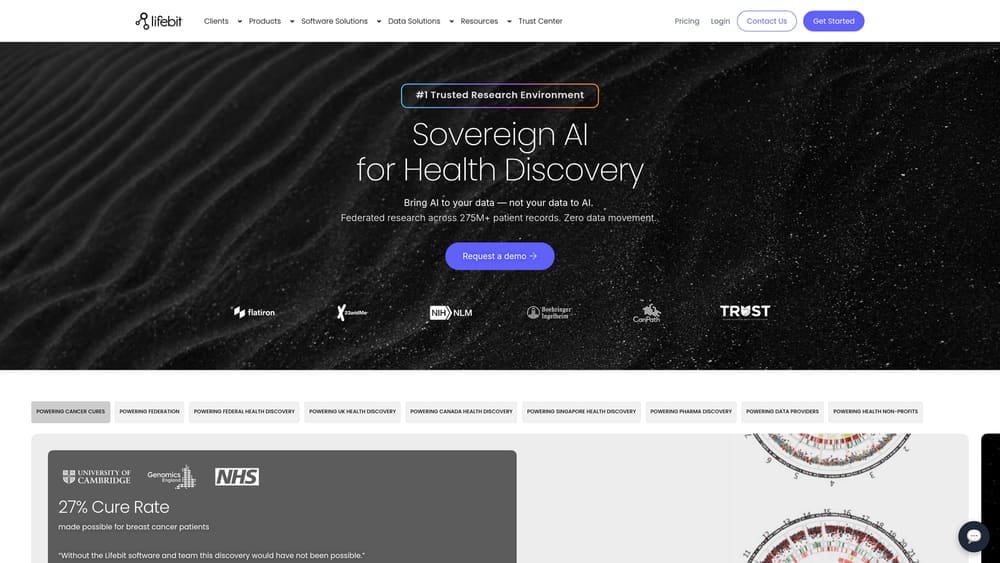
Lifebit is a federated genomic analysis platform trusted by national health programs worldwide for secure, compliant analysis.
Where This Platform Shines
The fundamental difference here is architectural. Instead of copying data to a central analysis environment, Lifebit brings the compute to wherever your data lives. This matters enormously when you’re managing genomic data across hospital networks, government agencies, or multinational research consortia where data movement creates compliance nightmares.
Organizations like NIH, Genomics England, and Singapore’s Ministry of Health use Lifebit to analyze over 275 million records without ever centralizing sensitive patient data. The platform deploys directly into your cloud environment—AWS, Azure, or GCP—meaning you maintain full data ownership and control.
Key Features
Federated Analysis Architecture: Compute travels to data locations; data never moves from original repositories.
Trusted Research Environment: Complete audit trails and governance controls for regulated research environments.
AI-Powered Data Harmonization: Standardizes disparate genomic datasets in 48 hours instead of the typical 12-month manual process.
Comprehensive Compliance: FedRAMP, HIPAA, GDPR, and ISO27001 certified from deployment day one.
Cloud-Agnostic Deployment: Install in your existing cloud infrastructure with no vendor lock-in requirements.
Best For
Government health agencies building national precision medicine programs where data cannot cross borders. Biopharma R&D teams collaborating across multiple sites with strict data governance requirements. Academic consortia managing multi-institutional studies with sensitive patient data.
Pricing
Custom enterprise pricing based on data volume and deployment model. Contact sales for specific configurations aligned with your compliance and scale requirements.
2. Terra
Best for: Academic researchers and consortia requiring open-source flexibility with deep GATK integration
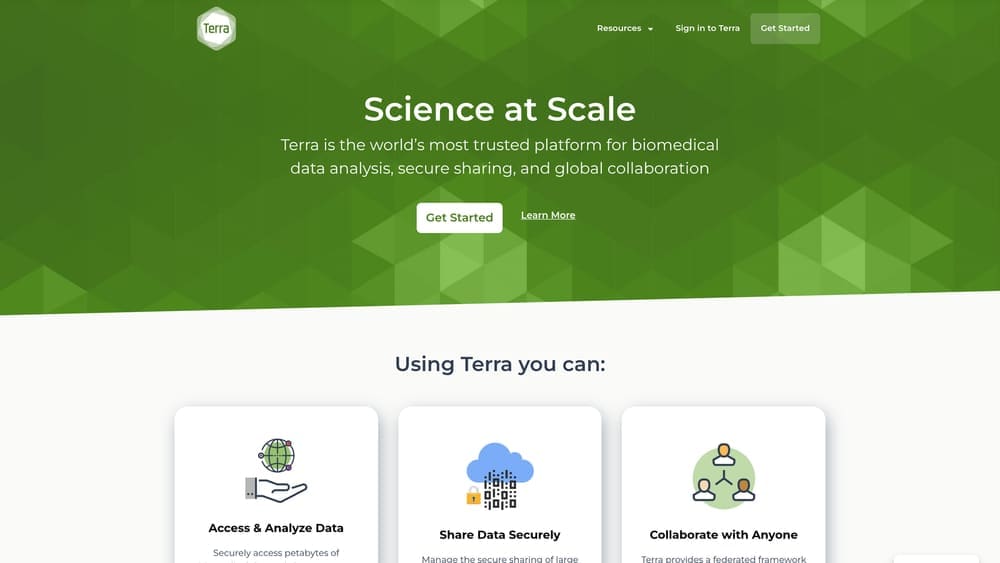
Terra is an open-source cloud platform developed by the Broad Institute for large-scale biomedical research.
Where This Platform Shines
Terra was built by the team that created GATK, which means the integration between platform and pipeline is seamless. If your research relies heavily on variant calling and you need maximum flexibility to customize workflows, this matters significantly.
The platform provides collaborative workspaces where research teams can share data, workflows, and compute resources without duplicating datasets. You also get immediate access to major public genomic datasets like gnomAD and TOPMed, eliminating the need to download and store massive reference files locally.
Key Features
Native GATK Integration: Optimized performance for variant calling workflows with direct Cromwell workflow engine support.
Google Cloud Infrastructure: Built on GCP for scalable compute and storage with global availability.
Collaborative Workspaces: Share datasets, workflows, and results across multi-institutional research teams.
Public Dataset Access: Pre-loaded access to gnomAD, TOPMed, and other major genomic reference databases.
WDL Workflow Language: Full support for Workflow Description Language with extensive community-contributed pipelines.
Best For
Academic research groups with computational genomics expertise who need workflow customization. Large consortia like All of Us or UK Biobank collaborators. Teams already invested in GATK pipelines looking for cloud scalability.
Pricing
Pay-as-you-go based on Google Cloud compute and storage usage. No platform licensing fees, but you pay for the underlying GCP resources consumed during analysis.
3. DNAnexus
Best for: Enterprise pharma teams requiring FDA-compliant infrastructure for clinical genomics applications
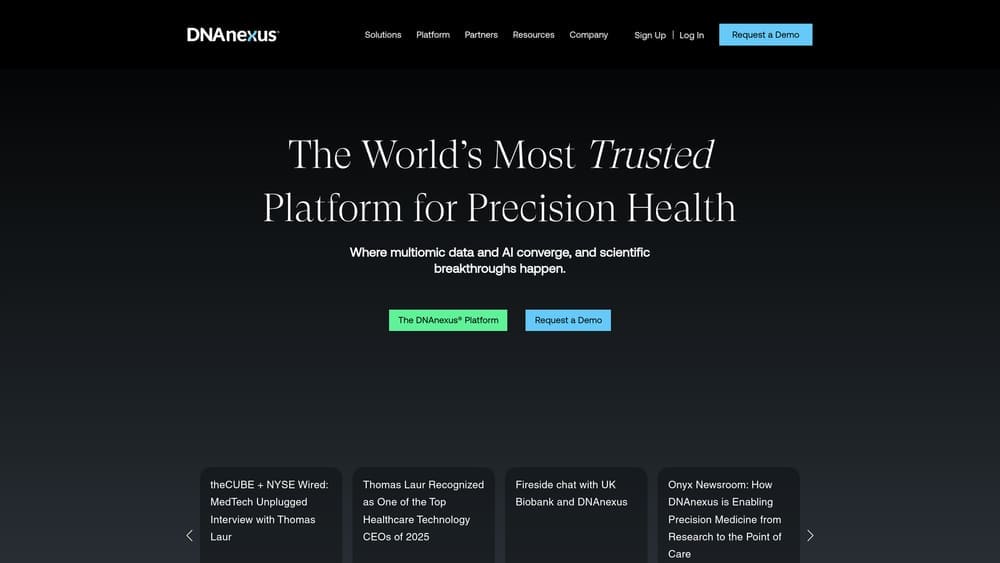
DNAnexus is an enterprise genomics platform built specifically for regulated environments and large-scale population studies.
Where This Platform Shines
When your genomic analysis needs to support clinical trials or diagnostic development, compliance isn’t optional. DNAnexus is FDA 21 CFR Part 11 compliant, which means it meets the regulatory requirements for electronic records in clinical applications.
The Apollo data management system handles multi-modal datasets—genomics, proteomics, imaging, and clinical data—in a unified environment. This becomes critical when you’re running integrated analyses across different data types for drug discovery or biomarker validation.
Key Features
FDA 21 CFR Part 11 Compliance: Validated infrastructure for clinical genomics applications requiring regulatory approval.
Apollo Data Management: Unified platform for managing genomic, proteomic, imaging, and clinical datasets together.
Multi-Cloud Deployment: Supports AWS, Azure, and private cloud installations for data sovereignty requirements.
Collaboration Tools: Built-in features for multi-site studies with role-based access controls and audit trails.
Pre-Built Pipelines: Validated workflows for common genomic analyses ready for immediate deployment.
Best For
Pharmaceutical companies running clinical trials with genomic endpoints. Diagnostic companies developing FDA-approved tests. Population health programs requiring enterprise-grade security and compliance certifications.
Pricing
Enterprise licensing with custom pricing based on data volume, user count, and compliance requirements. Contact sales for specific quotes aligned with your regulatory needs.
4. Seven Bridges
Best for: Multi-omics research requiring AI-driven integration across genomic, transcriptomic, and proteomic data
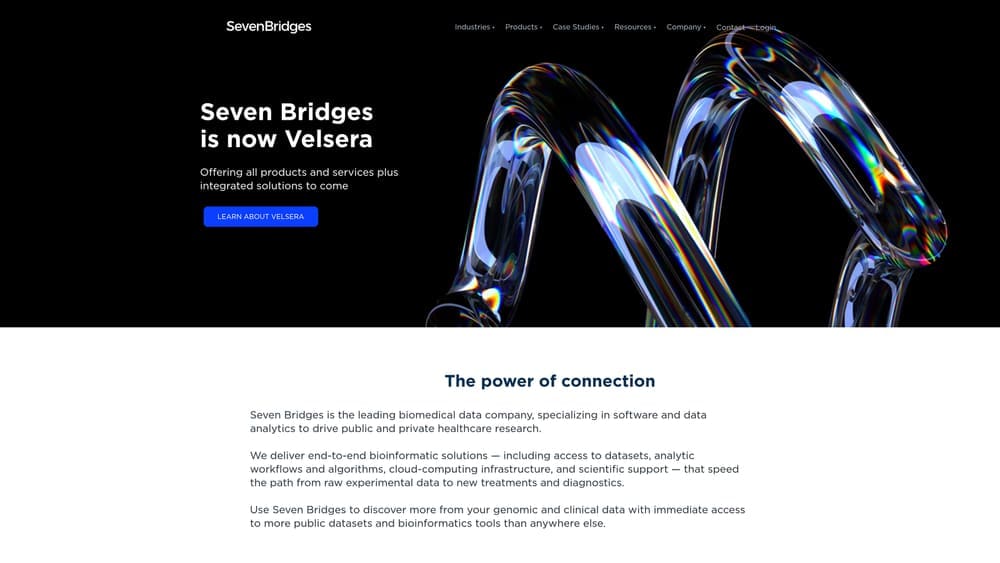
Seven Bridges is a multi-omics analysis platform with proprietary graph-based variant calling technology.
Where This Platform Shines
The GRAF pipeline represents a fundamentally different approach to variant calling. Instead of linear reference alignment, it uses graph-based methods that capture population diversity more accurately. This reduces reference bias and improves variant detection in underrepresented populations.
Seven Bridges also powers the NCI’s Cancer Genomics Cloud, which means it’s battle-tested on some of the largest oncology datasets in existence. The ARIA platform uses AI to integrate genomic, transcriptomic, and proteomic data for biomarker discovery—critical for precision oncology applications.
Key Features
GRAF Pipeline: Graph-based variant analysis that reduces reference bias and improves accuracy across diverse populations.
ARIA Multi-Omics Integration: AI-driven platform for combining genomic, transcriptomic, and proteomic datasets.
Cancer Genomics Cloud: Partnership with NCI providing validated pipelines for oncology research.
Workflow Language Support: Full compatibility with CWL and Nextflow for maximum pipeline flexibility.
CAVATICA Platform: Specialized environment for pediatric genomics research with built-in privacy protections.
Best For
Oncology research teams requiring multi-omics integration. Population genomics studies focused on diverse ancestries. Pediatric research programs needing specialized privacy controls and validated workflows.
Pricing
Enterprise pricing with custom quotes based on data volume and feature requirements. Academic discounts available for qualifying research institutions.
5. Illumina Connected Analytics (ICA)
Best for: Labs with Illumina sequencing instruments seeking seamless instrument-to-insight workflows
Illumina Connected Analytics is a cloud-based analysis platform optimized specifically for Illumina sequencing data.
Where This Platform Shines
If you’re running Illumina sequencers, the integration here eliminates manual data transfer steps entirely. Sequencing runs upload directly to ICA, where DRAGEN pipelines process data with hardware-accelerated performance that’s significantly faster than CPU-based alternatives.
The BaseSpace app ecosystem provides access to hundreds of analysis tools without requiring custom pipeline development. For clinical labs, the variant interpretation tools are designed to meet diagnostic-grade requirements with built-in quality controls.
Key Features
Direct Sequencer Integration: Automatic upload from Illumina instruments eliminates manual data transfer steps.
DRAGEN Pipelines: Hardware-accelerated secondary analysis delivering results in hours instead of days.
BaseSpace App Ecosystem: Access to hundreds of validated analysis applications without custom development.
Automated QC: Built-in quality control monitoring with alerts for run performance issues.
Clinical Variant Interpretation: Diagnostic-grade tools for variant classification and reporting.
Best For
Clinical diagnostic labs running Illumina instruments. Research facilities with high sequencing throughput requiring fast turnaround. Teams without dedicated bioinformatics staff who need validated, ready-to-use pipelines.
Pricing
Subscription-based pricing with bundled options available when purchasing Illumina sequencing instruments. Contact Illumina for specific pricing aligned with your sequencing volume.
6. Google Cloud Life Sciences (Vertex AI)
Best for: Organizations with data science teams building custom AI/ML models on genomic data
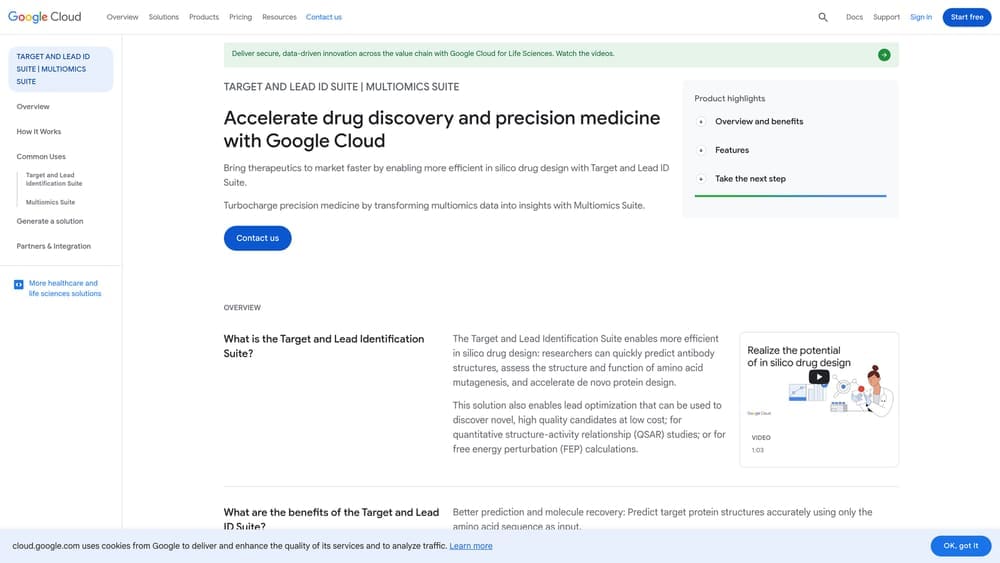
Google Cloud Life Sciences combines scalable genomics infrastructure with native AI capabilities for custom analysis development.
Where This Platform Shines
This isn’t a pre-built genomics platform—it’s infrastructure for building your own. If you have strong data science and engineering teams who need maximum flexibility, Google’s Vertex AI integration lets you train custom machine learning models directly on genomic datasets.
BigQuery’s genomic capabilities are particularly powerful for population-scale queries. You can run SQL queries across millions of variants in seconds, something traditional genomic databases struggle with. The Healthcare API enables integration with FHIR-formatted clinical data for combined genomic-phenotypic analyses.
Key Features
Vertex AI Integration: Train and deploy custom machine learning models on genomic datasets with managed infrastructure.
BigQuery Genomics: SQL-based querying of population-scale variant data with sub-second response times.
Variant Transforms: Automated pipelines for converting VCF files into BigQuery tables for analysis.
Healthcare API: FHIR data integration enabling combined genomic and clinical data analyses.
Global Infrastructure: Data residency options across multiple regions for compliance with local regulations.
Best For
Organizations with dedicated cloud engineering and data science teams. Research programs requiring custom AI/ML model development. Teams already invested in Google Cloud infrastructure looking to add genomics capabilities.
Pricing
Pay-as-you-go based on compute, storage, and AI services consumed. Pricing varies significantly based on analysis complexity and data volume—estimate costs using Google’s pricing calculator.
7. AWS HealthOmics
Best for: AWS-native organizations requiring purpose-built genomic storage and analysis services
AWS HealthOmics is a specialized AWS service for storing, querying, and analyzing genomic data at scale.
Where This Platform Shines
HealthOmics provides specialized storage tiers optimized for genomic file formats, which reduces costs compared to standard S3 storage. The variant store enables population-scale queries across millions of genomes without loading entire datasets into memory.
Ready2Run workflows provide validated pipelines for common analyses that integrate seamlessly with other AWS services. If you’re already using SageMaker for machine learning, the integration pathway is straightforward. The service is HIPAA eligible and SOC compliant, meeting requirements for regulated healthcare data.
Key Features
Specialized Genomic Storage: Optimized storage tiers for FASTQ, BAM, CRAM, and VCF files with cost savings over standard S3.
Ready2Run Workflows: Pre-validated pipelines for alignment, variant calling, and annotation ready for immediate use.
SageMaker Integration: Direct connection to AWS machine learning services for custom model development.
Variant Store: Query engine for population-scale variant analysis without loading full datasets.
HIPAA and SOC Compliance: Built-in compliance certifications for regulated healthcare applications.
Best For
Healthcare organizations already standardized on AWS infrastructure. Teams requiring cost-optimized genomic storage at petabyte scale. Research programs combining genomic analysis with AWS machine learning services.
Pricing
Pay-per-use model based on storage tier, compute for workflow runs, and variant store queries. Pricing varies by region and usage patterns—use AWS cost estimator for specific scenarios.
8. Benchling
Best for: Biotech R&D teams requiring integrated lab informatics with genomic sequence analysis
Benchling is a unified R&D platform combining electronic lab notebooks, LIMS, and genomic analysis capabilities.
Where This Platform Shines
Benchling solves a different problem than pure genomics platforms. It integrates sequence analysis with lab operations, experiment tracking, and molecular biology design tools. This matters enormously for biotech companies where genomic analysis is one step in a larger drug discovery workflow.
The Registry provides a single source of truth for all biological entities—plasmids, cell lines, proteins, antibodies—with version control and lineage tracking. For organizations requiring 21 CFR Part 11 compliance, Benchling provides validated workflows with complete audit trails connecting lab work to analytical results.
Key Features
Integrated ELN and LIMS: Combines electronic lab notebooks, inventory management, and sequence analysis in one platform.
Molecular Biology Design Tools: Plasmid design, primer design, and CRISPR guide RNA tools integrated with sequence data.
Biological Registry: Centralized database for all biological entities with version control and lineage tracking.
API-First Architecture: Extensive APIs for integrating with instruments, analysis tools, and enterprise systems.
21 CFR Part 11 Workflows: Validated processes with electronic signatures and audit trails for regulated environments.
Best For
Biotech companies where genomic analysis is part of broader R&D workflows. Synthetic biology teams requiring integrated design and analysis tools. Organizations needing unified lab informatics with genomic capabilities.
Pricing
Subscription-based pricing tiered by team size and feature requirements. Contact Benchling for specific quotes based on your organization’s needs.
9. BaseSpace Sequence Hub
Best for: Small research labs and clinical facilities requiring simple sequencing data management
BaseSpace Sequence Hub is Illumina’s cloud platform for sequencing data management and basic analysis.
Where This Platform Shines
BaseSpace prioritizes simplicity over advanced features. If you’re running a small lab with limited bioinformatics support, the automatic upload from Illumina instruments and straightforward app marketplace make getting started remarkably easy.
The free tier provides enough capacity for pilot projects and small-scale research without upfront investment. Automated run monitoring alerts you to quality issues immediately, and the collaboration features make sharing results with colleagues straightforward without complex permission management.
Key Features
Automatic Instrument Upload: Direct data transfer from Illumina sequencers without manual intervention.
App Marketplace: Over 100 analysis applications covering common genomic workflows and specialized analyses.
Run Monitoring: Automated quality control tracking with alerts for performance issues.
Simple Collaboration: Share datasets and results with colleagues through straightforward sharing controls.
Free Tier Available: No-cost option for small-scale use and pilot projects.
Best For
Small research labs without dedicated bioinformatics staff. Clinical facilities running targeted sequencing panels. Academic groups starting genomic research programs with limited budgets.
Pricing
Free tier for basic use with storage limits. Professional subscription unlocks advanced features, increased storage, and priority support—contact Illumina for current pricing.
Making the Right Choice
Picking the right cloud-based genomic analysis platform depends on three factors: your data sensitivity requirements, your team’s technical capabilities, and your collaboration needs.
For government health agencies and biopharma teams handling regulated, multi-site data—Lifebit’s federated approach eliminates data movement risks entirely. When data cannot cross borders or leave specific cloud environments, federated analysis isn’t just convenient—it’s the only compliant option.
Academic researchers with computational expertise thrive on Terra’s open-source flexibility. If you need maximum control over workflow customization and you’re already invested in GATK pipelines, Terra provides the infrastructure without restrictive licensing.
Enterprise pharma teams often choose DNAnexus or Seven Bridges for their compliance certifications and population-scale capabilities. When your analysis needs to support FDA submissions or multi-omics biomarker discovery, these platforms provide validated infrastructure that reduces regulatory risk.
Labs already committed to Illumina hardware should consider ICA or BaseSpace for seamless integration. The automatic upload and DRAGEN acceleration eliminate workflow friction that slows down high-throughput facilities.
Organizations with strong cloud engineering teams can build custom solutions on AWS HealthOmics or Google Cloud Life Sciences. This approach requires more upfront development but provides maximum flexibility for unique analytical requirements.
The bottom line: don’t choose based on features alone. Choose based on where your data lives, who needs to access it, and what compliance frameworks you must meet. Start there, and the right platform becomes obvious.
If you’re managing sensitive genomic data across multiple sites and need to maintain full control while enabling collaborative analysis, get started for free with Lifebit’s federated platform and see how analysis without data movement changes what’s possible.