

Unlocking Research Safely: A Deep Dive into Trusted Research Environments

Stop Bleeding Sensitive Data or Wasting 6+ Months on Approvals: What a Trusted Research Environment Actually Does
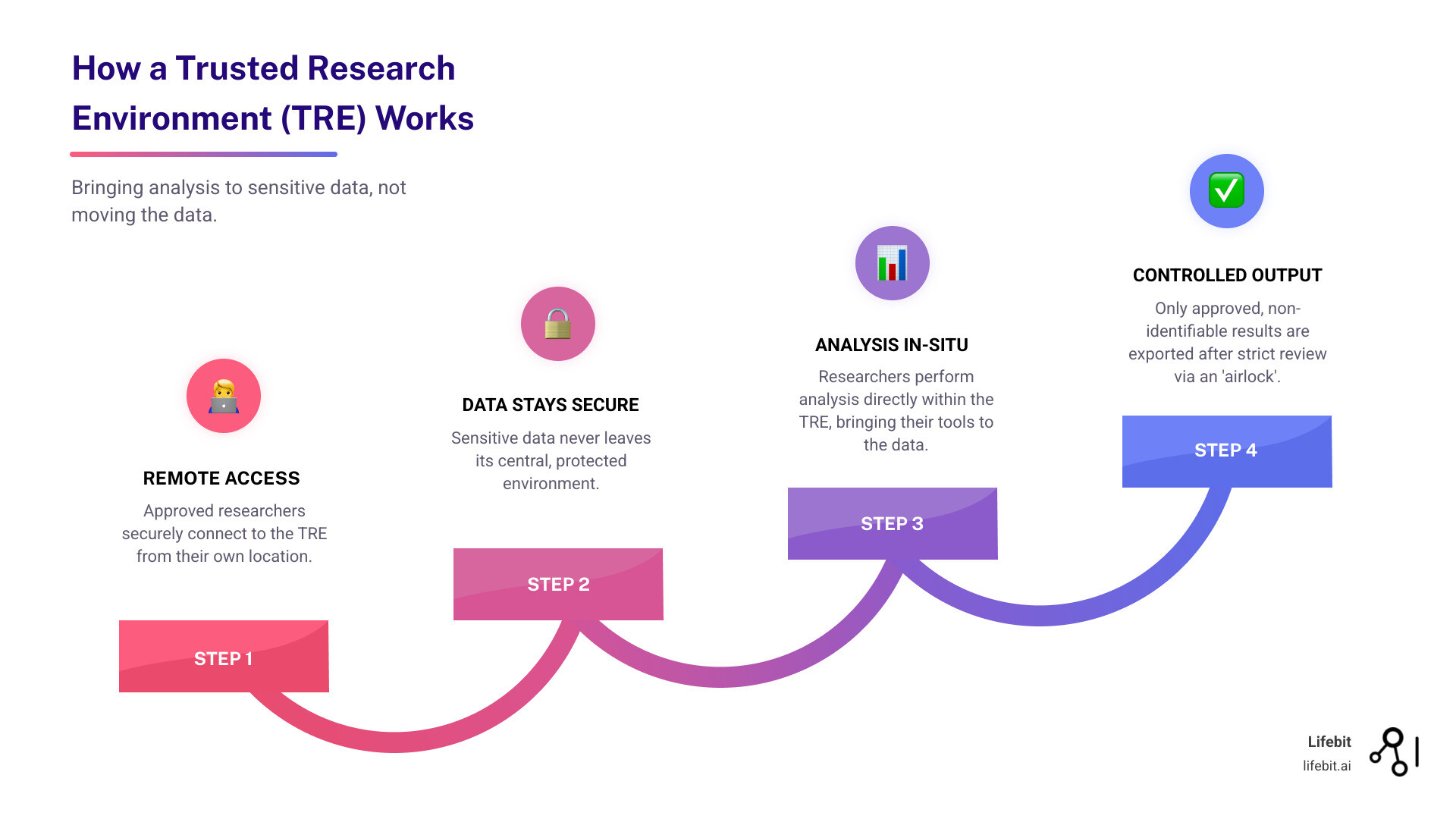
What is a trusted research environment? A Trusted Research Environment (TRE) is a highly secure computing environment that provides approved researchers with remote access to sensitive datasuch as health records, genomics, and clinical informationwithout requiring the data to leave its secure location. TREs enable analysis to be brought to the data, rather than moving data to researchers, ensuring patient confidentiality while enabling breakthrough research.
Key characteristics of a TRE:
- Secure, controlled access to sensitive datasets for approved researchers only
- Remote analysis capabilities without data extraction or duplication
- Built-in governance through frameworks like the Five Safes (Safe People, Safe Projects, Safe Settings, Safe Data, Safe Outputs)
- Full auditability of all research activities and data outputs
- Compliance-ready architecture aligned with GDPR, HIPAA, and emerging regulations like EHDS
We’re living through a data explosion in biomedical research. Health systems now generate petabytes of electronic health records, genomic sequences, imaging data, and real-world evidence. This data holds transformative potentialit can accelerate drug findy, improve patient outcomes, and power precision medicine.
But there’s a catch.
Much of this data remains locked away. Data controllers have a legal and ethical responsibility to protect sensitive patient information, and rightfully so. Yet research breakthroughs depend on accessing and analyzing diverse datasets at scale. The tension between data security and research accessibility has never been more acute.
Enter Trusted Research Environments. TREs solve this dilemma by creating secure digital spaces where researchers can analyze sensitive data remotelywithout the data ever leaving its protected environment. Instead of copying or transferring datasets (which increases risk), TREs bring the analysis to the data. This approach minimizes the risk of breaches, maintains patient confidentiality, and ensures compliance with stringent regulations.
As CEO and Co-founder of Lifebit, I’ve spent over 15 years working at the intersection of genomics, AI, and secure health data platforms, helping to pioneer federated data analysis that powers what is a trusted research environment across global healthcare organizations. Here’s everything you need to know about how TREs work, why they matter, and how they’re reshaping the future of research.
What is a trusted research environment? terminology:
- Lifebit’s Trusted Research Environment
- Trusted Research Environments Explained: How They Secure Global Health Data Sharing
- trusted research environment azure
How to Give Researchers Full Data Access—Without It Ever Leaving Your Control
At its heart, what is a trusted research environment? It’s a secure computing environment designed to offer safe remote access to sensitive data while keeping that data private. Think of it like a highly exclusive, digital library for sensitive information. Researchers can come in, use the information, and conduct their analysis, but the books (the raw data) never leave the building. This fundamental principle—bringing the analysis to the data, rather than moving the data—is what makes TREs so powerful and secure.
TREs are known by many names, reflecting their diverse applications and regional preferences. You might hear them called “data safe havens,” “secure data environments,” or “data clean rooms.” Regardless of the terminology, the core function remains the same: to provide a controlled, auditable space where sensitive information can be safely used for legitimate research purposes.
Data controllers, who are ultimately responsible for safeguarding sensitive datasets, use TREs to ensure maximum protection. These environments provide a single, secure location for valuable datasets and the necessary tools for analysis. This drastically reduces the risk of sensitive data being leaked or misused, giving data controllers far greater oversight and control over how their information is handled. For a deeper dive into these secure spaces, explore What is a Secure Data Environment (SDE)?.
How TREs Balance Unbreakable Security with Research Accessibility
The magic of TREs lies in their ability to strike a delicate balance: providing robust security without stifling the pace and potential of research. This is achieved through a multi-layered approach to control and governance.
Firstly, TREs establish a highly controlled environment. Access is strictly limited to approved researchers, and their activities within the TRE are carefully monitored and audited. This ensures that every interaction with the data is traceable, providing accountability and transparency. This controlled setting minimizes the risk of unauthorized access, data breaches, and misuse.
Secondly, TREs facilitate secure research collaboration. While the data remains in its secure home, researchers from different institutions or even different countries (such as those in the UK, USA, Canada, and Europe) can work together on the same datasets within the TRE. This fosters cross-functional research without the inherent risks of data sharing or duplication. Our Secure Research Environment provides further insights into how these environments are built.
The goal is to offer access to sensitive data, analysis tools, and computational power in a way that satisfies stringent governance requirements. This is particularly vital for health data, where patient confidentiality is paramount.
The Core Principles: Understanding the Five Safes Framework
To ensure this delicate balance between security and accessibility, TREs often operate under well-defined governance frameworks. The most widely adopted and respected of these is the Five Safes Framework, which originated from the UK Office for National Statistics (ONS) and has become a best practice in data protection across the UK and beyond.
The Five Safes provide a comprehensive structure for managing access to sensitive data:
-
Safe People: This principle ensures that only accredited, trained, and authorized researchers gain access to the data. Researchers must demonstrate a legitimate need for the data, undergo rigorous vetting, and complete mandatory training on information governance, privacy, and ethics. Think of it as ensuring only the most trustworthy individuals are allowed into our digital library.
-
Safe Projects: Every research project must be approved, ethically sound, and demonstrate a clear public benefit. The project’s purpose, methodology, and expected outcomes are scrutinized to ensure they align with ethical guidelines and legal frameworks. This prevents data from being used for inappropriate or harmful purposes.
-
Safe Settings: This refers to the physical and digital environment where the data is accessed. TREs are designed as secure, isolated computing environments. They often use virtual desktops, prevent external internet access, block copy/paste functions, and are fully auditable. The data never leaves this secure setting, acting as a digital “airlock” for inbound and outbound information. For more on this critical security feature, see our article on Airlock Data Export Trusted Research Environments.
-
Safe Data: Data within a TRE is typically de-identified, pseudonymized, or anonymized to protect individual privacy. This means direct identifiers are removed or replaced, making it extremely difficult to link the data back to an individual. The level of de-identification depends on the sensitivity of the data and the project’s requirements.
-
Safe Outputs: Before any research findings or results can leave the TRE, they undergo a rigorous review process. Output checkers scrutinize all aggregated analysis results, statistics, and visualizations to ensure that no sensitive person-level data can be inadvertently disclosed, preventing re-identification.
By adhering to these five principles, TREs provide a robust, transparent, and accountable system for secure data access. This framework has been adopted by various UK TREs, including Health Data Research-UK (HDR-UK) and the National Institute for Health Research Design Service (NIHR), demonstrating its widespread recognition and effectiveness. You can learn more about this foundational framework at The Five Safes Framework.
Slash Research Timelines from 6 Months to 6 DaysWithout Ever Risking a Data Breach
The shift towards TREs isn’t just about compliance; it’s about open uping unprecedented opportunities for research. Modern TREs offer a multitude of benefits that accelerate findy, reduce costs, and foster collaboration across the global research landscape.
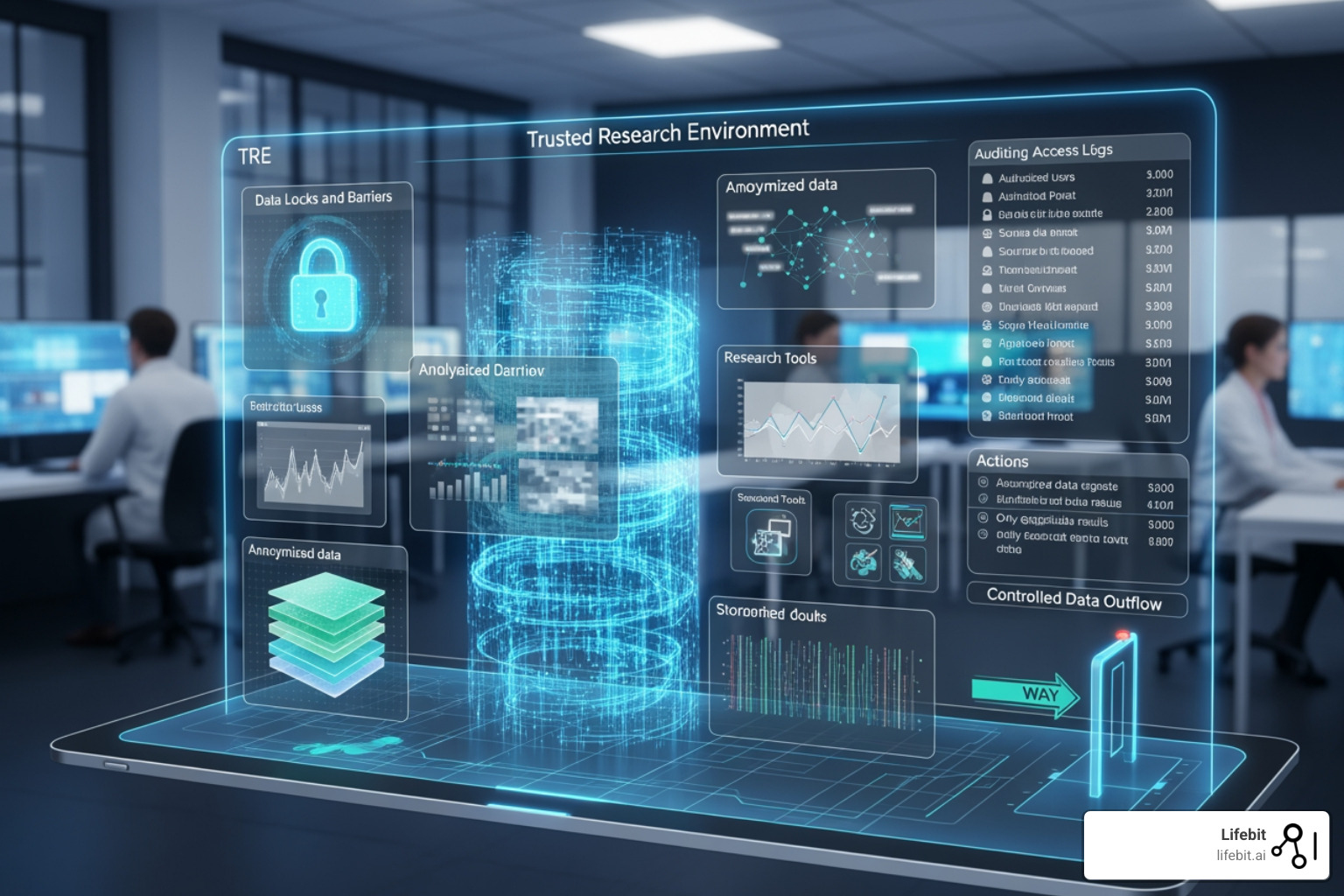
These environments are changing how we approach complex scientific questions, enabling us to derive insights that were previously out of reach. For a comprehensive overview of these advantages, dig into Advantages of Trusted Research Environments.
For Researchers: Accelerate Findings from Months to Days
Imagine the frustration of a researcher waiting months for data access, then struggling with incompatible tools and fragmented datasets. TREs eliminate these pain points, streamlining the research process and significantly accelerating the pace of findy.
- Faster Insights: By providing immediate, secure access to harmonized datasets and powerful analytical tools within a single environment, TREs allow researchers to move from hypothesis to insight in days or weeks, not months.
- Cross-Functional Research: TREs facilitate seamless collaboration across diverse research teams, disciplines, and geographical locations (e.g., London, New York, Singapore). This means geneticists can work alongside clinicians, epidemiologists, and AI specialists on the same secure data.
- Access to Advanced Tools: Modern TREs come equipped with a suite of cutting-edge analytical and statistical tools, including RStudio, Jupyter Notebook, SQL, Python, and even advanced AI/ML capabilities. This means researchers don’t waste time setting up their own environments or acquiring expensive software. Our guide on Data Analysis Trusted Research Environments explores this further.
- Reduced Administrative Burden: The often-cumbersome process of data application, transfer, and security checks is largely managed by the TRE, freeing up researchers to focus on what they do best: research.
For Data Owners: Guarantee Patient Confidentiality and Compliance
For organizations holding sensitive data, such as national health services, biobanks, and pharmaceutical companies, the primary concern is safeguarding patient privacy and adhering to stringent regulations. TREs provide the ultimate assurance.
- Unwavering Confidentiality: By ensuring data never leaves its secure environment, TREs virtually eliminate the risk of unauthorized access or breaches. Patient information within the TRE is pseudonymized, adding another layer of protection.
- Regulatory Compliance: TREs are built to align with global data protection regulations like GDPR in Europe and HIPAA in the USA, as well as emerging frameworks like the European Health Data Space (EHDS). This compliance is not an afterthought but is woven into the very architecture and operational policies of the TRE.
- Data Lineage and Auditability: Every action performed within a TREfrom data access to analysis runs and output generationis carefully logged and auditable. This provides an indisputable record of data usage, crucial for demonstrating accountability and trust.
- Improved Control: Data owners maintain granular control over who accesses their data, for what purpose, and what outputs can be generated. This level of oversight is unparalleled compared to traditional data sharing methods. For details on our approach to ensuring this, see the Lifebit Approach to Data Governance Security.
Inside the NHS COVID War Room: How a Trusted Research Environment Turned Raw Data into Life-Saving Policy in Weeks
The theoretical benefits of TREs translate into tangible, life-changing research across various domains. From public health crises to personalized medicine, TREs are proving indispensable. We explore how these environments are Accelerating Disease Research: Trusted Research Environments.
Powering National Health Initiatives and Biobanks
National health initiatives and large-scale biobanks, particularly in the UK, have been pioneers in adopting TREs. These environments are critical for managing vast amounts of health data and enabling population-level studies.
The UK Biobank, for instance, is a public health organization that created a biomedical database containing de-identified genomic information from 500,000 individuals. To empower global researchers, the UK Biobank allows users to freely download analyses and aggregate metrics, but accessing the database itself requires working within a secure, cloud-based TRE. Similarly, Genomics England hosts 100,000 genomes and research environments on secure platforms. These are not just data repositories; they are secure ecosystems designed for complex genomic research.
The NHS, particularly in the UK, has heavily invested in TREs to host health records. The NHS Digital TRE service for England, now succeeded by the NHS England Secure Data Environment (SDE), was instrumental in providing approved researchers with access to essential linked, de-identified health data to quickly answer COVID-19 related research questions. This service was used to guide national decision-making and recommend interventions to reduce the severity of COVID-19 outcomes. Research conducted within this TRE included investigating the impact of the pandemic on cardiovascular diseases and the association of COVID-19 vaccines with major venous, arterial, or thrombocytopenic events.
These examples highlight how TREs enable large-scale, compliant research, allowing us to leverage population-scale data for critical insights. The journey towards these capabilities, and the challenges along the way, are well-documented in research such as Next-Generation Capabilities in Trusted Research Environments.
What is a Trusted Research Environment’s Role in Pharma Innovation?
The pharmaceutical and biotechnology industries are experiencing a data revolution, with AI and machine learning offering “pharma companies a once-in-a-century opportunity,” according to McKinsey. TREs are central to using this potential.
- Biomarker Findy: Pharma companies can integrate diverse multi-omics data (genomics, proteomics, metabolomics) with clinical data within a TRE to identify novel biomarkers for disease diagnosis, prognosis, and treatment response. This is crucial for developing targeted therapies.
- Clinical Trial Analysis: TREs provide a secure environment for analyzing vast amounts of clinical trial data, allowing researchers to evaluate drug efficacy, identify adverse events, and stratify patient populations more effectively. The Yale University Open Data Access (YODA) Project, for example, provides no-cost access to data from 491 pharmaceutical trials to global researchers, enabling studies while maintaining patient confidentiality.
- Rare Disease Research: For rare diseases, data is often scarce and fragmented across multiple institutions. TREs facilitate the secure pooling and analysis of these limited datasets, accelerating the understanding of disease mechanisms and the development of new treatments. The Rare Disease Cures Accelerator Data Analytics Platform (RDCA-DAP) funded by the US FDA, for instance, focuses on increasing data sharing and collaboration among the entire rare disease ecosystem securely connecting rare disease data.
- Multi-omics Data Integration: Traditional research environments struggle with the volume and complexity of biomedical data. TREs provide the computational power and tools to integrate and analyze high-throughput sequencing data, medical imaging, and electronic health records, open uping deeper biological insights.
TREs are not just data repositories; they are innovation engines, enabling secure data commercialization and driving the next generation of pharmaceutical breakthroughs. Find more about this in Trusted Research Environments for Data Commercialization.
Your Secure Data Room Is Already Outdated: How Federated TREs Cut Risk and Unlock AI-Ready Insights
While existing TREs have made immense strides, the research landscape is constantly evolving, presenting new challenges. The organic growth of many TREs has sometimes led to data silos, infrastructure complexity, and a lack of standardization, hindering seamless interoperability. Researchers often face cumbersome application processes and limited computational power, especially for advanced AI/ML workloads.
The current generation of TREs, while excellent for observational studies using classical statistical methods, faces limitations in supporting “next-generation” requirements. These include handling wide ranges of data types (like genomic and imaging data that can be several terabytes), enabling sophisticated artificial intelligence algorithm development and export, managing truly big data, and facilitating timely data import and export. The absence of affordable and comprehensive software tools for de-identification and risk assessment, coupled with a heavy reliance on manual export checks, often slows down the research process.
How Next-Generation TREs Solve Current Limitations
The answer lies in the evolution of TREs themselves. Next-generation TREs are designed to address these limitations head-on, leveraging cutting-edge technology and architectural principles.
-
Cloud-Native Architecture: By building on public cloud infrastructure (such as those offered by Microsoft Azure or AWS), next-generation TREs gain unparalleled scalability and flexibility. This means they can dynamically adjust computational resources to meet the demands of even the most processor-intensive projects, from large-scale genomic analyses to complex AI model training. This also allows for flexible deployment models, whether on-premise, hybrid, or fully cloud-based, adapting to specific data governance requirements. For those interested in cloud-based solutions, our article on Trusted Research Environment Azure offers valuable insights.
-
Improved Interoperability and Standardization: Efforts like the SATRE (Standardised Architectures for Trusted Research Environments) specification are working to standardize TRE architecture and services. This paves the way for greater interoperability, allowing researchers to seamlessly access and analyze data across different TREs, rather than being confined to individual environments.
-
Automated Governance and Workflow: Advanced TREs are integrating automation into governance processes, from streamlined data access requests to intelligent airlock systems for output checks. While human oversight remains crucial (as 73% of TRE operators still rely on analyst knowledge rather than specialized tools for disclosure control), automation can significantly reduce administrative burdens and accelerate the research lifecycle.
The Next Frontier: Federated Learning and AI-Readiness
The true game-changer for next-generation TREs lies in their accept of federated learning and AI-readiness.
Federated learning is an innovative approach that allows AI algorithms to be trained across multiple decentralized datasets (e.g., in different hospitals or countries) without the data ever leaving its local TRE. Instead of centralizing raw data, the models “travel” to the data, learn from it, and then return the updated model parameters. This preserves privacy while enabling the development of powerful AI models from diverse, real-world data. This is a core component of our Federated Trusted Research Environment.
This capability is particularly exciting for pharma, where AI and machine learning are offering “a once-in-a-century opportunity” to transform research. Next-generation TREs are designed with AI-readiness in mind, offering features like GPU acceleration for deep learning, specialized tools for model development, and secure mechanisms for model export and deployment. They also integrate with FAIR data principles (Findable, Accessible, Interoperable, Reusable), ensuring that datasets are not only secure but also optimally structured for AI and machine learning applications.
The ability to perform real-time analytics and develop robust AI models from globally distributed, sensitive data, all within a secure and compliant framework, marks the next frontier for research. It allows us to open up insights from vast, previously inaccessible data pools, driving medical breakthroughs faster than ever before.
Your Next Blockbuster Trial or Policy Call Is Waiting in a TRE: Get Secure Access Before Your Rivals Do
We’ve explored what is a trusted research environment? and seen how these secure ecosystems are indispensable in today’s data-rich, privacy-conscious research landscape. From safeguarding patient confidentiality with the Five Safes Framework to accelerating drug findy and powering national health initiatives, TREs bridge the critical gap between data security and research accessibility.
The journey of TREs is one of continuous evolution. From their early days as basic secure computing environments, they are rapidly changing into sophisticated, cloud-native, and AI-ready platforms. The shift towards federated learning, in particular, represents a monumental leap, enabling global collaboration and AI development without compromising the fundamental principle that sensitive data must remain secure.
At Lifebit, we are proud to be at the forefront of this change, powering secure, real-time access to global biomedical and multi-omic data. Our platforms are designed to harmonize diverse datasets, enable advanced AI/ML analytics, and facilitate federated governance, ensuring that biopharma, governments, and public health agencies can conduct large-scale, compliant research and pharmacovigilance. We believe that by building research on a foundation of trust and cutting-edge technology, we can open up the full potential of health data to improve lives worldwide.
Discover how a next-generation Trusted Research Environment can transform your research