

Common Data Model: The Foundation for Scalable Healthcare Analytics
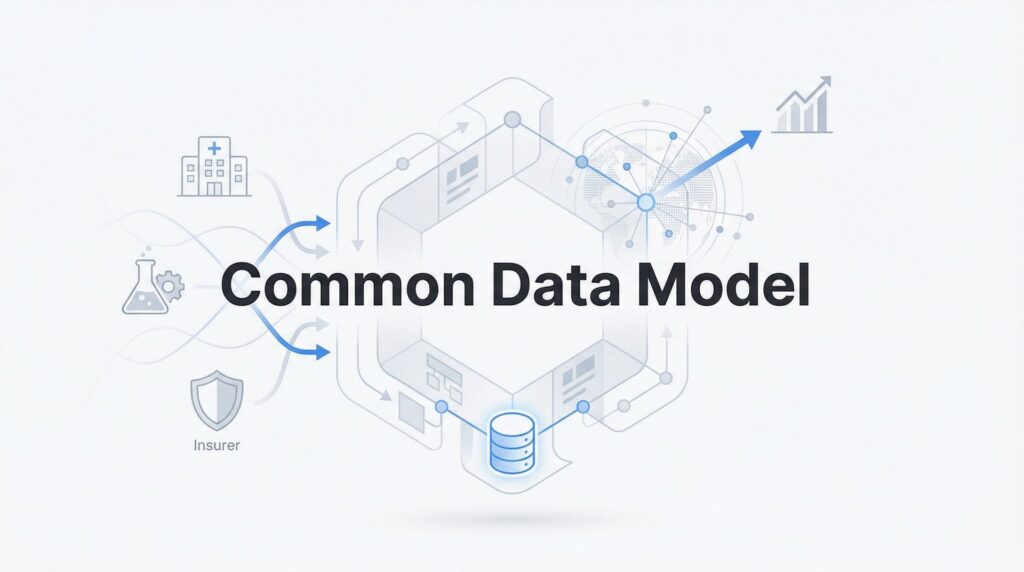
Your research team has spent six months preparing for a multi-site clinical study. The data is ready—patient records from five hospitals, genomic sequences from three labs, and claims data from two insurers. Then reality hits: the hospital in Boston codes diagnoses with ICD-10, the genomic lab uses proprietary identifiers, and the claims database speaks a completely different language. Before anyone can answer a single research question, your team faces months of manual data wrangling, custom scripts, and endless validation cycles.
This isn’t a workflow problem. It’s an infrastructure problem.
A Common Data Model solves this by establishing a single, standardized schema that all your source data maps into. Instead of building custom integrations for every new dataset, you transform everything once into a unified format. The result? Queries that used to require separate pipelines for each data source now run across your entire ecosystem. Regulatory submissions that demanded bespoke formatting now draw from a single, auditable structure. And multi-site collaborations that stalled on data incompatibility suddenly become operationally feasible.
This article breaks down what a CDM actually is, why precision medicine programs and biopharma R&D teams depend on them, and how modern organizations implement one without the traditional 12-month timeline. You’ll understand the landscape of CDM options, the technical realities of implementation, and the strategic decisions that determine success or expensive failure.
The Data Chaos Problem in Healthcare Research
Healthcare data doesn’t arrive in neat, queryable packages. It comes fragmented across hundreds of incompatible formats, each optimized for a different operational purpose. Your hospital’s EHR system stores clinical encounters in HL7 v2 messages. The genomic lab delivers variant calls in VCF files with custom annotations. The claims processor uses proprietary codes that don’t map cleanly to clinical terminologies. And the lab information system outputs results in yet another schema, often with non-standardized units and reference ranges.
Every format made sense to the vendor who built it. None of them were designed to work together.
When you launch a multi-site observational study, this fragmentation becomes operationally crippling. Each participating institution requires a custom Extract-Transform-Load pipeline. Your team writes bespoke code to handle Boston’s data structure, then rewrites it for the Chicago site’s completely different schema. A diagnosis of “Type 2 Diabetes” might appear as E11.9 in one system, 250.00 in another’s legacy codes, and “DM2” in a third’s free-text fields. Medications get even worse—one database uses NDC codes, another uses hospital formulary IDs, and a third stores only drug names with inconsistent spelling.
The financial cost is measurable. Organizations routinely spend six to eighteen months on data preparation before analysis begins. A 2025 survey of academic medical centers found that data wrangling consumed 60-80% of research project timelines, with teams spending more on ETL development than on the actual scientific questions they set out to answer.
But the strategic cost runs deeper. Regulatory bodies now demand reproducible, auditable analytics. The FDA expects you to demonstrate that your real-world evidence came from validated, standardized data processing. The EMA requires transparency in how multi-country datasets were harmonized. When every study uses custom ETL code written by different developers, reproducibility becomes nearly impossible to prove. You can’t easily re-run analyses, validate findings across institutions, or demonstrate that your data transformations didn’t introduce bias.
This is where the Common Data Model stops being a technical nicety and becomes strategic infrastructure. Without it, every new dataset is a custom integration project. With it, you transform data once and query it forever.
How a Common Data Model Actually Works
A Common Data Model defines a standardized schema—a fixed set of tables, fields, and relationships that all your source data maps into. Think of it as a universal translator. Your hospital’s EHR speaks one dialect, your genomic database speaks another, but they both get transformed into the same CDM language. Once that transformation happens, you can write a single query that runs across everything.
The technical architecture has three layers. First, you have your source data in its native formats—FHIR resources, HL7 messages, CSV exports, genomic VCF files, whatever your systems produce. Second, you have the transformation layer where ETL or ELT processes map source fields to CDM tables. Third, you have the standardized CDM tables themselves, now ready for analytics, machine learning, or regulatory reporting.
Here’s what makes a CDM more powerful than simple data warehousing: it standardizes semantics, not just structure. A traditional data warehouse might store diagnoses in a “conditions” table, but each row could use different coding systems—ICD-9, ICD-10, SNOMED-CT, or local hospital codes. A CDM goes further by mapping all those codes to standardized vocabularies. Every diagnosis gets represented using SNOMED-CT concepts. Every lab test maps to LOINC codes. Every medication resolves to RxNorm identifiers.
This semantic standardization enables something impossible in traditional warehouses: you can query for “patients with Type 2 Diabetes” and automatically capture every way that diagnosis appears in your source data. The CDM’s vocabulary mappings handle the translation—E11.9, 250.00, and SNOMED code 44054006 all resolve to the same concept. Your query doesn’t need to know about source-specific codes. It just asks for the standardized concept, and the CDM delivers every matching record.
The transformation process itself follows a defined pattern. Your ETL pipeline reads source data, applies vocabulary mappings, handles unit conversions, resolves temporal inconsistencies, and writes the result into CDM tables. A patient record that arrived as an HL7 ADT message gets decomposed into standardized Person, Visit, Condition, Procedure, and Drug Exposure tables. A genomic VCF file gets parsed into variant tables with standardized gene identifiers and consequence annotations.
The CDM also defines relationships between tables. The Person table links to Visit Occurrence, which links to Condition Occurrence and Procedure Occurrence. This relational structure lets you answer complex questions: “Find all patients diagnosed with heart failure who received a specific intervention within 30 days and had elevated troponin levels.” That query spans multiple source systems, but the CDM’s standardized schema makes it a straightforward SQL statement.
Critically, the CDM preserves provenance. Every transformed record maintains links back to its source system and original identifiers. If you need to audit a finding, you can trace it back to the exact EHR entry or lab result that generated it. This auditability is non-negotiable for regulatory submissions and quality assurance.
OMOP, Sentinel, PCORnet: Choosing the Right Model
Not all Common Data Models are created equal. Three major standards dominate healthcare research, each optimized for different use cases and regulatory contexts. Choosing the wrong one doesn’t just create technical debt—it can lock you out of collaborative networks and regulatory pathways.
The OMOP Common Data Model, maintained by the Observational Health Data Sciences and Informatics collaborative, has become the de facto standard for observational research and pharmacovigilance. OMOP was designed from the ground up for large-scale, multi-site studies that need to run identical analyses across distributed data networks. Its vocabulary system is exceptionally comprehensive, covering diagnoses (SNOMED-CT), procedures (SNOMED, CPT, HCPCS), drugs (RxNorm, NDC), and lab tests (LOINC). The model includes over 50 standardized tables spanning clinical events, healthcare utilization, and derived analytics.
OMOP’s strength lies in its open-source ecosystem. The OHDSI community has built a complete analytics stack on top of the CDM: standardized analysis packages, quality assurance tools, and a network of over 200 participating institutions. If you implement OMOP, you gain immediate access to validated phenotype definitions, drug safety surveillance methods, and a global research network. Major national precision medicine programs—including the NIH’s All of Us Research Program—have adopted OMOP as their foundational data model. Organizations looking to understand implementing OMOP for healthcare data can significantly accelerate their CDM journey.
Sentinel CDM takes a different approach, optimized specifically for FDA drug safety surveillance. Developed by the FDA’s Sentinel Initiative, this model focuses on rapid querying of claims and EHR data to detect adverse events and safety signals. Sentinel’s architecture emphasizes distributed queries—the CDM stays at each participating institution, and standardized analysis code runs locally without centralizing patient data. The vocabulary mappings prioritize drug exposure and outcome definitions relevant to post-market surveillance.
If your primary use case involves regulatory safety monitoring or you need to participate in FDA-coordinated surveillance networks, Sentinel offers purpose-built infrastructure. Its distributed query model aligns well with privacy regulations that restrict data movement. However, Sentinel’s scope is narrower than OMOP—it excels at pharmacovigilance but lacks OMOP’s breadth for general observational research.
PCORnet CDM was designed by the Patient-Centered Outcomes Research Institute for pragmatic clinical trials and patient-centered outcomes research. Its data model emphasizes patient-reported outcomes, social determinants of health, and longitudinal follow-up—elements often missing from claims-focused models. PCORnet’s governance structure involves patients as stakeholders, and its network architecture supports both observational studies and embedded clinical trials.
The practical decision often comes down to your institutional priorities. If you’re building a national precision medicine program that needs to integrate genomic, clinical, and environmental data for research at scale, OMOP’s comprehensive vocabulary system and global network make it the clear choice. If you’re a biopharma company focused on post-market safety surveillance and need to align with FDA infrastructure, Sentinel is purpose-built for that mission. If you’re running pragmatic trials that require patient engagement and real-world effectiveness data, PCORnet’s patient-centered design offers advantages.
Some organizations implement multiple CDMs, maintaining OMOP for research and Sentinel for regulatory reporting. This dual-model approach adds complexity but can be justified when you need to participate in both ecosystems. The key is understanding that your CDM choice isn’t just a technical decision—it determines which collaborative networks you can join, which regulatory pathways you can access, and which analytics tools you can leverage.
Implementation Realities: From Months to Days
The gap between CDM theory and implementation reality has traditionally been measured in months of painful manual work. A typical CDM implementation follows a predictable pattern: six months of requirements gathering and data profiling, another six months of ETL development and vocabulary mapping, and then ongoing cycles of validation and remediation. Organizations routinely budget 12 to 18 months from kickoff to production-ready CDM.
The bottleneck isn’t writing SQL transforms. It’s the semantic mapping challenge. Your source data says “CBC w/ diff.” The CDM requires a LOINC code. Which of the 47 possible LOINC codes for complete blood counts with differential is the correct match? Does your source system’s “Hemoglobin A1c” map to LOINC 4548-4, 17856-6, or one of the dozen other HbA1c codes that differ by method, specimen type, or reporting format?
Multiply that decision across thousands of lab tests, tens of thousands of diagnoses, and hundreds of thousands of medication entries, and you understand why traditional implementations drag on. Teams spend weeks in meetings with clinical SMEs, debating whether a particular source code should map to this SNOMED concept or that one. Data quality issues compound the problem—misspelled drug names, inconsistent units, temporal anomalies where discharge dates precede admission dates.
But implementation timelines are compressing dramatically. AI-powered harmonization tools can now automate the vocabulary mapping process that used to consume months of manual effort. These systems use large language models trained on medical terminologies to suggest mappings, then apply active learning to improve accuracy based on expert corrections. What used to require a team of clinical informaticists reviewing spreadsheets for months can now happen in days, with human experts focusing only on ambiguous edge cases.
The technical architecture of modern implementations has also evolved. Instead of batch ETL jobs that run overnight and fail mysteriously, organizations are moving to streaming architectures that validate and transform data continuously. When a new patient record arrives in your EHR, it gets mapped to the CDM in near real-time, with automated quality checks flagging anomalies immediately rather than months later during validation.
Three factors determine whether your CDM implementation takes 18 months or 6 weeks. First, executive sponsorship. CDM projects fail when they’re treated as IT initiatives rather than strategic infrastructure. You need clinical leadership, data governance, and IT aligned on priorities and willing to make hard decisions about data quality standards. Second, clear governance. Who decides when a vocabulary mapping is “good enough”? What’s the process for handling source data that doesn’t fit cleanly into CDM tables? Organizations that nail governance up front avoid the endless rework cycles that plague poorly scoped projects.
Third, iterative validation with domain experts. The mistake many teams make is building the entire CDM in isolation, then presenting it to clinicians for validation at the end. By then, you’ve baked in months of incorrect assumptions. Successful implementations validate incrementally—transform a subset of data, run it past clinical experts, fix issues, then expand scope. This iterative approach catches problems early when they’re cheap to fix.
The build-versus-buy decision also matters. Building CDM infrastructure internally gives you maximum control and customization, but requires specialized expertise in healthcare vocabularies, ETL architecture, and data quality frameworks. Hiring consultancies can accelerate timelines but often leaves you dependent on external teams for ongoing maintenance. Platform-based approaches that automate harmonization offer the fastest time-to-value, though they require trusting a vendor’s mapping logic and may limit customization.
CDMs in Action: Precision Medicine and Drug Development
The strategic value of a Common Data Model becomes concrete when you see it deployed at scale. National precision medicine programs use CDMs to unify genomic, clinical, and environmental data across hundreds of institutions—something impossible with traditional data integration approaches.
Genomics England, which has sequenced over 100,000 whole genomes for rare disease and cancer patients, relies on CDM infrastructure to link genomic variants with longitudinal clinical outcomes. Their researchers can query: “Find all patients with pathogenic BRCA1 variants who developed breast cancer before age 50, and compare their treatment responses.” That query spans genomic databases, hospital EHRs, cancer registries, and national mortality data—all unified through a common schema that makes the complexity invisible to the researcher.
The federated analytics capability is particularly powerful. With CDM-standardized data, you can run analyses across institutions without moving sensitive records. A researcher in London writes a query against the OMOP CDM. That same query executes at participating hospitals across the UK, each analyzing their local CDM-transformed data. Only aggregate results get shared back, preserving patient privacy while enabling population-scale insights. This federated approach is how the European Health Data Space plans to enable cross-border research without violating GDPR’s strict data movement restrictions.
Biopharma companies leverage CDM-harmonized real-world data to accelerate drug development pipelines. Instead of spending months integrating claims databases, EHR data, and specialty registries for each new indication, they maintain a CDM-standardized data lake that’s always analysis-ready. When evaluating a new oncology target, they can immediately query treatment patterns, survival outcomes, and biomarker associations across millions of patient records—analysis that used to take quarters now takes days. Understanding biopharma data integration strategies is essential for organizations pursuing this approach.
Post-market surveillance becomes operationally feasible at scale. When a safety signal emerges, companies can rapidly query CDM-standardized data across their entire real-world evidence network to assess risk. The FDA increasingly expects this kind of rapid, reproducible analysis in regulatory submissions. Having your data in a validated CDM isn’t just convenient—it’s becoming table stakes for regulatory engagement.
Academic medical centers use CDMs to power clinical decision support and quality improvement initiatives. When all your patient data lives in a standardized schema, you can deploy phenotype algorithms that identify patients who might benefit from specific interventions. A CDM-powered system can flag patients with uncontrolled diabetes who haven’t had recent HbA1c testing, or identify heart failure patients not on guideline-directed medical therapy—use cases that require querying across multiple clinical domains in real-time.
The economics matter too. Organizations that implement CDMs report significant reductions in per-study data preparation costs. Instead of custom ETL development for each research question, you write queries against the CDM. A study that used to require six months of data engineering can launch in weeks. The upfront investment in CDM infrastructure pays back quickly when you’re running dozens of studies per year.
Building Your CDM Strategy: A Practical Framework
Strategy starts with honest prioritization. What questions must your data answer in the next twelve months? If you’re a national health agency building a precision medicine program, you need to link genomic variants with clinical outcomes across institutions—OMOP’s comprehensive vocabulary system and federated analytics capabilities align with that mission. If you’re a biopharma company focused on post-market safety surveillance, Sentinel’s FDA-aligned infrastructure might be your fastest path to regulatory credibility.
Don’t start with “we need a CDM.” Start with “we need to answer these specific research questions, and here’s why our current data infrastructure can’t support them.” That clarity prevents scope creep and helps you make rational tradeoffs when implementation challenges arise.
Next, assess your data readiness with brutal honesty. Inventory every source system that needs to feed your CDM. How clean is that data? Can you reliably identify unique patients across systems? Are diagnosis codes actually coded, or buried in free-text notes? Do medication records include dosing information, or just drug names? The answers determine whether you’re six weeks or six months from a working CDM.
Vocabulary gaps are often the surprise blocker. Your lab system uses local test codes that have no published mappings to LOINC. Your pharmacy system stores drug names with inconsistent spelling and no NDC codes. Identifying these gaps early lets you prioritize remediation or accept that some data will require manual mapping. Robust data harmonization services can help bridge these gaps efficiently.
The build-versus-buy decision hinges on your team’s capabilities and timeline constraints. Building internally makes sense if you have experienced healthcare data engineers, clinical informaticists who understand vocabulary standards, and executive patience for a 12-month timeline. You’ll own the infrastructure completely and can customize to your exact requirements.
Hiring consultancies accelerates timelines but creates dependency. You’ll get experienced teams who’ve implemented CDMs before, but you’re paying premium rates and may struggle to maintain the system after they leave. Make sure knowledge transfer is contractually defined, not an afterthought.
Platform-based automation offers the fastest time-to-value. Modern data analytics platforms use AI to automate vocabulary mapping, data quality checks, and ETL pipeline generation. You can go from raw source data to a validated CDM in weeks rather than months. The tradeoff is less customization and dependence on vendor-maintained mapping logic. For organizations under time pressure or lacking specialized expertise, this tradeoff often makes sense.
Governance can’t be an afterthought. Define clear ownership: who approves vocabulary mappings? Who decides data quality thresholds? What’s the process for handling source data that doesn’t fit the CDM schema? Organizations that nail governance up front avoid the endless committee meetings and rework cycles that plague poorly scoped projects. A comprehensive approach to decentralized data governance can provide the framework needed for multi-site implementations.
Plan for iteration, not perfection. Don’t try to map every source system and achieve perfect data quality before launching. Start with your highest-priority use case, transform the data needed to answer that question, validate with domain experts, and expand from there. This iterative approach builds momentum and delivers value while you’re still refining the broader implementation.
The Infrastructure Decision That Determines Your Research Velocity
A Common Data Model isn’t a data warehouse project or a compliance checkbox. It’s the foundational infrastructure that determines whether your organization can operate at the speed modern healthcare research demands. Without it, every new dataset is a custom integration project, every multi-site study requires bespoke ETL development, and regulatory submissions depend on manual data preparation that can’t be validated or reproduced.
With a CDM in place, your research velocity transforms. Queries that used to require months of data engineering run in minutes. Multi-site collaborations that stalled on data incompatibility become operationally straightforward. Regulatory submissions draw from auditable, standardized pipelines that demonstrate reproducibility. And federated analytics become possible—you can analyze data across institutions without moving sensitive records, unlocking collaborations that privacy regulations previously blocked.
The strategic choice isn’t whether to implement a CDM. Organizations serious about precision medicine, real-world evidence, or population health analytics will implement one, because operating without standardized data infrastructure becomes competitively untenable. The choice is whether you’ll spend 18 months on manual implementation or compress that timeline through automated harmonization.
Your CDM strategy should align with your research priorities. If you’re building a national precision medicine program, OMOP’s comprehensive vocabularies and global research network provide the foundation. If you’re focused on regulatory safety surveillance, Sentinel’s FDA-aligned infrastructure offers the fastest path to credibility. If you’re running pragmatic trials, PCORnet’s patient-centered design aligns with your mission.
Implementation success hinges on three factors: executive sponsorship that treats CDM as strategic infrastructure, clear governance that prevents endless rework cycles, and iterative validation that catches problems early. Organizations that nail these fundamentals can compress traditional 12-18 month timelines to weeks, particularly when leveraging AI-powered harmonization that automates the vocabulary mapping bottleneck.
The economics are straightforward. CDM infrastructure requires upfront investment, but pays back quickly when you’re running multiple studies per year. The alternative—custom ETL for every research question—scales linearly with cost and time. The CDM scales logarithmically: high initial cost, then marginal cost per additional study approaches zero.
Federated, AI-powered research at scale depends on this foundation. You can’t run privacy-preserving analytics across institutions without standardized schemas. You can’t deploy machine learning models that work across datasets without semantic interoperability. You can’t meet regulatory expectations for reproducible, auditable analysis without validated data pipelines. The CDM is the infrastructure layer that makes all of it possible.
If your organization is managing multi-site studies, integrating genomic and clinical data, or building real-world evidence capabilities, your CDM timeline matters strategically. Every month spent on manual data wrangling is a month your competitors spend answering research questions. Get started for free and see how automated data harmonization can compress your CDM implementation from quarters to weeks.