

How to manage biotech data without going broke

Why Biotech Data Management Determines Whether Your Research Succeeds or Stalls
Biotech data management is the practice of organizing, storing, securing, and making research data accessible and reusable across your entire organization — from raw instrument output to AI-ready datasets.
Here’s what effective biotech data management looks like in practice:
| What It Involves | Why It Matters |
|---|---|
| Standardizing file naming and formats | Reduces time wasted searching and fixing errors |
| Centralizing data from labs, CROs, and instruments | Eliminates silos that slow down research |
| Applying FAIR principles (Findable, Accessible, Interoperable, Reusable) | Makes data usable for AI, collaboration, and compliance |
| Automating audit trails and version control | Meets 21 CFR Part 11, HIPAA, and GDPR requirements |
| Using LIMS, ELNs, or cloud platforms | Replaces fragmented spreadsheets and legacy systems |
Biotech is one of the most data-rich industries on the planet. Labs generate enormous volumes of data from experiments, instruments, QA/QC processes, clinical operations, and supply chains every single day.
And yet, most of that data never reaches its full potential.
Files scatter across personal drives, cloud folders, and spreadsheets. Naming conventions differ between teams. Handoffs between R&D, clinical operations, and external partners break down. Data from five years ago sits on a tape drive no one can read anymore.
The result? Researchers waste hours hunting for files. Errors creep in from outdated versions. Compliance reviews drag on. And the AI-powered breakthroughs everyone is chasing stay just out of reach.
The problem isn’t a lack of data. It’s that the data is inaccessible, inconsistent, and disconnected — turning what should be a strategic asset into noise.
I’m Dr. Maria Chatzou Dunford, CEO and Co-founder of Lifebit, and I’ve spent over 15 years working at the intersection of computational biology, high-performance computing, and biotech data management — from building genomic analysis tools at the Centre for Genomic Regulation to leading federated data platforms used by pharma organizations and public health institutions worldwide. In this guide, I’ll walk you through the practical strategies that actually work — without requiring you to overhaul everything overnight.
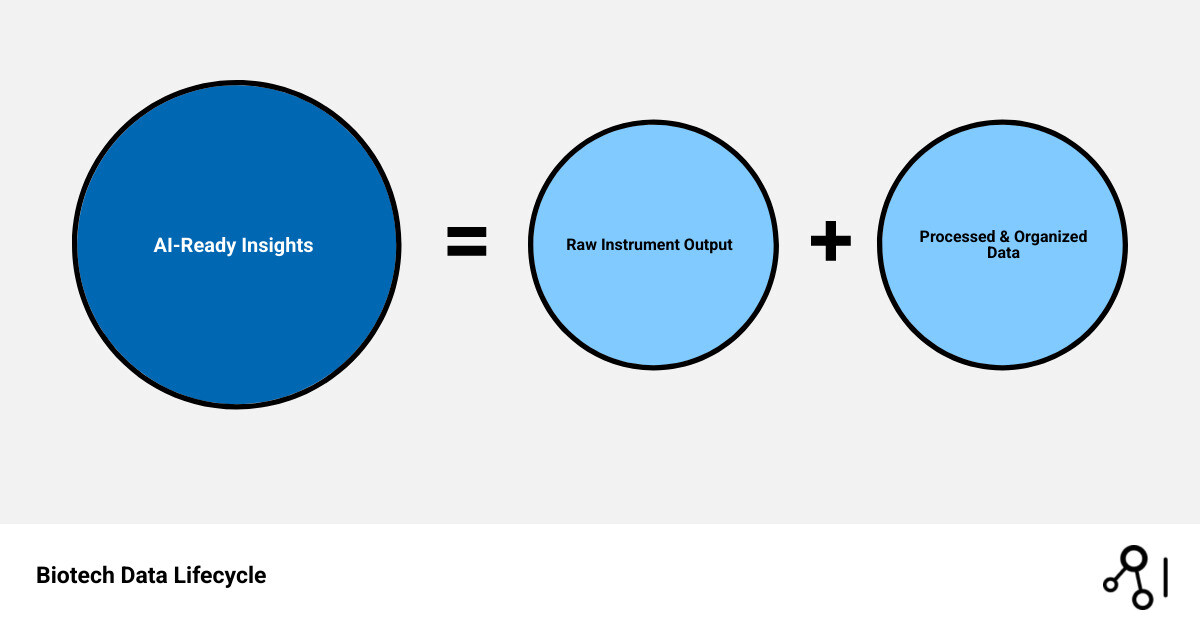
Basic Biotech data management vocab:
The Hidden Costs of Poor Biotech Data Management

When we talk about biotech data management, we aren’t just talking about where files live. We’re talking about the “lifeblood” of your company. Research shows that scientists can spend 3x more time searching for, collating, and navigating data when systems are disorganized. That is time stolen from the bench and the breakthrough. In a high-stakes environment where the cost of bringing a drug to market can exceed $2 billion, every hour lost to data friction is a direct hit to the bottom line.
Data fragmentation occurs when information is trapped in silos—handwritten records, digital discs, or proprietary instrument formats that don’t talk to each other. Even worse is the “dark data” sitting on obsolete media like old tapes or local hard drives of former employees. Recovering this data often requires specialized historical equipment, yet it holds the key to historical longitudinal studies that could save millions in repeated experiments. For instance, a retrospective analysis of failed clinical trials can often reveal secondary indications for a molecule, but only if that data is accessible and searchable.
Manual workflow errors are another silent budget killer. When a scientist has to manually copy-paste results between a lab instrument and a spreadsheet, the risk of transposition errors skyrockets. These “small” mistakes lead to failed data management in biotech strategies and, ultimately, compromised results that may not be discovered until the QA/QC phase or, worse, during a regulatory audit.
| Feature | Manual Data Handling | Automated Lifecycle Management |
|---|---|---|
| Search Time | Hours/Days | Seconds |
| Error Rate | High (Human Factor) | Minimal (Machine-to-Machine) |
| Compliance | Manual Paper Trail | Automated Audit Logs |
| Scalability | Linear/Expensive | Exponential/Cost-Effective |
| Data Integrity | Vulnerable to tampering | Immutable Audit Trails |
| Collaboration | Email-based/Siloed | Real-time/Global |
How Inefficient Biotech Data Management Drains Startup Capital
For startups, every dollar counts. Inefficient biotech data management is an invisible leak in the bucket. Industry data suggests that moving to a structured digital environment can lead to a 30% reduction in study cycle times. Imagine getting to your next milestone four months earlier just by fixing your data flow. This acceleration is often the difference between securing a Series B round or running out of runway.
Furthermore, teams using modern platforms report 60% less time spent on compliance activities. Instead of a team of three scientists spending a month prepping for an audit, the system does the heavy lifting. This allows your most expensive and brilliant minds to focus on biotech data management tasks that actually drive IP value. We often see “Data Debt” accumulate in early-stage companies; by the time they reach Phase II trials, the cost of cleaning up five years of messy data can be astronomical.
Regulatory Risks and Compliance Burdens
The regulatory landscape is a minefield for the unorganized. Whether it’s 21 CFR Part 11 for electronic records, HIPAA for patient privacy, or GDPR for data protection in Europe, the requirements are non-negotiable. Regulators like the FDA and EMA are increasingly looking for “Data Integrity” — ensuring that data is ALCOA+ (Attributable, Legible, Contemporaneous, Original, and Accurate).
A robust biotech data security strategy doesn’t just keep you safe; it makes you faster. Companies that automate their data capture see a 50% reduction in regulatory report preparation time. By maintaining a continuous audit trail with electronic signatures and timestamps, you transition from “hoping you’re compliant” to “knowing you are.” This level of readiness is a significant asset during due diligence for acquisitions or partnerships with Big Pharma.
Implementing FAIR Principles for AI-Ready Research
To truly optimize research, we must embrace the FAIR principles: Findable, Accessible, Interoperable, and Reusable. In the modern era, “AI-ready” is the gold standard. If an AI cannot “read” your data because it lacks metadata tagging or uses a non-standard format, that data is effectively useless for machine learning.
Implementing FAIR principles isn’t just a “nice to have”—it’s the bedrock of a modern biomedical data platform. It ensures that the data you generate today remains a valuable asset for years, even as biopharma market trends shift toward more data-intensive modalities like targeted protein degraders (TPDs) or cell and gene therapies.
Breaking Down the FAIR Framework
- Findable: Data and metadata should be easy to find for both humans and computers. This requires unique, persistent identifiers (PIDs) and rich metadata that describes the content, context, and quality of the data.
- Accessible: Once the user finds the required data, they need to know how it can be accessed, possibly including authentication and authorization. This doesn’t mean all data is “open,” but rather that the process for access is clearly defined and automated.
- Interoperable: The data needs to integrate with other data. This is the hardest part of biotech data management. It requires using standardized vocabularies (like SNOMED-CT or Gene Ontology) and formats (like FHIR for clinical data or FASTQ for genomics) so that different systems can “talk” to each other.
- Reusable: The ultimate goal is that data can be used for future research. This requires clear usage licenses and detailed provenance—knowing exactly how the data was generated, processed, and by whom.
Standardizing Data for Global Collaboration
Biotech is a team sport. Whether you are working with a CRO in Singapore or a university in London, you need a common language. Using CDISC standards for clinical data is often mandated by the FDA and PMDA, but standardization should start much earlier in the R&D phase. When data is standardized at the point of capture, the “downstream” effort of data cleaning is virtually eliminated.
By remaining data source agnostic, we can integrate multi-omic datasets—genomics, transcriptomics, and proteomics—into a single view. This data integration biotech approach ensures that when you hand off a project from discovery to clinical ops, nothing is lost in translation. It allows for cross-study analysis that can identify biomarkers that would be invisible in a single, isolated dataset.
Data Governance and Long-term Preservation
Data longevity is a major concern. As your organization grows from 5 scientists to 500, your data governance biotech must scale with you. This involves setting clear rules on who owns the data, who can access it, and how it is archived. Treating data as a shared organizational asset—rather than the “property” of the scientist who ran the experiment—is a cultural shift that pays dividends in IP protection and long-term research scalability. Effective governance also includes “Data Lifecycle Management,” which defines when data should be moved to cold storage or securely deleted to manage costs and risk.
7 Strategies to Streamline Lab Workflows
You don’t need a multi-million dollar IT budget to start improving your biotech data management. You can start small and iterate. Here are seven practical strategies to transform your lab’s efficiency:
- Standardize Naming Conventions: Stop naming files “Resultv2final_FINAL.csv”. Use a structured format like
ProjectID_Date_ExperimentType_ScientistInitials.csv. This simple change can save hundreds of hours of search time over a year. - Create a Single Source of Truth: Pick one platform for active projects. If it’s not in the central repository, it doesn’t exist. This eliminates the “which version is the latest?” debate that plagues many R&D teams.
- Automate Data Handoffs: Eliminate the “emailing spreadsheets” phase. Use integrated tools where data flows automatically from the instrument to the analysis layer. APIs and automated uploaders can bridge the gap between hardware and software.
- Implement Version Control: Use software logic (like Git) for both your code and your datasets to ensure reproducibility. If a result changes, you should be able to see exactly what changed in the data or the algorithm to cause it.
- Use Metadata Tagging: Don’t just store the “what,” store the “how” and “why.” Metadata makes your data searchable and reusable for future data lakehouse best practices. Include details like reagent lot numbers, incubator temperatures, and software versions.
- Establish Data Stewardship: Assign “Data Stewards” within each department. These aren’t IT people; they are scientists who ensure their team follows the data standards. This decentralizes the burden of data quality and puts it in the hands of those who understand the data best.
- Prioritize Cloud-Native Scalability: Avoid “on-premise” traps. Cloud platforms allow you to scale your storage and computing power instantly as your data grows from gigabytes to petabytes, ensuring your infrastructure never becomes a bottleneck.
Treating Data Hygiene Like Scientific Experimentation
We often tell our partners to treat their data processes like a lab experiment. Form a hypothesis: “If we standardize our NGS naming conventions, we will reduce search time by 20%.” Test it for two weeks, gather feedback from the team, and then optimize. This “Agile” approach to data management ensures that the systems you build actually serve the scientists, rather than becoming a bureaucratic burden.
This iterative approach prevents the “overwhelmed” feeling that comes with digital transformation. We’ve seen teams reduce workflow steps from 5 down to 1 simply by identifying and removing redundant manual checks. By automating the mundane, you free up your scientists to do what they do best: innovate.
Centralizing Disparate Data Sources
The modern lab is a cacophony of data sources: lab instruments (sequencers, mass specs, flow cytometers), external CRO reports, and legacy media. Centralizing these into unified data platforms for biotech allows for a 360-degree view of your research. Instead of spending 3x more time searching for data, your scientists can spend that time analyzing it. This centralization is also the first step toward implementing advanced analytics and AI, which require a holistic view of the data to be effective.
Modern Infrastructure: From LIMS to Lakehouses
The “old way” involved siloed Laboratory Information Management Systems (LIMS) and Electronic Lab Notebooks (ELNs) that didn’t talk to each other. While these tools were great for tracking samples or notes, they were never designed to handle the massive, unstructured datasets generated by modern high-throughput biology. The “new way” leverages the biotech data lakehouse.
A data lakehouse combines the flexibility of a data lake (storing raw data in its native format) with the management and structure of a data warehouse (providing high-performance querying and ACID transactions). This is essential for a data lakehouse guide because it allows scientists to store massive amounts of heterogeneous data—from high-resolution microscopy images to genomic sequences—in one place while maintaining the data integrity required for clinical submissions.
The Medallion Architecture for Biotech
In a modern biotech data management setup, we often use a “Medallion Architecture” to organize data as it flows through the lakehouse:
- Bronze (Raw): The landing zone for raw data straight from the instrument. No changes are made here, ensuring a permanent record of the original observation.
- Silver (Validated): Data that has been cleaned, filtered, and standardized. This is where FAIR principles are applied, and data is joined from different sources.
- Gold (Enriched): Business-ready or AI-ready datasets. This data is optimized for specific use cases, such as a machine learning model for protein folding or a dashboard for clinical trial monitoring.
Future-Proofing Biotech Data Management with AI and Edge Computing
The scale of data is exploding. We are now seeing organizations package 8PB+ of AI-ready research data monthly. To handle this, we use edge computing—bringing the processing power closer to the data source (like the lab instrument) to reduce latency and bandwidth costs. Instead of moving a 1TB file to the cloud for processing, we process it at the source and only move the relevant insights.
By using data lakehouse AI capabilities, we can automate the extraction of insights from unstructured text or handwritten notes, making the transition to a “digital-native” biotech much faster and more accurate than human processing ever could be. Large Language Models (LLMs) are now being used to “read” thousands of internal lab notebooks to identify forgotten experiments that might be relevant to current projects.
Weaving Multimodal Datasets for Deeper Analysis
The future of medicine is multimodal. To find the next breakthrough, you need to weave together genomics, transcriptomics, and proteomics data with real-world clinical evidence (RWE). This is where data lakehouse life sciences applications shine, allowing researchers to see the full picture of a disease state across different biological layers simultaneously. This holistic view is critical for precision medicine, where the goal is to match the right patient with the right drug at the right time.
Frequently Asked Questions about Biotech Data Management
How can startups achieve regulatory compliance through data strategy?
Startups should implement digital audit trails and standardized data models from day one. By using cloud-native platforms that are built-in with 21 CFR Part 11 and GDPR compliance, you avoid the “compliance debt” that often crushes growing companies during their first major audit or clinical trial submission. It is much cheaper to build a compliant system from the start than to retroactively fix a non-compliant one.
What role does metadata play in data reusability?
Metadata is the “context” of your data. Without it, a column of numbers is just noise. High-quality metadata includes the instrument settings, the batch number of the reagents used, the environmental conditions of the lab, and even the specific version of the analysis pipeline used. This ensures that a scientist three years from now can replicate the experiment exactly, or that an AI can correctly interpret the results across different batches.
Why is a single source of truth essential for drug programs?
In drug discovery, decisions are made based on the most recent data. If different team members are looking at different versions of a dataset, you risk making critical (and expensive) errors in molecule selection or clinical trial design. A single source of truth ensures everyone is rowing in the same direction and that the “winning” molecule is chosen based on the most accurate, up-to-date evidence.
What is the difference between a Data Lake and a Data Lakehouse in biotech?
A Data Lake is a repository for raw data, but it often becomes a “data swamp” because it lacks structure and governance. A Data Lakehouse adds a layer of management on top, allowing for features like versioning, indexing, and security controls. For biotech, the Lakehouse is superior because it supports both the “messy” raw data of R&D and the “structured” data needed for regulatory compliance.
How does federated data access improve biotech research?
Federated data access allows researchers to analyze data where it resides (e.g., in a hospital’s secure server) without actually moving the data. This is crucial for biotech companies working with sensitive patient data across different countries, as it helps comply with data residency laws like GDPR while still allowing for large-scale, multi-center studies.
Can AI help with legacy data migration?
Yes, modern AI and machine learning tools can be trained to recognize patterns in legacy data formats, extract text from scanned PDFs of old lab notebooks, and even map old data fields to modern standardized ontologies. This significantly reduces the manual effort required to bring “dark data” back into the light.
Conclusion: Stop Drowning in Data and Start Discovering
At Lifebit, we believe that data should never be a bottleneck to discovery. Our next-generation federated AI platform is designed to provide secure, real-time access to global biomedical and multi-omic data without moving the data itself.
By utilizing our Trusted Research Environment (TRE) and Trusted Data Lakehouse (TDL), biopharma and public health agencies can collaborate across 5 continents while maintaining the highest levels of federated governance. We help you turn your data chaos into a streamlined, compliant, and AI-ready asset.
Ready to transform your R&D operations? Find out more about how the Lifebit platform can accelerate your research.