

8 Best Compliant Research Platforms for Sensitive Health Data in 2026

If you’re searching for VIDA compliant research platform pricing, you’re already in evaluation mode. You need a secure, regulation-ready environment for sensitive health or genomic data, and you want to know what it actually costs. VIDA is a legitimate option, but it’s one of several platforms competing for this space in 2026.
The compliant research platform market has matured considerably. You now have real choices across trusted research environments, federated analytics systems, and cloud-native genomics platforms, each with different compliance postures, deployment models, and pricing structures. The challenge is that almost none of them publish prices publicly, which makes comparison harder than it should be.
This guide breaks down the top compliant research platforms for sensitive health data, covering what each does well, who it’s built for, and what you can expect on pricing, so you can make a grounded decision before you pick up the phone.
1. Lifebit
Best for: Government health agencies, biopharma R&D teams, and academic consortia needing federated, AI-powered compliant research at national scale.
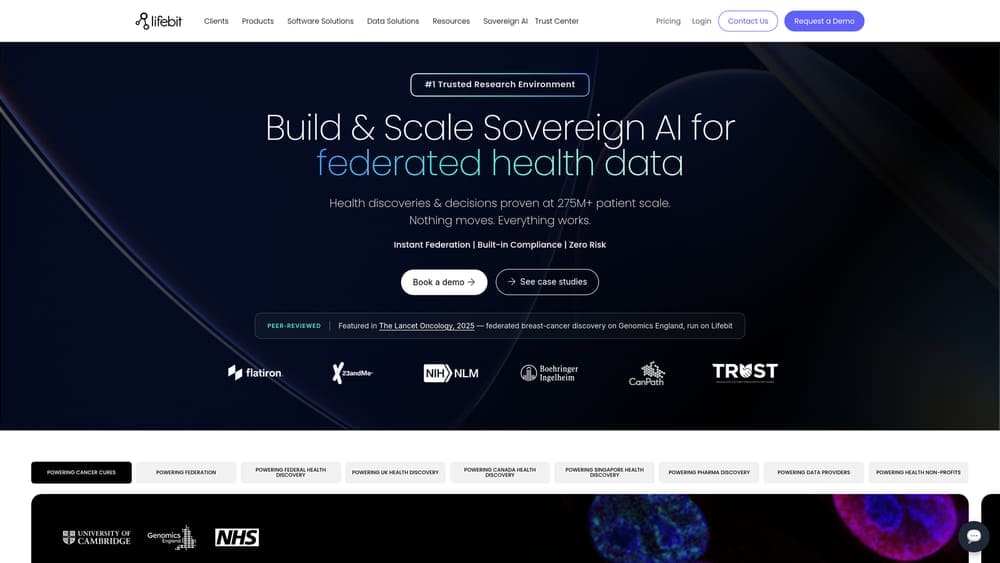
Lifebit is a federated, AI-powered compliant research platform deployed directly in your cloud, trusted by national health programs across 30+ countries and managing over 275 million records without ever moving sensitive data.
Where This Tool Shines
Lifebit’s core architectural advantage is that data never moves. You analyze it where it lives, whether that’s a national genomics repository, a hospital network, or a government data lake. This isn’t just a compliance feature; it eliminates the single biggest risk vector in sensitive health research: data transfer.
The platform also solves one of the most frustrating bottlenecks in this space: harmonization. What typically takes months of manual curation, Lifebit’s Trusted Data Factory handles with AI in as little as 48 hours. For biopharma teams under pipeline pressure, that difference is measured in quarters, not days.
Key Features
Trusted Research Environment (TRE): Deployed in your own cloud, giving you full control with zero vendor lock-in.
Federated Analysis: Run queries and analytics across distributed datasets across borders without centralizing or moving data.
Trusted Data Factory (TDF): AI-powered harmonization that converts siloed, heterogeneous health data into analysis-ready formats in as little as 48 hours.
AI-Automated Airlock: A first-of-its-kind governance system that automates the review and approval of data exports while maintaining a full audit trail.
Built-in Compliance: FedRAMP, HIPAA, GDPR, and ISO 27001 coverage from day one, not bolted on after deployment.
Best For
Lifebit is purpose-built for organizations operating at scale under strict regulatory frameworks: government health agencies running national precision medicine programs, biopharma R&D teams needing to accelerate target discovery, and academic consortia managing multi-institutional studies across jurisdictions. If you’re managing millions of records and need cross-border federation, this is the platform designed for that problem.
Pricing
Custom enterprise pricing based on deployment scope and data scale. Request a quote directly at lifebit.ai/get-a-quote.
2. VIDA (Virtual Integrated Data Access)
Best for: Academic and NHS-linked researchers needing a controlled virtual desktop environment for sensitive health datasets.
VIDA is a virtual desktop-based trusted research environment designed for institutional researchers working with sensitive clinical and health datasets in governed, compliant workspaces.

Where This Tool Shines
VIDA’s strength is its virtual desktop approach. Researchers get a familiar, pre-configured workspace with the tools they already use, without data ever leaving the secure environment. This makes onboarding relatively straightforward for academic teams accustomed to standard statistical tools.
Its design is well-suited to NHS-linked research contexts, where data access governance, controlled egress, and audit requirements are non-negotiable. For smaller institutional programs that don’t need cross-border federation or AI harmonization, VIDA covers the core bases effectively.
Key Features
Virtual Desktop TRE: Secure, controlled workspace with strict access and egress policies to prevent unauthorized data movement.
Pre-configured Analytics Tools: R, Python, and Stata available within the secure environment without additional setup.
Role-based Access Controls: Granular permissions management and full audit logging for compliance requirements.
Institutional Integration: Designed to align with NHS and academic institutional governance frameworks.
Best For
Academic researchers and NHS-linked institutions running controlled data access studies who need a straightforward, compliant workspace without complex infrastructure requirements. Less suited for large-scale federated or multi-country programs.
Pricing
Custom and institutional pricing, not publicly listed. Requires direct inquiry. Pricing typically reflects institutional licensing structures rather than usage-based models.
3. Aridhia DRE (Digital Research Environment)
Best for: UK health research programs with NHS Digital integration requirements and workspace-centric analytics needs.
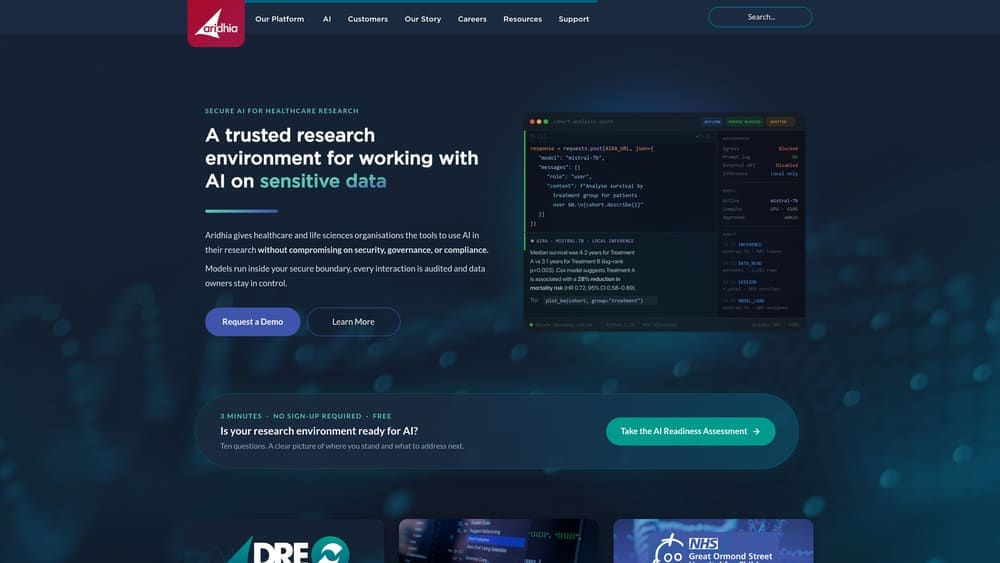
Aridhia DRE is a UK-focused digital research environment offering secure, project-based workspaces with strong NHS ecosystem integration and ISO 27001 certification.
Where This Tool Shines
Aridhia has built deep roots in the UK health data ecosystem. Its integration with NHS Digital, the NHS Data Security and Protection Toolkit, and UK Biobank workflows makes it a natural fit for UK-based research programs that need to demonstrate compliance within that specific regulatory context.
The project-workspace model is practical for multi-team research programs: each project gets its own governed environment with scoped access, which simplifies both security management and audit reporting.
Key Features
Project-based Workspaces: Isolated, governed environments per research project with built-in analytics tooling.
NHS Ecosystem Integration: Designed to align with NHS Digital standards and UK Biobank data access requirements.
ISO 27001 Certification: Meets NHS Data Security and Protection Toolkit requirements out of the box.
Analytics Tooling: Supports R, Python, and SQL within governed workspace environments.
Best For
UK academic medical centers, NHS trusts, and research programs that need a proven, compliant workspace aligned to UK-specific health data governance standards. Less suited for organizations outside the UK or those requiring global federation.
Pricing
Custom enterprise and institutional pricing available on request. No public pricing tiers listed on the website.
4. DNAnexus
Best for: Biopharma and genomics teams running large-scale multi-omics pipelines with GxP and FDA submission requirements.
DNAnexus is a cloud-native platform purpose-built for large-scale genomics and multi-omics analysis, with compliance pathways specifically designed for FDA submissions and GxP-regulated research environments.
Where This Tool Shines
DNAnexus is one of the few platforms that takes GxP compliance seriously at the infrastructure level. For biopharma teams submitting data to the FDA or running validated computational workflows, this matters enormously. The platform’s Apollo collaboration environment also makes it practical for multi-site consortium studies where different teams need to work on shared data under controlled conditions.
Its cloud scalability is genuine: whole genome sequencing at population scale is a realistic use case here, not a marketing claim.
Key Features
GxP and FDA 21 CFR Part 11 Compliance: Infrastructure and audit controls designed for regulated pharmaceutical research and submission workflows.
Scalable Genomics Pipelines: Supports WGS, WES, and multi-omics analysis at population scale.
Apollo Collaboration Platform: Multi-site data analysis with controlled access for consortium research programs.
FedRAMP-authorized Options: HIPAA and SOC 2 compliance, with FedRAMP deployment pathways for government programs.
Best For
Biopharma R&D teams, CROs, and genomics research programs with FDA submission workflows, GxP validation requirements, or large-scale multi-omics pipelines. Particularly strong for organizations where regulatory defensibility of computational processes is a core requirement.
Pricing
Custom enterprise pricing combining usage-based compute costs and platform fees. Requires sales consultation; no self-serve pricing available.
5. Terra (Broad Institute)
Best for: Academic researchers and NIH-funded programs needing open-source, cloud-native biomedical data analysis at scale.
Terra is an open-source, cloud-native research platform developed by the Broad Institute, Verily, and Microsoft, widely adopted across NIH-funded data commons including AnVIL and BioData Catalyst.
Where This Tool Shines
Terra’s open-source foundation and deep NIH ecosystem integration make it the default choice for many academic genomics researchers. If your data already lives in an NIH data commons, Terra is often the path of least resistance. The WDL/Cromwell workflow execution engine is well-established in the genomics community, and the platform’s integration with Jupyter, R/RStudio, and Galaxy covers most academic analytical workflows.
The cost model is also genuinely different from the rest of this list: the platform itself is free. You pay only for underlying cloud compute and storage, which can be a significant advantage for grant-funded research with tight budgets.
Key Features
Open-source Platform: WDL/Cromwell workflow execution with no platform licensing fees.
Multi-cloud Support: Runs on Google Cloud and Microsoft Azure with flexibility across environments.
NIH Data Commons Integration: Native connectivity to AnVIL, BioData Catalyst, and other NIH-funded data repositories.
Integrated Notebooks and Tools: Jupyter, R/RStudio, and Galaxy available within the platform.
Best For
Academic researchers, NIH-funded consortia, and open-science programs where budget constraints are real and data already resides in NIH data commons. Less suited for enterprise or government programs requiring dedicated support, custom deployment, or advanced governance features.
Pricing
Platform access is free. Users pay underlying Google Cloud or Azure compute and storage costs directly, which scale with usage. No platform subscription fee.
6. TriNetX
Best for: Life sciences companies and clinical researchers needing real-world evidence generation and clinical trial feasibility across a global health network.
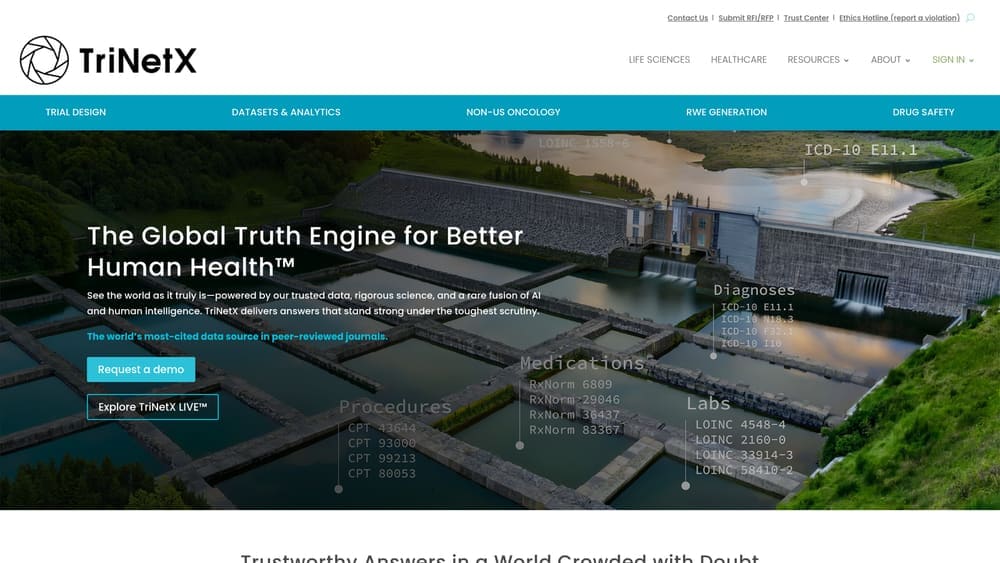
TriNetX is a global federated health research network connecting hundreds of healthcare organizations for real-world evidence generation, clinical trial design, and patient cohort identification without moving patient data.
Where This Tool Shines
TriNetX operates differently from most platforms on this list. Rather than providing infrastructure you deploy, it gives you access to a federated network of healthcare organizations that have already connected their data. This means you can run cohort queries across hundreds of institutions without any of the data integration work typically required.
For clinical trial feasibility studies and RWE submissions to the FDA or EMA, this pre-built network is a substantial time advantage. The tradeoff is that you’re working within TriNetX’s network rather than your own data environment.
Key Features
Federated Network Queries: Query across hundreds of healthcare organizations without patient data leaving source institutions.
Real-world Evidence Analytics: Tools designed for FDA and EMA regulatory-grade RWE generation.
Clinical Trial Feasibility: Cohort identification and site selection analytics across the global network.
De-identified and Identified Access: Multiple data access tiers depending on research requirements and governance approvals.
Best For
Biopharma companies, CROs, and academic medical centers focused on clinical trial design, patient cohort identification, and regulatory-grade real-world evidence. Particularly valuable when speed of network access matters more than custom infrastructure control.
Pricing
Subscription-based with custom pricing depending on network access tier and analytical modules. Requires direct sales inquiry; no public pricing tiers available.
7. Flywheel
Best for: Research programs specializing in medical imaging, neuroscience, and imaging AI development requiring automated data curation and de-identification.
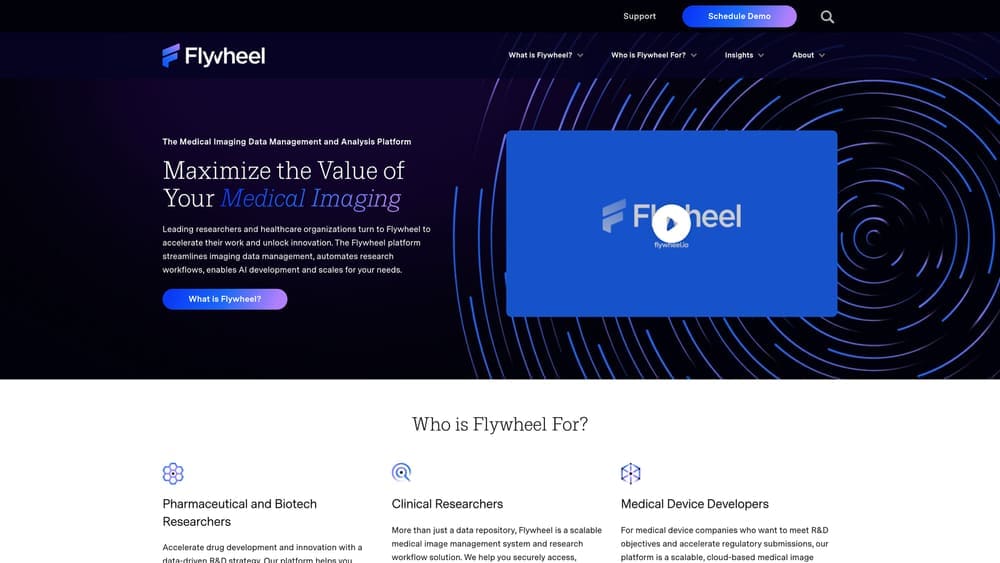
Flywheel is a HIPAA-compliant research data platform purpose-built for medical imaging and neuroscience, offering automated DICOM ingestion, de-identification, and AI-ready pipeline support.
Where This Tool Shines
Flywheel occupies a specific and well-defined niche: imaging-centric research. If your program handles large volumes of DICOM data, runs neuroimaging studies, or is building imaging AI models, Flywheel’s automated curation and de-identification workflows address problems that general-purpose research platforms handle poorly.
Its support for BIDS and OMOP standards is meaningful for multi-site imaging studies where data structure consistency is critical for downstream analysis and regulatory submission.
Key Features
Automated DICOM Ingestion and De-identification: Streamlines the most labor-intensive parts of imaging data preparation.
HIPAA and GDPR-compliant Deployment: Available as cloud or on-premise deployment depending on institutional requirements.
Imaging Standards Support: Built-in support for BIDS, OMOP, and imaging metadata standards for multi-site research.
ML Pipeline Integration: Designed to feed curated imaging data directly into machine learning development workflows.
Best For
Academic medical centers, neuroscience research programs, radiology departments, and imaging AI teams that need a purpose-built platform for managing and analyzing large-scale medical imaging datasets. Not designed as a general-purpose TRE for non-imaging health data.
Pricing
Custom pricing tiered by data volume and deployment model. Contact sales for a quote; no self-serve pricing available.
8. Snowflake Health Data Cloud
Best for: Enterprise health organizations and life sciences companies needing governed data sharing, clean rooms, and cross-organizational analytics at scale.
Snowflake Health Data Cloud is an enterprise-scale data cloud with health-specific capabilities for governed data sharing, clean rooms, and cross-organizational analytics across payers, providers, and life sciences companies.
Where This Tool Shines
Snowflake’s strength is enterprise-scale data infrastructure. If your organization already runs significant data operations on Snowflake, the Health Data Cloud extends those capabilities into governed health data sharing without requiring a separate platform. Clean rooms allow organizations to collaborate on overlapping datasets without exposing underlying records, which is increasingly relevant for payer-provider collaboration and biopharma partnerships.
The Health Data Marketplace also provides direct access to curated real-world data and claims datasets, which can accelerate research programs that need external data to complement internal assets.
Key Features
Governed Data Sharing and Clean Rooms: Enables cross-organizational collaboration on sensitive data without exposing underlying records.
HIPAA-eligible and HITRUST-certified Infrastructure: Meets enterprise compliance requirements for health data at scale.
Health Data Marketplace: Access to curated real-world data, claims datasets, and partner data assets.
Enterprise Scale: Handles structured clinical, claims, and operational health data across large, complex organizations.
Best For
Large health systems, payers, and life sciences enterprises that need governed data sharing infrastructure across organizational boundaries, particularly those already invested in Snowflake’s broader data ecosystem. Less suited as a standalone research environment for academic or government programs with specialized TRE requirements.
Pricing
Usage-based pricing covering compute, storage, and data transfer. Health-specific pricing tiers available through Snowflake’s sales team. Costs scale significantly with data volume and query frequency at enterprise scale.
Choosing the Right Platform for Your Program
The honest reality of this market: almost every platform here requires a custom quote. Pricing opacity is the norm, not the exception, and it means total cost of ownership is harder to evaluate than the sticker price suggests. Factor in implementation costs, data migration or harmonization work, ongoing support, and compliance validation time before comparing numbers.
Here’s a quick orientation by use case. If you’re a government health agency running a national genomics or precision medicine program, Lifebit’s federated architecture, built-in compliance stack, and proven deployments with organizations like Genomics England and Singapore’s Ministry of Health make it the most defensible choice at scale. If you’re a biopharma team with FDA submission requirements and GxP workflows, DNAnexus is the most purpose-built option. For UK NHS-linked academic research, Aridhia or VIDA fit the institutional governance context. For open-science NIH-funded programs with lean budgets, Terra’s free platform model is hard to beat. For real-world evidence and clinical trial feasibility, TriNetX’s pre-built network delivers speed. For imaging-heavy research, Flywheel is in a category of its own. For enterprise health data sharing across organizational boundaries, Snowflake scales where others don’t.
If you’re evaluating platforms for a program that needs federated analysis, AI-powered harmonization, and compliance built in from day one, Lifebit is worth a direct conversation. The platform is deployed in your cloud, you retain full control, and there’s no data movement by design.
Get started for free and request a quote from Lifebit to see how the platform fits your specific program requirements.
Related Lifebit reading
Continue with these pillar guides:
- The complete guide to Trusted Research Environments — what a TRE is, the Five Safes framework, and why federated architectures became the procurement default after the UK Biobank incident.
- Federated learning in healthcare — how machine-learning models train across hospitals and biobanks without the data ever leaving its source.
- The biomedical data lakehouse — the open-format storage layer that powers clinical, research, and AI workloads from one copy of the data.
- Federated data governance — how each data custodian retains control while participating in multi-institution research and AI.
- Lifebit’s federated biomedical data platform — see how Genomics England, Singapore Synapxe, NIH, and Boehringer Ingelheim use Lifebit to run Sovereign AI on federated health data.