
9 Best Multi-Institutional Research Collaboration Tools in 2026

Multi-institutional research is broken by default. Data lives in silos across hospitals, biobanks, and government agencies. Governance frameworks conflict. Moving sensitive records across institutions invites compliance risk. And by the time teams agree on a data-sharing protocol, the research window has often closed.
The tools in this list solve that. Each one addresses a specific layer of the collaboration problem: secure federated analysis, data harmonization, clinical data capture, project coordination, and reproducible workflows. We evaluated platforms on five criteria: data governance capabilities, scalability across institutions, compliance posture (HIPAA, GDPR, FISMA), ease of cross-site deployment, and fitness for sensitive health and genomic data.
Whether you’re a government health agency standing up a national precision medicine program, a biopharma team trying to unlock real-world data across hospital networks, or an academic consortium navigating IRB requirements, this list gives you a clear starting point. Here are the top multi-institutional research collaboration tools worth evaluating in 2026.
1. Lifebit
Best for: Government agencies, biopharma, and academic consortia managing sensitive health and genomic data across borders
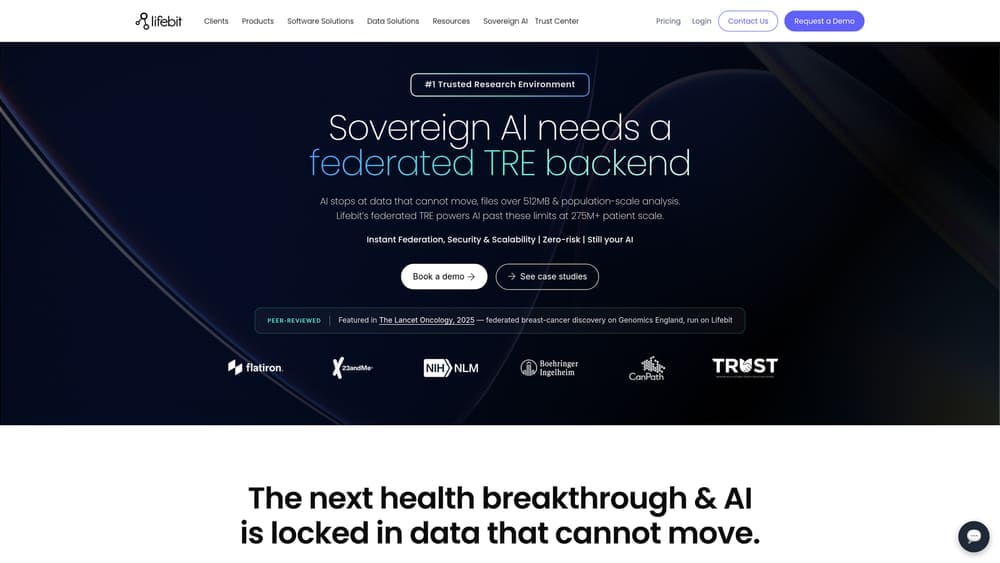
Lifebit is a federated research platform built for institutions that need to analyze sensitive health and genomic data across sites without ever moving it. Trusted by NIH, Genomics England, and Singapore’s Ministry of Health, it manages over 275 million records across 30+ countries.
Where This Tool Shines
Lifebit’s core architecture is built around a simple but powerful premise: bring the computation to the data, not the other way around. For institutions operating under GDPR, national data sovereignty laws, or strict IRB constraints, this removes the single biggest compliance bottleneck in multi-site research.
What separates Lifebit from other federated platforms is the speed of its data harmonization layer. The Trusted Data Factory uses AI to harmonize datasets in 48 hours, compared to the months-long timelines that typically stall consortium research. That’s not a marginal improvement; it changes what’s operationally possible.
Key Features
Federated Data Platform: Run analyses across institutions without data egress, keeping records where they live while enabling cross-site queries and computations.
Trusted Data Factory (TDF): AI-powered data harmonization delivered in 48 hours, replacing what traditionally requires large teams and months of manual work.
Trusted Research Environment (TRE): Secure, compliant cloud workspaces deployed per institution, giving each site control over their own environment while enabling collaboration.
AI-Automated Airlock: A governance-controlled data export system with a full audit trail, designed to be the first of its kind for managing what leaves a secure environment.
Compliance Stack: FedRAMP, HIPAA, GDPR, and ISO 27001 compliance built in from day one, not bolted on as an afterthought.
Best For
Lifebit is the right choice for programs where data cannot move across borders, where scale exceeds 100,000 participants, or where compliance risk is genuinely non-negotiable. It’s particularly well-suited to government health agencies building national precision medicine infrastructure and biopharma teams needing access to real-world hospital data without egress.
Pricing
Enterprise pricing. Contact Lifebit directly for a quote tailored to your program’s scale and compliance requirements.
2. IQVIA Orchestrated Analytics
Best for: Life sciences organizations running multi-site observational studies using real-world data
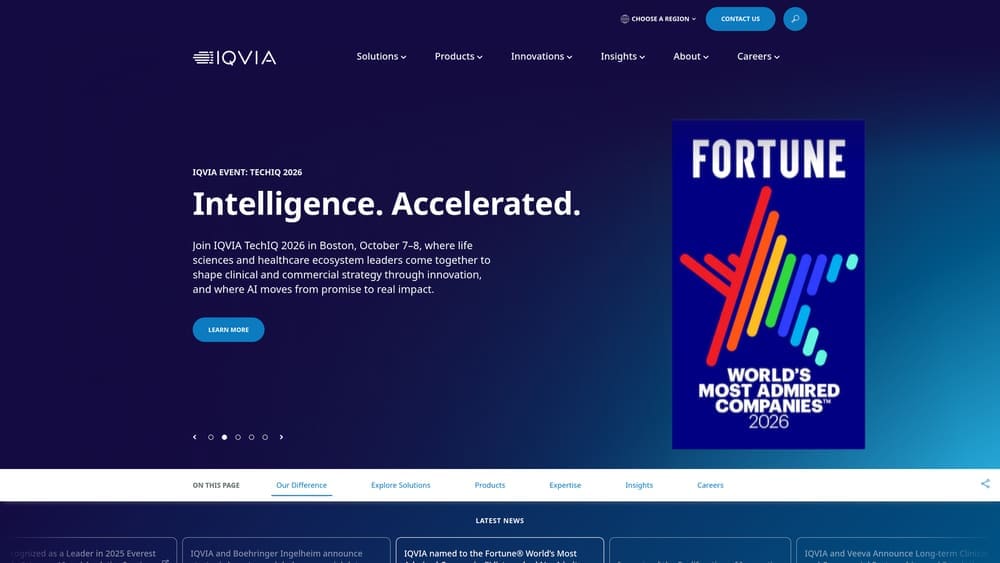
IQVIA Orchestrated Analytics is an enterprise analytics platform that gives life sciences organizations access to one of the largest real-world data networks in existence, spanning claims, EHR records, and patient registries.
Where This Tool Shines
IQVIA’s primary strength is the depth and breadth of its real-world data network. For pharma and biotech teams designing observational studies or generating regulatory-grade evidence, the ability to access pre-linked, large-scale RWD across multiple sources in one environment is a significant operational advantage.
Where IQVIA is less focused is in federated compute or genomics-specific infrastructure. It’s built for the pharma evidence generation use case, and it does that well. Teams needing deep genomic analysis or sovereign data environments will likely need to look elsewhere.
Key Features
Real-World Data Network: Access to large-scale claims, EHR, and patient registry data across multiple countries and healthcare systems.
Multi-Site Study Support: Tools for designing and executing observational studies across geographically distributed sites.
Regulatory-Grade Analytics: Analytics workflows built to support regulatory submissions and evidence generation for drug development.
Integrated Data Linkage: Connects disparate data sources within IQVIA’s ecosystem without requiring manual reconciliation by research teams.
Best For
Biopharma R&D and medical affairs teams that need access to large-scale real-world evidence for clinical development, regulatory submissions, or market access decisions. Less suited to academic consortia or programs requiring federated computation over sovereign datasets.
Pricing
Enterprise pricing. Contact IQVIA for a quote based on study scope and data access requirements.
3. Palantir Foundry
Best for: Large government health programs and health systems needing enterprise-grade data operations infrastructure
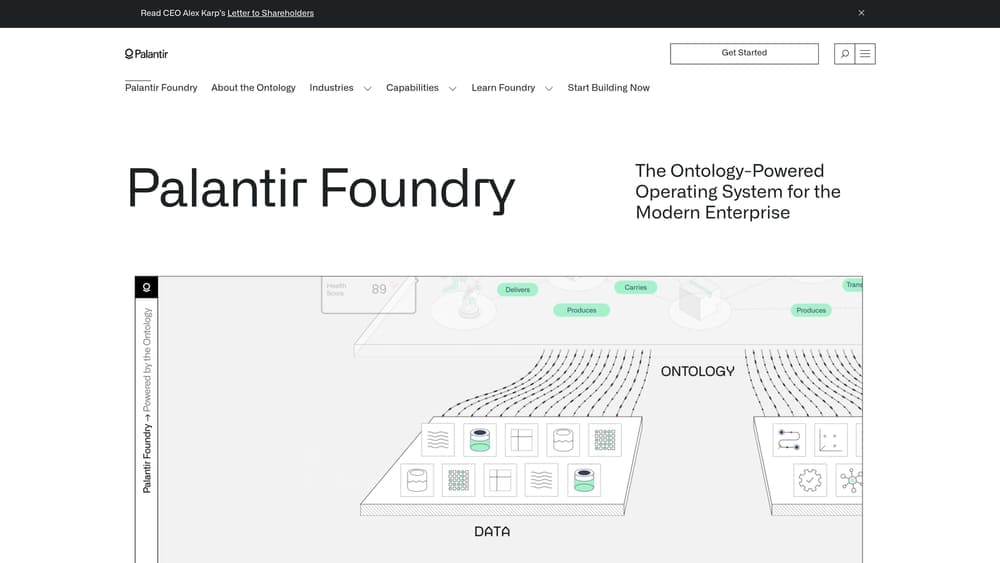
Palantir Foundry is a data integration and operations platform used by government agencies and large health systems to build centralized data pipelines, enforce access controls, and operationalize complex multi-source datasets.
Where This Tool Shines
Foundry’s ontology-based data modeling approach is genuinely powerful for organizations dealing with heterogeneous data sources that don’t naturally fit together. It excels at creating a unified operational picture from messy, multi-format institutional data, which is why it’s been deployed in programs like the NHS COVID-19 response and US Department of Defense health initiatives.
The tradeoff is implementation complexity. Foundry is not a plug-and-play solution. Deploying it meaningfully requires significant technical resources, dedicated Palantir support, and a long onboarding runway. For institutions with the capacity to absorb that overhead, it’s a capable platform. For those that need to move quickly, it can be a bottleneck.
Key Features
Data Pipeline Orchestration: End-to-end pipeline management across heterogeneous data sources, from ingestion to transformation to analysis.
Granular Access Controls: Fine-grained permissions and full audit trails across every data object and operation in the platform.
Ontology-Based Data Modeling: A structured approach to representing complex institutional data relationships, enabling cross-source queries and operational workflows.
Government Deployment Track Record: Active deployments in NHS, US DoD, and other major government health programs provide a reference base for regulated environments.
Best For
Large government agencies or health systems with significant IT resources and long implementation timelines. Not the right fit for teams that need to stand up collaboration infrastructure quickly or at lower cost.
Pricing
Enterprise pricing with high implementation overhead. Contact Palantir for a quote; total cost of ownership typically includes significant professional services.
4. DNAnexus
Best for: Biobanks, genomics consortia, and precision medicine programs managing large-scale sequencing data
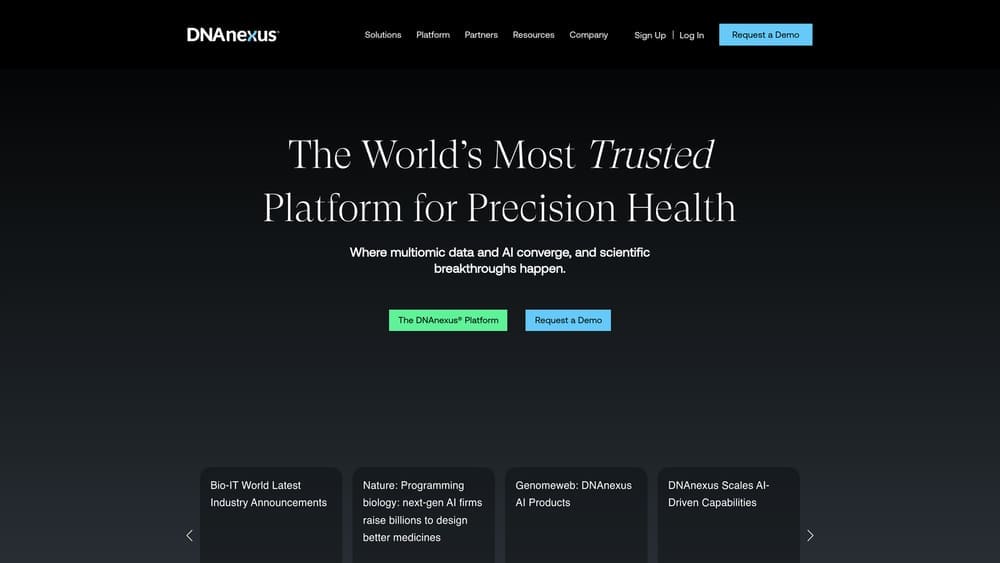
DNAnexus is a cloud-based genomics platform designed for organizations that need to store, manage, and analyze large-scale sequencing data across multiple sites with built-in compliance. It’s used by UK Biobank and major cancer genomics programs globally.
Where This Tool Shines
DNAnexus is purpose-built for the genomics use case in a way that general-purpose cloud platforms simply aren’t. Its handling of whole-genome sequencing, whole-exome sequencing, and RNA-seq data at scale is a genuine differentiator, and its support for CWL and WDL workflow standards means analyses are portable and reproducible across environments.
For multi-site consortia, the project-level access control model makes it straightforward to partition data and analysis environments by institution while still enabling collaborative work. It’s a strong choice when genomics is the core data type and scale is in the hundreds of thousands of samples or beyond.
Key Features
Genomics-Native Architecture: Built specifically for WGS, WES, and RNA-seq data at biobank scale, with optimized storage and compute for sequencing workloads.
Multi-Site Access Control: Project-level permissions that allow consortia to manage access across institutions without compromising data boundaries.
Workflow Portability: Native support for CWL and WDL standards ensures analyses are reproducible and transferable across cloud environments.
Compliance Posture: HIPAA, GDPR, and ISO 27001 compliance built into the platform architecture.
Consortium Track Record: Active use in UK Biobank and major cancer genomics initiatives provides confidence for large-scale program deployments.
Best For
Genomics consortia, precision medicine programs, and biobanks where sequencing data is the primary asset. Teams working primarily with clinical or claims data may find the platform’s genomics focus limits its utility for broader multi-modal research.
Pricing
Enterprise pricing. Contact DNAnexus for a quote based on storage volume, compute requirements, and number of sites.
5. Aridhia DRE
Best for: UK NHS and European academic-clinical partnerships operating under the Five Safes framework
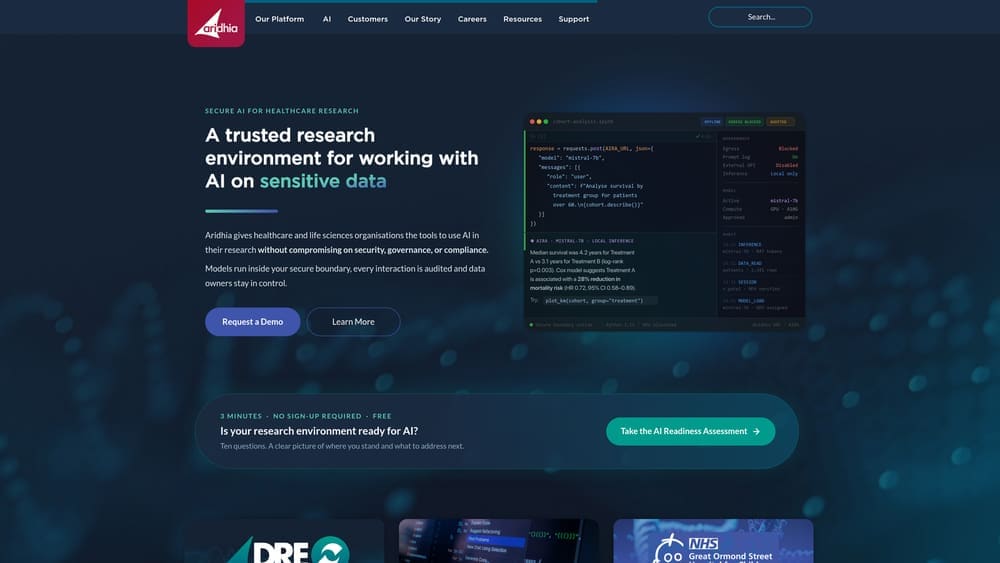
Aridhia DRE is a Trusted Research Environment platform with a strong track record in UK NHS and European academic-clinical settings, providing secure, governed workspaces for analyzing sensitive health data without data extraction.
Where This Tool Shines
Aridhia has built its platform around the UK’s Five Safes framework, which defines how safe data access should work across people, projects, settings, data, and outputs. For institutions operating within NHS Digital or HDRUK networks, this alignment is a significant advantage because it maps directly to existing governance expectations.
The platform supports standard analytics tools including R and Python within the secure workspace, which reduces friction for research teams who don’t want to learn a new computational environment. It’s a practical, well-integrated TRE for the UK and EU context, though its global footprint is narrower than some alternatives.
Key Features
Five Safes Alignment: Platform design built around the UK’s established framework for safe data access, making governance sign-off more straightforward for NHS-connected programs.
Secure Analytical Workspaces: Role-based access and isolated environments ensure researchers can only access data they’re approved for.
NHS Data Integration: Direct integration with NHS data assets and the HDRUK network for UK-based programs.
Standard Tool Support: R, Python, and common analytics libraries available within the environment, reducing onboarding time for research teams.
Audit and Governance Controls: Comprehensive logging of all data access and analysis activities for compliance reporting.
Best For
UK and European academic-clinical consortia, NHS trusts, and health data research programs operating under established UK governance frameworks. Organizations outside the UK/EU ecosystem may find better-fitted alternatives.
Pricing
Enterprise pricing. Contact Aridhia for a quote based on program scope and data access requirements.
6. Seven Bridges
Best for: NIH-funded programs and cancer genomics consortia requiring FAIR data management and portable workflows
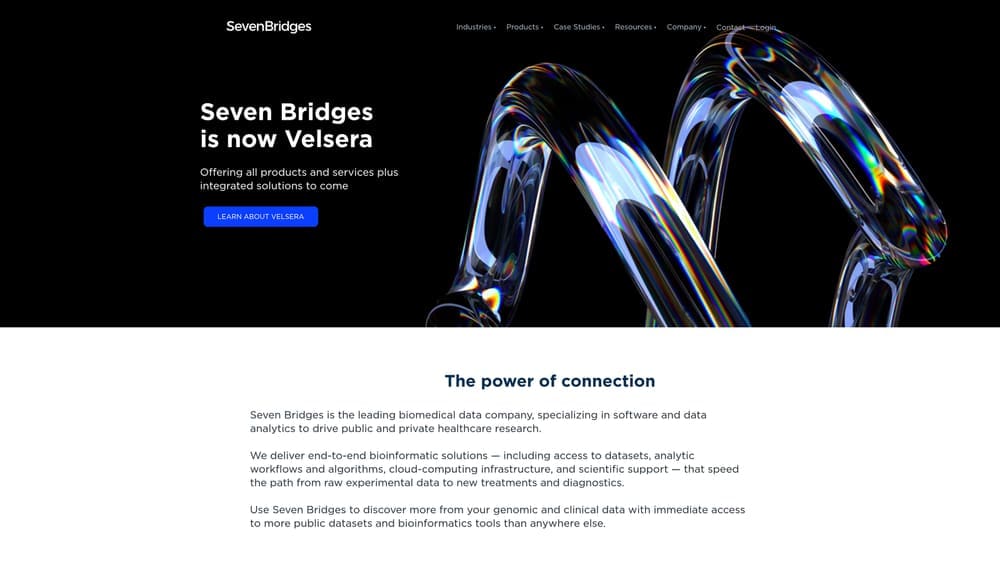
Seven Bridges is a biomedical data analysis platform built around FAIR data principles and portable workflow standards, widely used in NIH-funded programs and large-scale cancer genomics consortia for reproducible multi-site research.
Where This Tool Shines
Seven Bridges has established itself as a core piece of NIH cloud infrastructure, particularly through its role in the Cancer Research Data Commons. For programs that need to demonstrate FAIR compliance (Findable, Accessible, Interoperable, Reusable) as a condition of funding or publication, the platform’s architecture makes that straightforward rather than an afterthought.
Its support for CWL and WDL workflow standards means analyses developed on Seven Bridges can be exported, shared, and reproduced across other cloud environments. For consortia where reproducibility is a scientific and regulatory requirement, that portability matters.
Key Features
FAIR Data Architecture: Platform-level support for FAIR principles, with metadata management and data cataloging built into the core workflow.
Workflow Portability: Native CWL and WDL support enables analyses to move across cloud environments without re-engineering.
NIH Program Integration: Active deployment in the NIH Cancer Research Data Commons and similar federally funded programs.
Collaborative Workspaces: Project-level environments with access controls for multi-site consortia.
Bioinformatics Scale: Handles large-scale sequencing pipelines with cloud-native compute management.
Best For
NIH-funded research programs, cancer genomics consortia, and academic groups where FAIR data compliance and workflow reproducibility are core requirements. Strong fit for US-based programs embedded in federal health data infrastructure.
Pricing
Enterprise pricing. Contact Seven Bridges for a quote based on program size and compute needs.
7. REDCap
Best for: Multi-site clinical research teams needing structured, IRB-aligned data capture at no cost
REDCap is a free, widely adopted web application for building and managing research databases and surveys, purpose-built for multi-site clinical research with strong IRB alignment and a global consortium of over 6,000 institutions.
Where This Tool Shines
REDCap’s biggest advantage is its ubiquity. With over 6,000 institutional members in the REDCap Consortium, it’s likely that every institution in your research network already has a REDCap deployment. That removes procurement friction, speeds up onboarding, and makes cross-site data collection coordination significantly more practical.
It’s not a federated analysis platform and it’s not built for genomic data. But for structured clinical data capture across sites, survey administration, and IRB-aligned project management, it’s the most battle-tested free tool available. The tradeoff is that it requires institutional hosting and IT support to remain HIPAA-compliant.
Key Features
Structured Data Capture: Flexible form and survey builder for clinical research instruments, with validation rules and branching logic.
Multi-Site Project Management: Role-based permissions and site-level access controls for distributed research teams.
HIPAA Compliance: Compliant when self-hosted on institutional servers with appropriate IT configuration.
Free via Consortium: Available at no cost through Vanderbilt University’s REDCap Consortium membership model.
Global Support Community: Extensive documentation, training resources, and a large peer community across 6,000+ institutions.
Best For
Academic medical centers, clinical research teams, and multi-site trial coordinators who need structured data collection without budget. Not appropriate for federated analysis, large genomic datasets, or programs requiring sophisticated data governance beyond clinical forms.
Pricing
Free via self-hosting through Vanderbilt consortium membership. Institutional IT resources required for deployment and HIPAA-compliant configuration.
8. Open Science Framework (OSF)
Best for: Academic research teams prioritizing transparency, reproducibility, and open collaboration
Open Science Framework (OSF) is a free, open-source research project management platform from the Center for Open Science, designed to support transparent, reproducible multi-institutional research through file sharing, preregistration, and collaboration tools.
Where This Tool Shines
OSF is the standard platform for open science practices in academic research. Its preregistration and registered reports features are widely recognized by journals and funding bodies as markers of methodological rigor, which makes it genuinely useful for consortia that need to demonstrate transparency as part of their research governance.
It integrates with tools researchers already use, including GitHub, Dropbox, and Google Drive, so it acts as a coordination layer rather than a replacement for existing workflows. The key limitation is clear: OSF is not built for sensitive or regulated data. It’s an open collaboration platform, and its security posture reflects that.
Key Features
Project Management and File Sharing: Centralized workspace for research teams to organize files, documentation, and collaboration across institutions.
Preregistration Support: Built-in tools for preregistering study designs and analysis plans, with recognition from major journals and funders.
Third-Party Integrations: Native connections to GitHub, Dropbox, Google Drive, and other common research tools.
Public or Private Settings: Projects can be kept private during active research and made public at publication, supporting both collaboration and open sharing.
Best For
Academic researchers and multi-institutional teams focused on open science, reproducibility, and transparent research practices. Not suitable for sensitive health data, regulated datasets, or programs requiring HIPAA or GDPR compliance controls.
Pricing
Free for all users. Institutional storage add-ons available for teams with larger file storage requirements.
9. Globus
Best for: HPC-connected institutions needing secure, high-speed data transfer between research sites
Globus is a research-grade data transfer and sharing service used by national labs, universities, and HPC-connected institutions to move large datasets securely between sites, with identity-based access controls and audit logging.
Where This Tool Shines
Globus solves a problem that sounds simple but is operationally painful: moving very large research datasets reliably between institutions. Standard file transfer tools fail at the scale common in genomics, imaging, and climate research. Globus handles multi-terabyte transfers with automatic error recovery, which matters when you’re moving sequencing data between a biobank and an HPC cluster.
It’s important to understand what Globus is not. It’s not an analysis platform. It doesn’t harmonize data or provide analytical workspaces. It’s infrastructure for data movement, and it does that job better than any general-purpose alternative in the research computing ecosystem. Most serious multi-institutional programs use it alongside an analysis platform rather than instead of one.
Key Features
High-Speed File Transfer: Reliable, resumable transfers between HPC systems, cloud storage, and institutional endpoints at research data scale.
Identity-Based Access Controls: Sharing permissions tied to institutional identities, with fine-grained control over who can access transferred data.
Audit Logging: Transfer logs that support compliance reporting for data governance requirements.
Broad Infrastructure Integration: Connected to major HPC centers, national labs, and cloud providers across NSF- and DOE-funded research infrastructure.
Best For
Research computing teams, HPC facilities, and national lab programs that need to move large datasets between sites as part of a broader research infrastructure. Best used as a complement to an analysis platform, not a standalone collaboration solution.
Pricing
Free for basic use. Globus subscription tiers available for institutions needing advanced sharing features, high-availability endpoints, and additional administrative controls.
Choosing the Right Tool for Your Program
The right tool depends entirely on what layer of the collaboration problem you’re actually trying to solve. Most serious multi-institutional programs end up combining two or three of these tools rather than relying on a single platform.
Here’s a direct breakdown by use case:
National precision medicine programs and biopharma pipelines where compliance risk is non-negotiable: Lifebit. Federated compute, AI-powered harmonization, and a full compliance stack (FedRAMP, HIPAA, GDPR, ISO 27001) make it the strongest option for programs that cannot afford to move data across borders or wait months for harmonization.
Genomics-specific infrastructure at biobank scale: DNAnexus or Seven Bridges. Both are purpose-built for sequencing data and have strong track records in major genomics consortia. Seven Bridges is the stronger choice for NIH-embedded programs requiring FAIR compliance; DNAnexus for programs closer to the UK Biobank model.
UK and EU academic-clinical settings operating under NHS governance: Aridhia DRE. Its Five Safes alignment and NHS data integration make it the natural fit for programs operating within established UK health data frameworks.
Structured clinical data capture across sites, at no cost: REDCap. If your institutions are already in the consortium (most are), it’s the lowest-friction option for multi-site clinical data collection.
Open academic collaboration and reproducibility: OSF. For non-sensitive research where transparency and preregistration matter, it’s the community standard.
Moving large datasets between HPC systems: Globus. Use it as infrastructure alongside an analysis platform, not instead of one.
If you’re evaluating Lifebit for a federated research program, the fastest way to understand whether it fits your architecture is to see it in action. Get-Started for Free and explore how federated analysis, AI-powered harmonization, and compliant data governance work together in a real environment.
Related Lifebit reading
Continue with these pillar guides:
- The complete guide to Trusted Research Environments — what a TRE is, the Five Safes framework, and why federated architectures became the procurement default after the UK Biobank incident.
- Federated learning in healthcare — how machine-learning models train across hospitals and biobanks without the data ever leaving its source.
- The biomedical data lakehouse — the open-format storage layer that powers clinical, research, and AI workloads from one copy of the data.
- Federated data governance — how each data custodian retains control while participating in multi-institution research and AI.
- Lifebit’s federated biomedical data platform — see how Genomics England, Singapore Synapxe, NIH, and Boehringer Ingelheim use Lifebit to run Sovereign AI on federated health data.