

9 Best Secure Research Environment Platforms in 2026
When you’re handling genomic data, patient records, or multi-site clinical research, security isn’t a feature—it’s the foundation. The wrong platform means compliance nightmares, data breaches, and months of delays. The right one means your researchers can actually do their jobs without legal breathing down their necks.
We evaluated platforms based on what matters: compliance certifications (FedRAMP, HIPAA, GDPR, ISO27001), deployment flexibility, data governance controls, and whether they actually solve the federated analysis problem or just claim to. Here are the top platforms worth considering for secure research environments in 2026.
1. Lifebit Trusted Research Environment
Best for: Government agencies and biopharma running federated analysis across borders without data movement
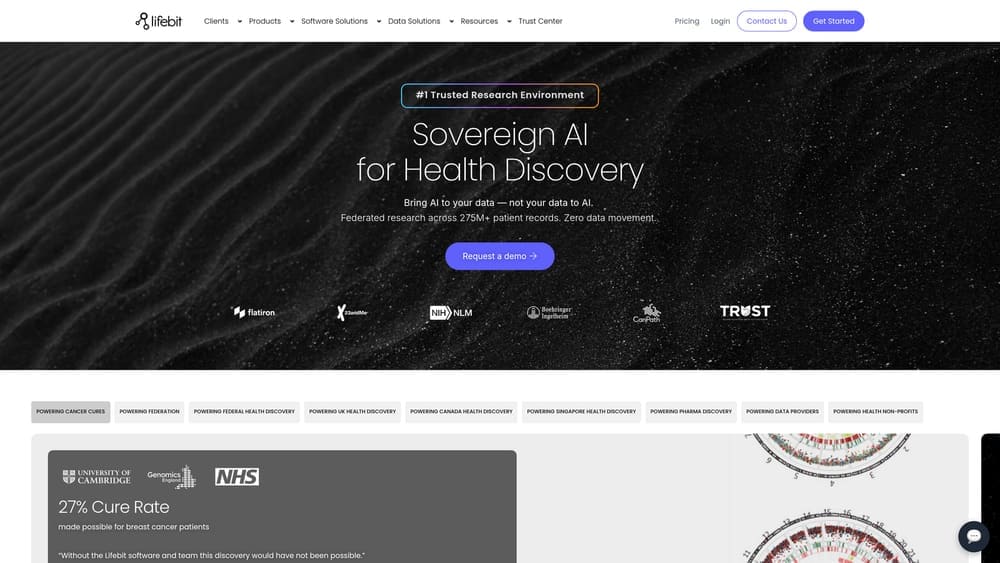
Lifebit Trusted Research Environment is a federated, compliant cloud workspace platform designed for secure analysis of sensitive health and genomic data.
Where This Tool Shines
The core strength here is federated analysis without data movement. You analyze data where it lives—across countries, institutions, and regulatory boundaries—without creating copies or risking exposure. This matters when you’re running a national precision medicine program or a multi-site clinical trial where data sovereignty isn’t negotiable.
The AI-Automated Airlock is the first-of-its-kind governance system that handles secure data exports automatically. No more waiting weeks for manual review committees to approve every analysis output. The system validates what can leave the environment based on your policies, cutting approval cycles from weeks to hours.
Key Features
Deploy in Your Cloud: No vendor lock-in—runs in AWS, Google Cloud, or Azure under your control and compliance framework.
AI-Automated Airlock: First automated governance system for secure data exports with policy-based approval workflows.
Day-One Compliance: FedRAMP, HIPAA, GDPR, and ISO27001 certified out of the box—no months-long certification projects.
Federated Analysis: Analyze across borders without data movement, meeting data residency requirements automatically.
48-Hour Harmonization: Trusted Data Factory uses AI to harmonize disparate datasets in two days instead of twelve months.
Best For
Government health agencies building national genomic programs, biopharma R&D teams managing multi-site trials, and academic consortia handling regulated data across institutions. If you need to prove to regulators that data never moved while still running meaningful analysis, this solves that problem.
Pricing
Custom enterprise pricing based on deployment scale and data volume. Contact for assessment.
2. DNAnexus
Best for: Large-scale genomic pipeline execution with strong pharmaceutical industry adoption
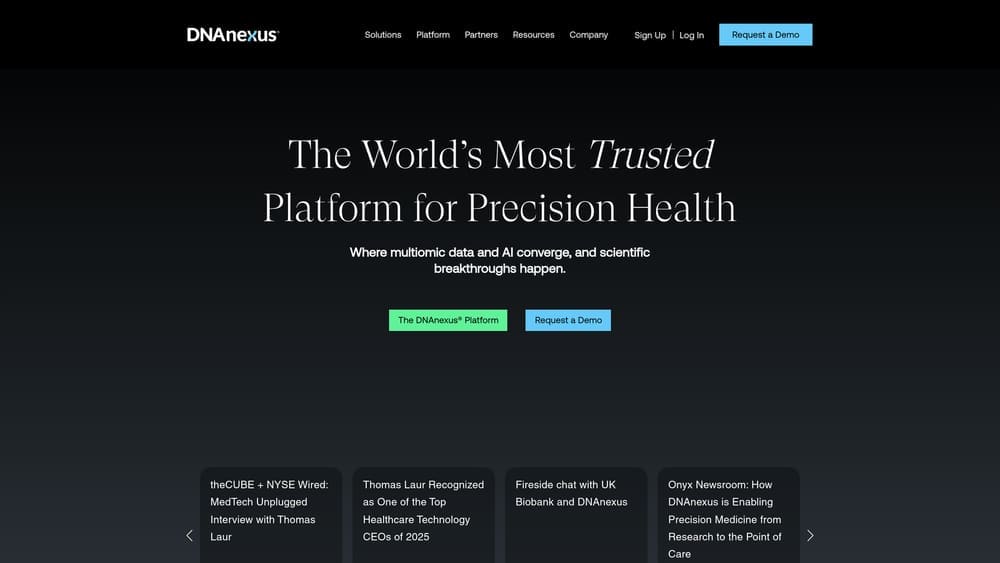
DNAnexus is a cloud-based platform built specifically for genomic analysis at pharmaceutical and population scale.
Where This Tool Shines
DNAnexus has deep roots in pharmaceutical genomics. The platform handles massive sequencing datasets with the kind of pipeline reliability that matters when you’re running a Phase III trial. Their UK Biobank partnership gives them credibility at population scale—half a million genomes analyzed with consistent performance.
The workflow portability is genuine. Write your pipeline in WDL or CWL, and it runs without platform-specific rewrites. This matters when your bioinformatics team already has validated workflows they can’t afford to rebuild.
Key Features
Scalable Pipeline Execution: Handles thousands of concurrent genomic analysis jobs without performance degradation.
UK Biobank Partnership: Proven at population scale with over 500,000 whole genome sequences processed.
HIPAA and ISO27001 Certified: Meets pharmaceutical industry regulatory requirements with audit trails.
Workflow Portability: Native support for WDL and CWL means your existing pipelines work without rewrites.
Best For
Pharmaceutical companies running genomic analysis in drug development, large academic centers with established bioinformatics teams, and research organizations needing proven scalability for population genomics studies.
Pricing
Usage-based pricing with enterprise agreements available. Costs scale with compute and storage consumption.
3. Terra by Broad Institute
Best for: Academic researchers needing open-source flexibility with NIH data access
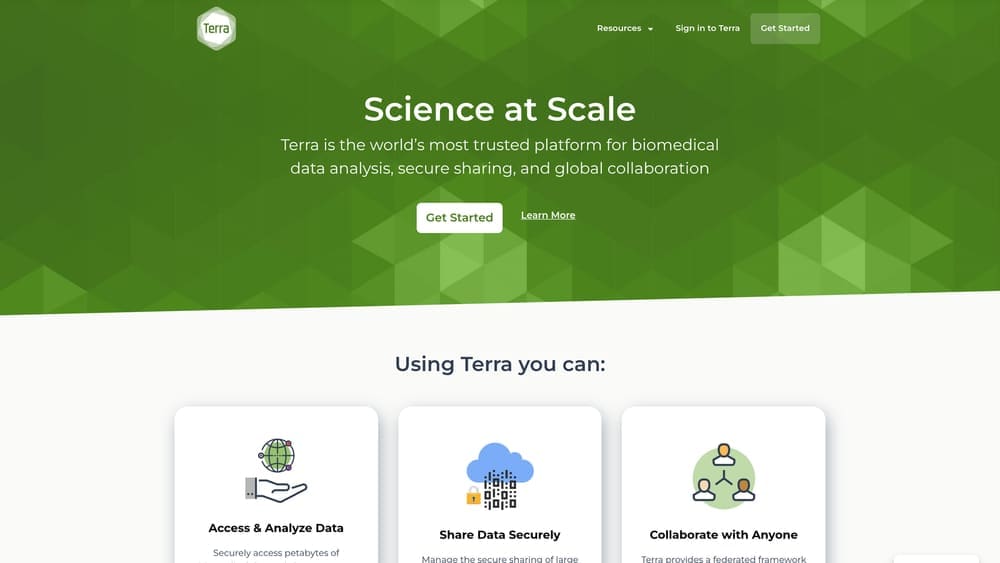
Terra is an open-source biomedical research platform built on Google Cloud with direct NIH STRIDES integration.
Where This Tool Shines
Terra’s open-source foundation means you’re not locked into proprietary workflows. The community-contributed workflow library gives you tested pipelines for common analyses without starting from scratch. When someone at another institution solves a problem, you can use their solution directly.
The NIH STRIDES integration is the real advantage for academic users. Direct access to AnVIL and NHGRI datasets without data transfer means you can start analysis immediately instead of waiting months for data access approvals.
Key Features
Open-Source Platform: Community-contributed workflows and tools with no vendor lock-in risk.
Native AnVIL Access: Direct connection to NIH genomic datasets without data transfer delays.
Jupyter and RStudio Integration: Work in familiar environments without learning new interfaces.
FedRAMP Moderate Authorized: Meets federal security requirements for government-funded research.
Best For
Academic researchers using NIH datasets, institutions with limited budgets needing free platform access, and teams wanting open-source flexibility without enterprise vendor commitments.
Pricing
Free platform access. You pay only for Google Cloud compute and storage consumption.
4. Seven Bridges Platform
Best for: Multi-cloud deployment with government and regulatory project experience
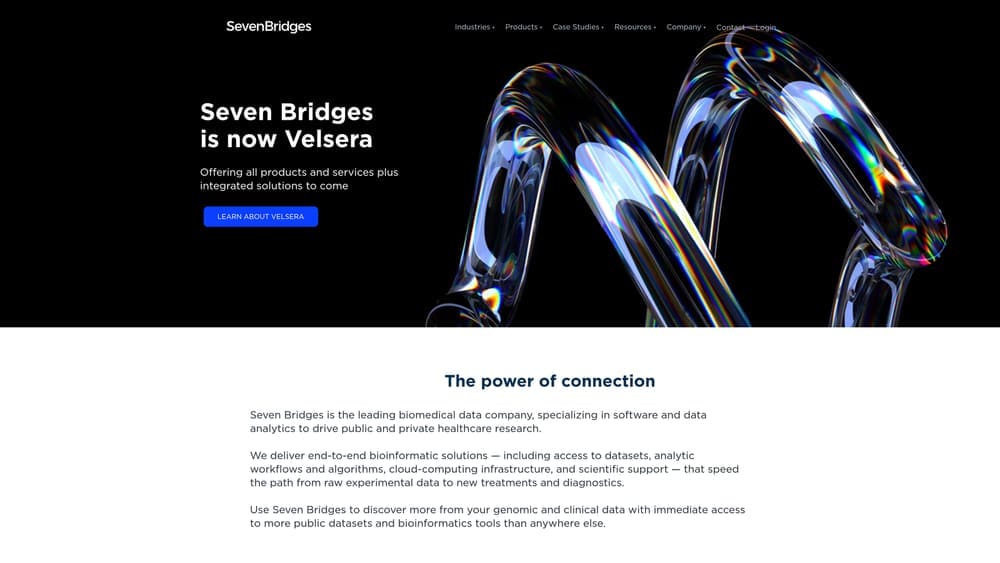
Seven Bridges Platform is a multi-cloud bioinformatics platform with proven FDA and NIH project track record.
Where This Tool Shines
The multi-cloud deployment is genuine flexibility, not marketing. Run the same workflows on AWS, Google Cloud, or Azure without platform rewrites. This matters when different collaborators have different cloud commitments or when you need to meet specific data residency requirements.
Their FDA project experience shows in the audit trail implementation. Every analysis step is logged with the kind of detail that survives regulatory inspection. CAVATICA, their pediatric research variant, demonstrates they understand the extra compliance layers that come with vulnerable populations.
Key Features
Multi-Cloud Deployment: Run identical workflows on AWS, Google Cloud, or Azure without modifications.
FDA Project Experience: Proven regulatory submission support with detailed audit trails.
FAIR Principles Implementation: Data findability, accessibility, interoperability, and reusability built into platform design.
CAVATICA Pediatric Platform: Specialized environment for pediatric research with additional consent and privacy controls.
Best For
Organizations with multi-cloud strategies, research groups preparing regulatory submissions, and pediatric research institutions needing specialized compliance controls.
Pricing
Custom pricing based on compute consumption and data volume. Contact for enterprise assessment.
5. Aridhia DRE
Best for: UK NHS data and European health systems with population health analytics
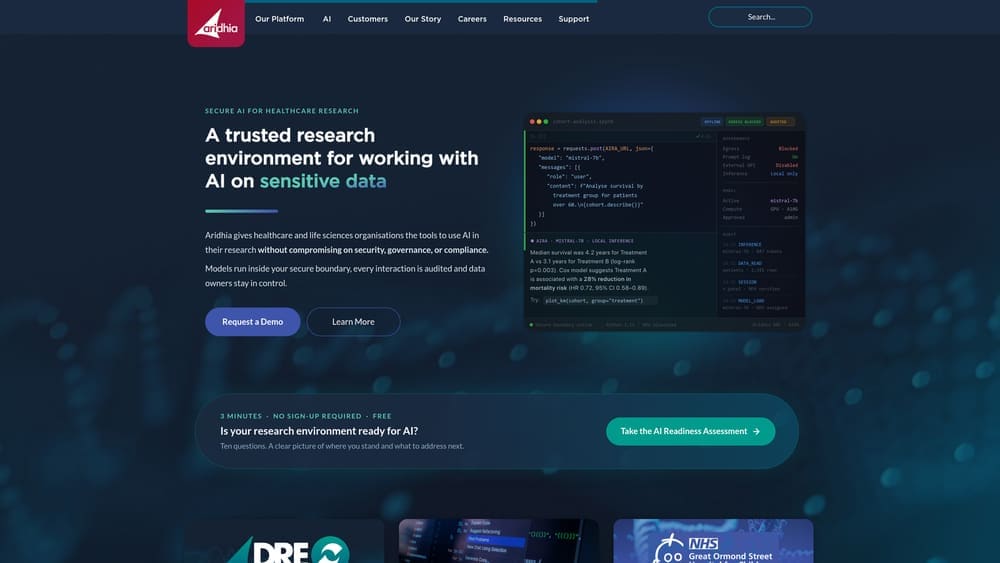
Aridhia DRE is a digital research environment focused on UK NHS and European health data with built-in population health capabilities.
Where This Tool Shines
Aridhia’s NHS DSP Toolkit compliance isn’t bolted on—it’s foundational. They understand UK health data governance at a level that matters when you’re working with NHS datasets. The platform speaks the language of NHS data controllers and Caldicott Guardians.
The built-in analytics workbench means researchers can start analysis without waiting for IT to provision tools. Population health dashboards are pre-configured for common NHS metrics, cutting setup time from weeks to hours.
Key Features
NHS DSP Toolkit Compliant: Meets UK health data security standards with ISO27001 certification.
Built-In Analytics Workbench: Pre-configured analysis tools reduce IT provisioning delays.
UK Health Data Partnerships: Established relationships with NHS trusts and UK Biobank.
Population Health Dashboards: Pre-built visualizations for common NHS quality metrics.
Best For
UK NHS trusts and academic health science networks, European health systems needing GDPR-compliant analysis environments, and population health researchers working with UK datasets.
Pricing
Custom enterprise pricing based on user count and data volume.
6. TriNetX
Best for: Real-world evidence generation and clinical trial feasibility studies
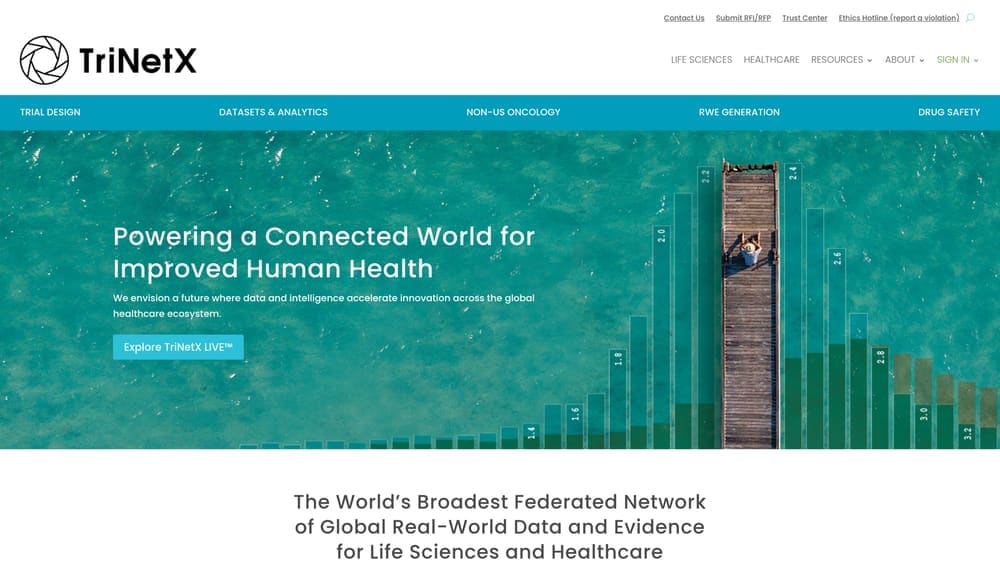
TriNetX is a global health research network providing federated access to real-world clinical data across health systems.
Where This Tool Shines
TriNetX solves the clinical trial feasibility problem—can you actually recruit enough patients matching your inclusion criteria? The federated network lets you query across health systems without seeing patient-level data, getting accurate feasibility counts in hours instead of months.
The protocol design tools help you refine inclusion criteria before committing to a study design. See how changing one criterion affects your recruitment pool across the entire network. This prevents the common mistake of designing trials that look good on paper but can’t recruit.
Key Features
Federated Health System Network: Query across hundreds of health systems without accessing individual patient records.
Protocol Design Tools: Test inclusion criteria against real patient populations before finalizing study design.
HIPAA and GDPR Compliant Queries: Federated analysis meets privacy requirements automatically.
Real-World Evidence Generation: Comparative effectiveness and safety studies using actual clinical practice data.
Best For
Pharmaceutical companies planning clinical trials, contract research organizations doing feasibility studies, and health services researchers needing real-world evidence across multiple sites.
Pricing
Subscription-based network access with tiered pricing by query volume and network scope.
7. Flywheel
Best for: Medical imaging research with DICOM and neuroimaging workflows
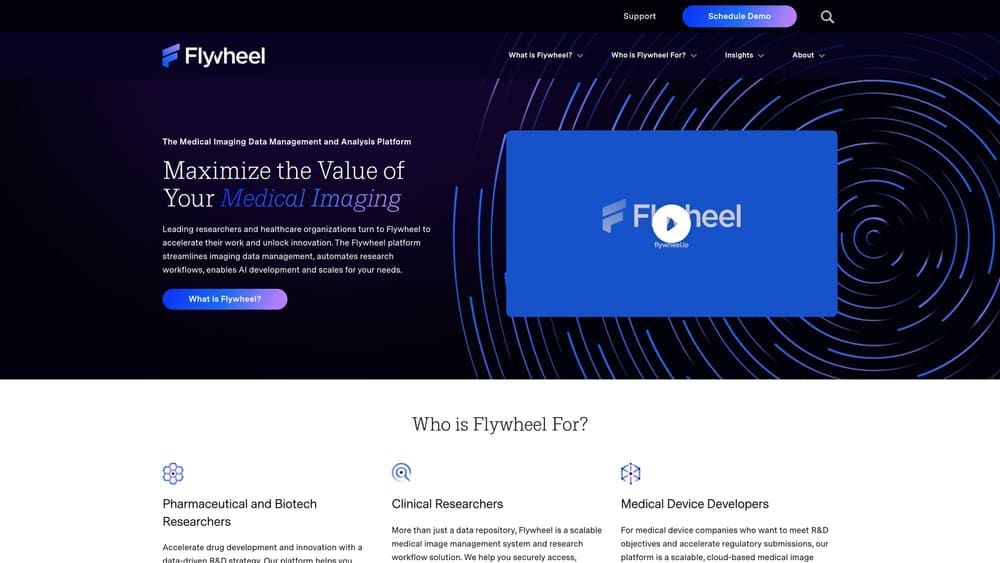
Flywheel is a research data platform specializing in medical imaging, neuroscience, and DICOM workflow automation.
Where This Tool Shines
Flywheel understands imaging data in ways general platforms don’t. DICOM and BIDS aren’t afterthoughts—they’re native data types with proper metadata handling. This matters when you’re running neuroimaging studies where file organization determines whether your analysis pipeline works.
The automated de-identification pipelines handle the complexity of removing PHI from DICOM headers without breaking downstream analysis. Many imaging studies fail because someone manually de-identified data and lost critical metadata. Flywheel automates this correctly.
Key Features
DICOM and BIDS Native Support: Proper handling of imaging metadata and neuroimaging data structures.
Automated De-Identification: Remove PHI from imaging data without breaking analysis pipelines.
Imaging Analysis Tool Integration: Direct connections to FSL, FreeSurfer, SPM, and other neuroimaging tools.
HIPAA Compliant with BAA: Business Associate Agreement available for clinical imaging research.
Best For
Neuroimaging research centers, radiology departments conducting clinical research, and multi-site imaging studies needing centralized data management with consistent quality control.
Pricing
Usage-based pricing with academic discounts available. Costs scale with storage and compute consumption.
8. Databricks for Healthcare
Best for: Large-scale health analytics with lakehouse architecture and ML/AI development
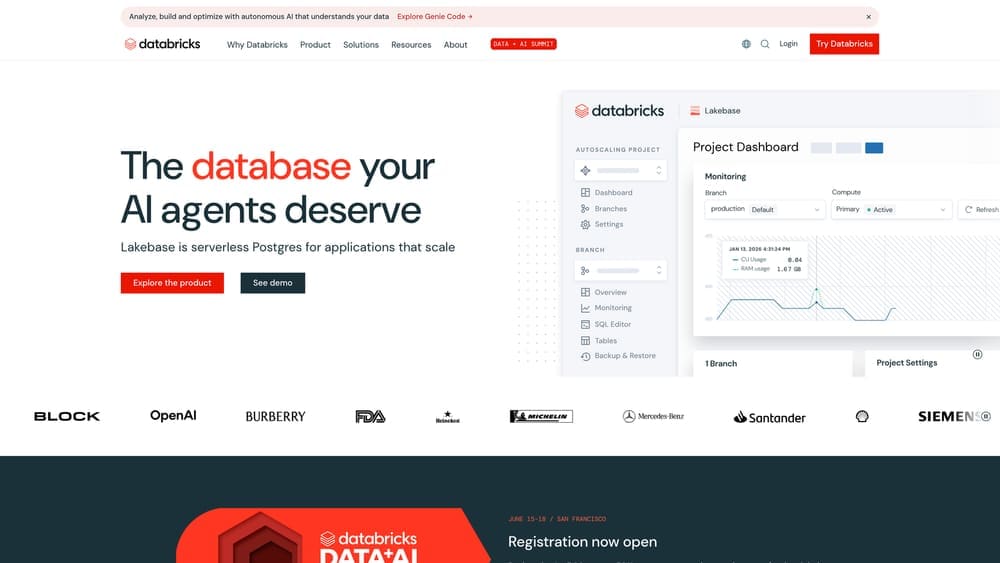
Databricks for Healthcare is a unified analytics platform bringing lakehouse architecture to health data at enterprise scale.
Where This Tool Shines
The lakehouse architecture solves the problem of health data scattered across data warehouses, data lakes, and operational systems. You can analyze structured claims data alongside unstructured clinical notes and genomic files without moving data between systems.
Native ML/AI model development means your data scientists can build predictive models directly on the same platform where data lives. Delta Lake provides the reliability layer that prevents the common lakehouse problem of inconsistent data versions breaking production models.
Key Features
Lakehouse Architecture: Unified platform for structured, semi-structured, and unstructured health data.
HIPAA BAA and HITRUST Certified: Enterprise-grade compliance with healthcare regulatory requirements.
Native ML/AI Development: Build and deploy predictive models without moving data to separate ML platforms.
Delta Lake Reliability: ACID transactions and versioning prevent data inconsistency issues.
Best For
Health systems with large-scale analytics programs, payers building predictive models for population health, and life sciences companies integrating diverse data types for drug development insights.
Pricing
Usage-based DBU (Databricks Unit) pricing with enterprise agreements for committed consumption.
9. Microsoft Azure Health Data Services
Best for: Enterprise Microsoft environments needing FHIR-native interoperability
Microsoft Azure Health Data Services is an enterprise health data platform with FHIR-native interoperability and deep Microsoft ecosystem integration.
Where This Tool Shines
If your organization runs on Microsoft infrastructure, Azure Health Data Services integrates without friction. FHIR, DICOM, and MedTech device data all flow into a unified data model that works with Power BI for reporting and Teams for collaboration.
Azure Active Directory integration means you use existing identity management instead of creating separate user accounts. This matters at enterprise scale where managing separate credentials for every system creates security risks and help desk overhead.
Key Features
FHIR, DICOM, and MedTech Services: Native support for clinical, imaging, and device data with standardized APIs.
HITRUST and HIPAA Certified: Enterprise compliance certifications with audit-ready logging.
Power BI and Teams Integration: Use existing Microsoft tools for reporting and collaboration.
Azure Active Directory Security: Leverage existing identity management and access controls.
Best For
Health systems heavily invested in Microsoft infrastructure, enterprise IT departments needing unified identity management, and organizations building patient-facing applications on FHIR standards.
Pricing
Pay-as-you-go Azure consumption model with enterprise agreements for committed usage.
Making the Right Choice
The real question isn’t which platform has the most features—it’s which one solves your specific compliance, scale, and analysis challenges without creating new ones.
Government precision medicine programs with federated data needs across borders should look at Lifebit first. The federated analysis without data movement solves the regulatory problem that kills most multi-country initiatives. Pure genomics pipelines at pharmaceutical scale point toward DNAnexus or Seven Bridges—both have the track record and reliability that matters when your drug development timeline depends on analysis completing on schedule.
Academic research teams on limited budgets benefit from Terra’s free platform access and NIH dataset integration. You pay only for compute, which keeps costs predictable. UK and NHS-focused research needs Aridhia’s deep understanding of UK data governance—trying to retrofit another platform for NHS DSP Toolkit compliance wastes months.
Medical imaging research, particularly neuroimaging, works best on Flywheel. The DICOM and BIDS native support prevents the metadata disasters that plague imaging studies on general platforms. Real-world evidence and clinical trial feasibility studies need TriNetX’s federated network—you can’t replicate that capability by cobbling together data use agreements with individual health systems.
Enterprise Microsoft environments should evaluate Azure Health Data Services seriously. The integration with existing infrastructure reduces deployment friction significantly. General health analytics at scale with ML/AI development points toward Databricks—the lakehouse architecture handles the data variety that breaks traditional approaches.
Start with your data governance requirements, then work backward to the platform that meets them without forcing you to rebuild your workflows. The wrong platform creates compliance gaps that regulatory audits will find. The right platform becomes invisible infrastructure that lets your researchers focus on science instead of fighting with data access permissions.
If you’re managing federated analysis across regulated boundaries or need to prove data never moved while still generating insights, Get-Started for Free with Lifebit to see how automated governance and federated architecture solve problems that manual processes can’t.