

8 Best ISO 27001 Certified Research Platforms in 2026

When you’re handling genomic data, patient records, or multi-national health datasets, security certification isn’t a nice-to-have. It’s a gate. ISO 27001 certification proves a platform has passed rigorous third-party audits for information security management, giving procurement teams, legal departments, and data governance officers something concrete to point to.
For CIOs, Chief Data Officers, and research leads in government health agencies, biopharma, and academic institutions, choosing an ISO 27001 certified research platform means fewer compliance headaches, faster procurement approvals, and real protection for sensitive data. But not all certified platforms are built the same. Some specialize in genomics. Others focus on clinical trials, lab informatics, or medical imaging.
Here are the top ISO 27001 certified research platforms worth evaluating in 2026, covering what each does best, who it’s built for, key features, and pricing.
1. Lifebit
Best for: National-scale precision medicine programs and federated multi-site genomic research requiring full compliance coverage.
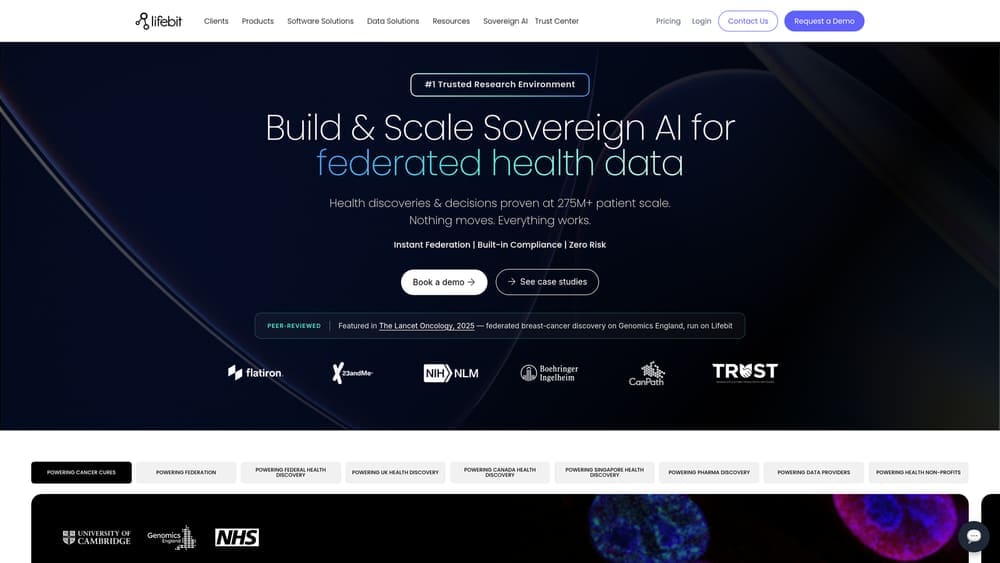
Lifebit is a federated data platform built for large-scale health research that demands ISO 27001, FedRAMP, HIPAA, and GDPR compliance without compromising analytical speed.
Where This Tool Shines
Lifebit’s core differentiator is its no-data-movement architecture. Instead of centralizing sensitive records, researchers query data where it lives, across institutions, countries, and cloud environments. This directly addresses the data sovereignty concerns that stall most cross-border research programs.
The platform is trusted by NIH, Genomics England, and Singapore’s Ministry of Health, managing over 275 million records across 30+ countries. That’s not a pilot deployment. That’s national infrastructure at scale, which is exactly the context its compliance stack was built for.
Key Features
Federated Analysis: Query and analyze data across sites without moving it, preserving data residency and sovereignty requirements by design.
Trusted Data Factory (TDF): AI-powered data harmonization that transforms raw, siloed datasets into analysis-ready formats in 48 hours rather than months.
Trusted Research Environment (TRE): Secure, compliant cloud workspaces with full audit trails, role-based access controls, and governance built into every layer.
AI-Automated Airlock: A first-of-its-kind governance system for secure, audited data exports that automates what used to require manual review cycles.
Bring-Your-Own-Cloud Deployment: Deploy in your own cloud environment with no vendor lock-in, giving your organization full ownership and control.
Best For
Government health agencies launching national genomics programs, biopharma R&D teams working across multi-site cohorts, and academic consortia handling regulated data under GDPR or HIPAA. Particularly strong for organizations that need federated analysis alongside a full compliance stack from day one.
Pricing
Custom pricing based on deployment scale and modules selected. Contact Lifebit directly for a quote tailored to your program’s scope.
2. Aridhia DRE
Best for: UK NHS-adjacent and academic health research requiring governed collaborative workspaces.
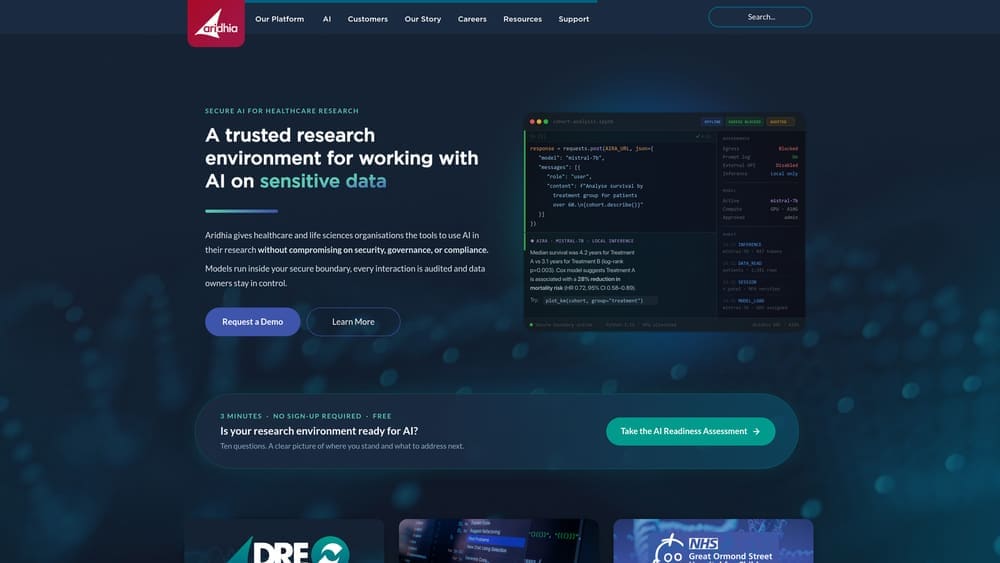
Aridhia DRE is a Digital Research Environment designed for governed, collaborative health data analytics with a strong presence across UK academic and NHS research programs.
Where This Tool Shines
Aridhia’s strength is in structured collaboration. Multiple researchers can work within isolated, governed workspaces on shared datasets without compromising access controls or data integrity. This makes it well-suited for consortium-style research where different teams need different permissions on the same underlying data.
The platform’s disclosure control capabilities are particularly relevant for safe outputs, ensuring that results leaving a workspace meet statistical disclosure standards before release.
Key Features
Governed Workspaces: Role-based access and project-level governance ensure each team sees only what they’re authorized to access.
Built-in Analytics Tools: R, Python, and Jupyter are available natively within the secure environment, so researchers don’t need to export data to analyze it.
Data Ingestion and Curation: Pipelines for ingesting and curating health datasets from NHS and academic sources into analysis-ready formats.
Audit Trails and Disclosure Control: Full logging of workspace activity and automated safe output checks before data leaves the environment.
Best For
UK academic institutions, NHS trusts, and health data research hubs that need a proven, compliant workspace environment for multi-investigator studies. Less suited for organizations requiring global federated analysis or large-scale genomics pipelines.
Pricing
Custom pricing. Typically licensed per workspace or per project. Contact Aridhia for current rates.
3. DNAnexus
Best for: Large-scale genomics and multi-omics analysis for pharma, biobanks, and population health programs.
DNAnexus is a cloud-based platform for large-scale genomics and biomedical data analysis, used by major pharma companies and biobank programs globally.
Where This Tool Shines
DNAnexus is purpose-built for the volume and complexity of genomics data. Whole genome sequencing, exome sequencing, RNA-seq pipelines: these run reliably at scale on its cloud infrastructure. Its partnership with UK Biobank and integration into major population health programs gives it credibility in high-stakes genomic research settings.
The Apollo data management layer adds cohort-level analytics on top of raw sequencing workflows, which bridges the gap between pipeline execution and downstream research questions.
Key Features
Scalable Genomics Pipelines: WGS, WES, and RNA-seq workflows run on cloud infrastructure designed for biomedical data at population scale.
Apollo Data Management: Multi-omics cohort analysis tools for connecting sequencing outputs to clinical and phenotypic data.
Compliance Certifications: ISO 27001, HIPAA, and SOC 2 certified to meet pharma and government procurement requirements.
Workflow Portability: Support for WDL and CWL workflow languages enables portability and reproducibility across compute environments.
Biobank Partnerships: Direct integrations with UK Biobank and other major biobank programs for controlled-access data analysis.
Best For
Pharma R&D teams, biobank programs, and population genomics researchers who need industrial-strength sequencing pipelines with compliance baked in. Strong choice when genomics volume is the primary driver.
Pricing
Usage-based pricing. Enterprise contracts available. Costs scale with compute and storage consumption on underlying cloud infrastructure.
4. Flywheel
Best for: Medical imaging research and multi-modal clinical data management requiring automated curation and AI-ready pipelines.
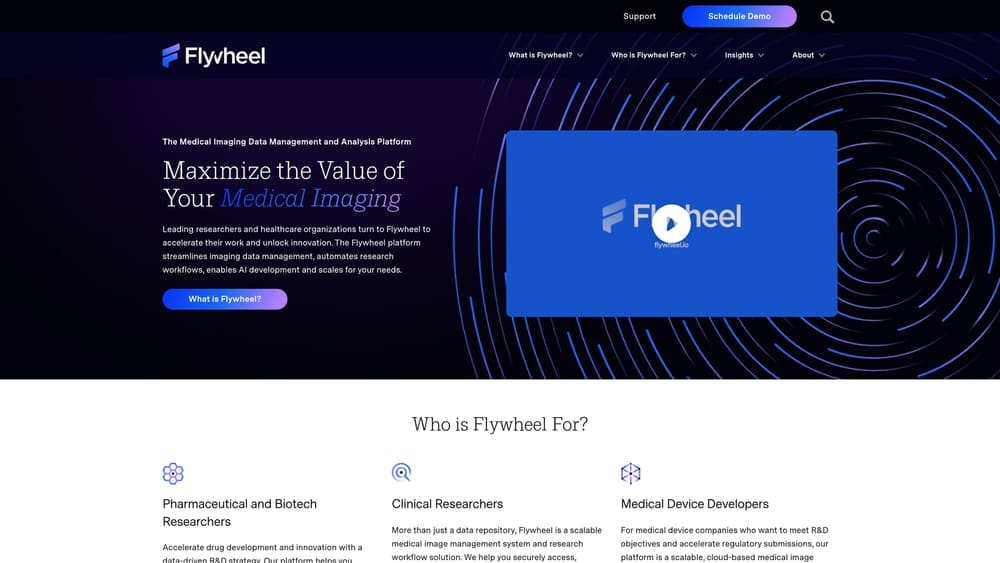
Flywheel is a research data platform focused on medical imaging and clinical data management with automated curation, de-identification, and machine learning capabilities.
Where This Tool Shines
If your research involves MRI, CT, PET, or other imaging modalities, Flywheel handles the messy work that typically slows teams down: DICOM de-identification, metadata standardization, and organizing data into formats that ML models can actually consume. That automated curation layer saves significant manual effort in imaging-heavy studies.
Its ability to support both cloud and on-premise deployments gives institutions with strict data residency requirements the flexibility to keep imaging data where it needs to stay.
Key Features
Automated DICOM De-identification: Strips and standardizes PHI from imaging files automatically, reducing manual curation burden at scale.
Multi-modal Data Support: Handles imaging (MRI, CT, PET) alongside clinical metadata for integrated research datasets.
ML Pipeline Integration: Built-in tools for training and deploying machine learning models directly within the governed environment.
Flexible Deployment: HIPAA-compliant cloud or on-premise deployment to meet institutional data residency requirements.
ISO 27001 and SOC 2 Type II: Dual certification covering both information security management and operational controls.
Best For
Academic medical centers, radiology research groups, and clinical AI teams working with imaging data who need automated curation and compliant infrastructure. Less suited for genomics-first or federated multi-site programs.
Pricing
Custom pricing based on data volume and deployment model. Contact Flywheel for a tailored quote.
5. Benchling
Best for: Regulated biotech and pharma R&D teams managing lab workflows, molecular biology data, and sample registries.
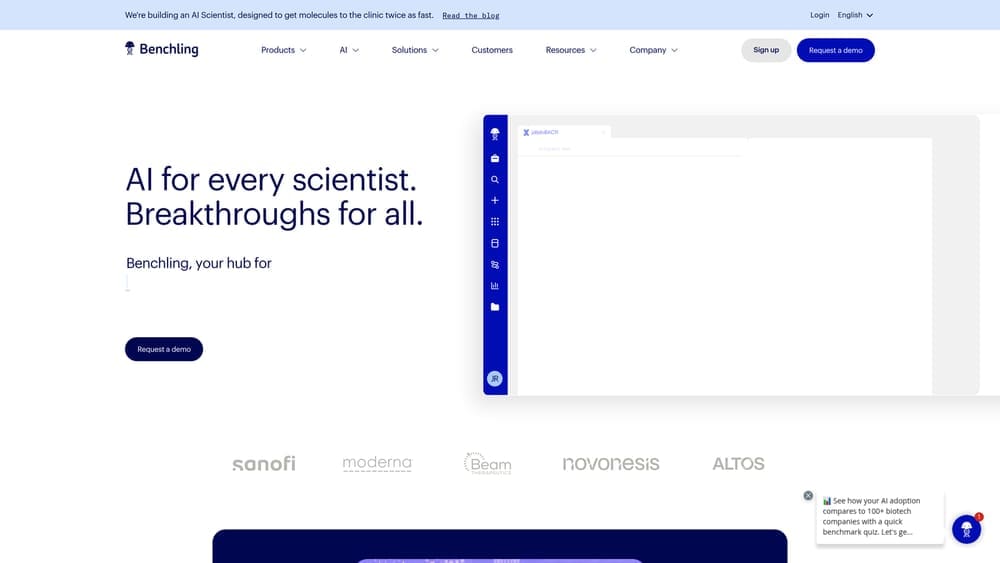
Benchling is a cloud-based R&D platform for life sciences with electronic lab notebooks, configurable registries, and workflow management built for regulated environments.
Where This Tool Shines
Benchling sits at the intersection of lab operations and data management. It’s where bench scientists record experiments, track samples, design sequences, and manage the biological assets that feed into downstream research. Its 21 CFR Part 11 compliance support makes it viable for regulated workflows in pharma and biotech where audit trails on lab records are a regulatory requirement.
The API-first architecture is a practical advantage for organizations with existing LIMS or ELN systems. Benchling integrates rather than replaces, which lowers adoption friction in established lab environments.
Key Features
Electronic Lab Notebook (ELN): 21 CFR Part 11 compliant notebooks that capture experimental records with full audit trails for regulatory submissions.
Molecular Biology Tools: Sequence design, CRISPR guide tools, and plasmid mapping built directly into the platform for wet lab workflows.
Configurable Registries: Manage samples, molecules, cell lines, and other biological entities with customizable schemas and relationships.
ISO 27001 and SOC 2 Type II: Dual certification supporting procurement requirements in pharma and regulated biotech.
API-First Integration: Connect with LIMS, ERP, and other R&D systems to build a unified data environment without replacing existing tools.
Best For
Biotech and pharma R&D organizations that need a compliant, integrated platform for lab data management. Strong fit for drug discovery and development teams. Less relevant for clinical data analytics or genomics pipeline work.
Pricing
Free tier available for academic users. Enterprise pricing on request for commercial and regulated deployments.
6. Terra (Broad Institute)
Best for: NIH-funded genomics researchers and government precision medicine programs requiring open-source, FedRAMP-authorized infrastructure.
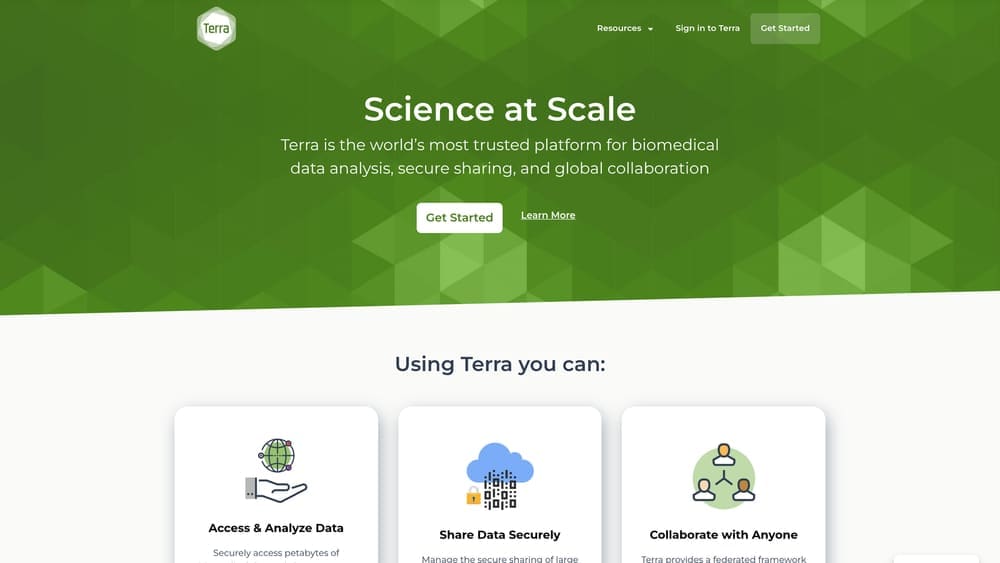
Terra is an open-source, cloud-native platform for genomics research built by the Broad Institute, deeply integrated with NIH datasets and widely used in government-funded precision medicine programs.
Where This Tool Shines
Terra’s primary advantage is access. It connects researchers directly to major NIH-controlled datasets including All of Us, TCGA, and the AnVIL ecosystem, without requiring separate data access agreements for each dataset. For researchers already operating within the NIH funding and data access framework, this is a significant time saver.
Its FedRAMP authorization is critical for government-funded programs that require cloud platforms to meet federal security standards. This puts Terra in a short list of platforms that can legally host controlled-access federal health data.
Key Features
NIH Dataset Access: Direct connectivity to All of Us, TCGA, AnVIL, and other major NIH-controlled research datasets.
WDL Workflow Execution: Run scalable genomics pipelines using Workflow Description Language on Google Cloud infrastructure.
Interactive Analysis: Jupyter notebooks, RStudio, and Galaxy environments available within the secure workspace.
FedRAMP Authorization: Meets federal cloud security requirements for handling controlled-access government health data.
Open-Source Community: Active development community with shared workflows, notebooks, and methods through the Dockstore and Broad ecosystem.
Best For
Academic researchers and government-funded teams working with NIH datasets who need FedRAMP-authorized infrastructure. Strong for genomics workflows. Less suited for organizations needing enterprise support, federated analysis across non-NIH data sources, or commercial deployment flexibility.
Pricing
Free to use. Researchers pay only for underlying Google Cloud compute and storage consumed during analysis.
7. TriNetX
Best for: Clinical trial feasibility, site selection, and real-world evidence studies using federated EHR network data.
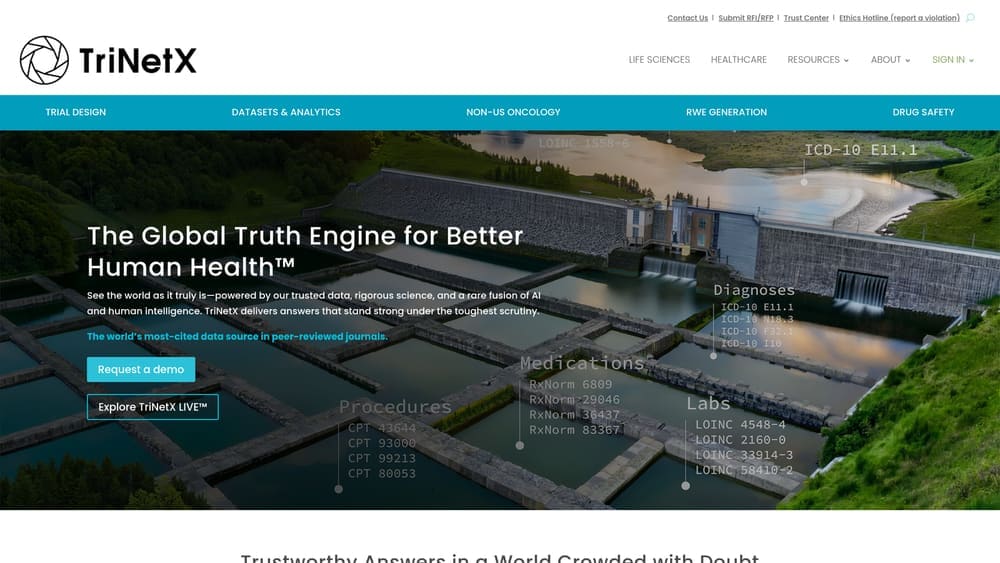
TriNetX is a global federated health research network connecting de-identified EHR data from health systems worldwide for clinical research and real-world evidence generation.
Where This Tool Shines
TriNetX operates differently from most platforms on this list. Rather than providing a workspace for your own data, it gives you access to a federated network of de-identified EHR data from health systems globally. This makes it exceptionally useful for clinical trial feasibility work, where the core question is: “Do enough eligible patients exist, and where are they?”
The self-service analytics interface lets clinical and commercial teams run protocol optimization and cohort queries without needing a data engineer in the loop, which accelerates early-stage trial design considerably.
Key Features
Federated EHR Network: Access to de-identified patient data from health systems worldwide without centralizing the underlying records.
Protocol Optimization: Tools for refining inclusion/exclusion criteria and identifying sites with sufficient eligible patient populations.
Real-World Evidence Analytics: Generate regulatory-grade real-world evidence outputs for submissions and market access decisions.
ISO 27001, HIPAA, and GDPR: Multi-framework compliance covering the major regulatory requirements for clinical research data.
Self-Service Interface: Clinical and commercial teams can run queries and analyses without requiring dedicated data science support.
Best For
Pharma and biotech clinical development teams, CROs, and health systems conducting trial feasibility, site selection, or real-world evidence studies. Not designed for genomics pipelines or primary data management.
Pricing
Subscription-based. Pricing varies by network access tier and modules selected. Contact TriNetX for current rates.
8. Palantir Foundry (AIP for Healthcare)
Best for: Large government health agencies and enterprise health systems requiring complex, multi-source data integration at scale.
Palantir Foundry is an enterprise data integration and analytics platform used by large health systems and government agencies for complex, multi-source data operations.
Where This Tool Shines
Foundry’s ontology-based data model is its defining technical feature. Rather than treating data as flat tables, it creates a semantic layer that maps relationships between entities across disparate structured and unstructured sources. For large health systems or government agencies integrating claims data, EHR records, genomics, and operational data simultaneously, this approach handles complexity that simpler platforms can’t.
Its deployment track record across US government health and defense agencies gives it credibility in high-security, high-stakes environments where procurement teams need proven infrastructure rather than emerging tools.
Key Features
Ontology-Based Integration: Semantic data modeling connects structured and unstructured sources across complex, multi-system environments.
Granular Access Controls: Fine-grained permissions and full audit logging across every data operation within the platform.
ISO 27001, FedRAMP, and SOC 2: Comprehensive certification stack covering federal, international, and enterprise security requirements.
AI/ML Pipeline Orchestration: Build, deploy, and govern machine learning pipelines within the same controlled environment as your data.
Government Deployment Track Record: Actively deployed across US government health and defense agencies with established security clearance processes.
Best For
Large government health agencies, defense health programs, and enterprise health systems with complex multi-source data integration needs and budgets to match. The cost and implementation complexity make it a poor fit for academic groups or mid-size research organizations.
Pricing
Enterprise pricing only. Contracts typically run in the high six-figure to seven-figure annual range. Not suited for organizations without significant dedicated IT and data infrastructure budgets.
Choosing the Right Platform for Your Research Program
Every platform on this list holds ISO 27001 certification, but that shared credential covers a wide range of capabilities, deployment models, and use cases. The right choice depends on what you’re actually trying to do with your data.
If your priority is federated analysis across multi-site genomic and clinical datasets with full compliance coverage including FedRAMP, HIPAA, and GDPR, Lifebit is the strongest option. Its no-data-movement architecture solves the data sovereignty problem at the source, and the AI-powered harmonization layer means you’re not waiting months to get data analysis-ready. It’s the platform built for organizations running national-scale or cross-border health research programs.
For NIH-funded genomics researchers already operating within the federal data ecosystem, Terra offers FedRAMP-authorized infrastructure at no platform cost. For pharma teams focused on clinical trial feasibility and real-world evidence, TriNetX’s federated EHR network is purpose-built for that workflow. For biotech R&D teams managing lab operations and molecular data, Benchling handles the bench-to-data pipeline better than any other option here.
Aridhia and Flywheel serve more specialized contexts: NHS-adjacent collaborative research and medical imaging programs respectively. DNAnexus remains a strong choice for high-volume genomics pipelines. Palantir Foundry fits large government programs with the budget and complexity to warrant it.
The compliance certification is the starting point, not the finish line. What matters is whether the platform’s architecture, deployment model, and feature set actually match your program’s data environment and research goals.
If you’re evaluating federated research infrastructure that can handle genomic and clinical data across borders without moving it, Get-Started for Free and see how Lifebit handles your specific compliance and analytical requirements firsthand.
Related Lifebit reading
Continue with these pillar guides:
- The complete guide to Trusted Research Environments — what a TRE is, the Five Safes framework, and why federated architectures became the procurement default after the UK Biobank incident.
- Federated learning in healthcare — how machine-learning models train across hospitals and biobanks without the data ever leaving its source.
- The biomedical data lakehouse — the open-format storage layer that powers clinical, research, and AI workloads from one copy of the data.
- Federated data governance — how each data custodian retains control while participating in multi-institution research and AI.
- Lifebit’s federated biomedical data platform — see how Genomics England, Singapore Synapxe, NIH, and Boehringer Ingelheim use Lifebit to run Sovereign AI on federated health data.