

9 Best Secure Genomic Data Analysis Platforms in 2026
Genomic data is the most sensitive data your organization handles. One breach exposes patient identities, disease risks, and family lineages—permanently. Yet researchers need access to analyze it.
The tension between security and utility has stalled precision medicine programs for years. The solution: platforms built from the ground up for secure genomic analysis. Not retrofitted security. Not bolted-on compliance. Native protection that lets researchers work without moving data outside controlled environments.
This guide evaluates 9 platforms that solve this problem. We assessed each on compliance certifications, data residency controls, federated analysis capabilities, and real-world deployment scale. Whether you’re building a national biobank or accelerating drug discovery pipelines, these platforms deliver security without sacrificing research velocity.
1. Lifebit
Best for: Government agencies and biopharma requiring federated analysis without data movement across sovereign boundaries
Lifebit is a federated data platform enabling secure genomic analysis without moving data from controlled environments.
Where This Platform Shines
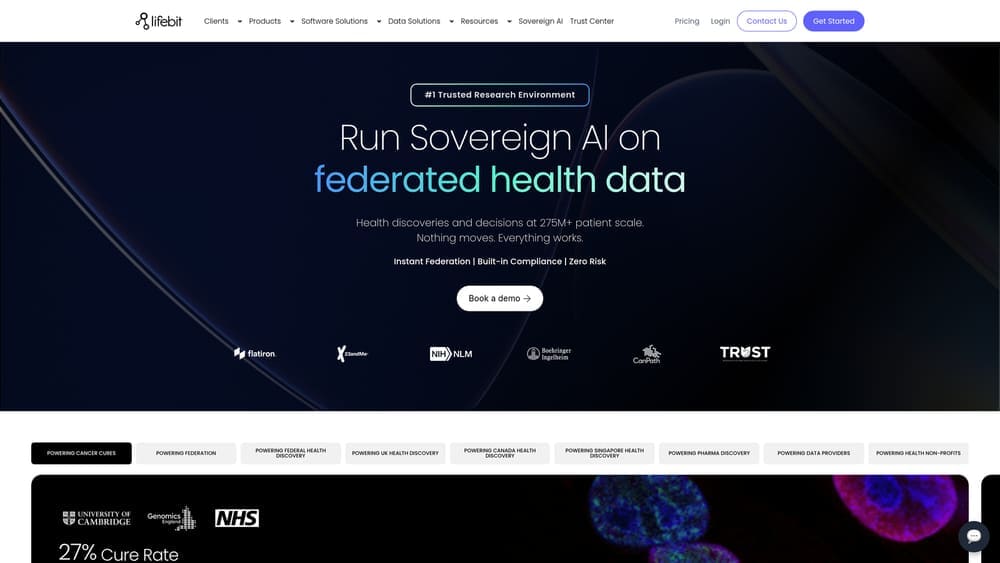
Lifebit solves the fundamental problem that kills most national genomics programs: data can’t move, but analysis must happen. The platform’s federated architecture lets researchers query and analyze genomic datasets where they live—in your cloud, under your control, within your regulatory boundaries.
Trusted by NIH, Genomics England, and Singapore’s Ministry of Health to manage over 275 million records, Lifebit has proven it can operate at national scale. The AI-Automated Airlock—the industry’s first governance system for secure data exports—means researchers get results without manual approval bottlenecks that slow discovery.
Key Features
Federated Analysis Architecture: Data never leaves your environment—queries run where data lives, eliminating transfer risks entirely.
Trusted Data Factory: AI-powered harmonization transforms siloed datasets into analysis-ready formats in 48 hours instead of 12 months.
AI-Automated Airlock: First-of-its-kind governance system automates compliant data exports without manual review delays.
Multi-Certification Compliance: FedRAMP, HIPAA, GDPR, and ISO 27001 certified from day one—no configuration required.
Cloud-Agnostic Deployment: Deploy in your sovereign cloud environment with zero vendor lock-in—you own the infrastructure.
Best For
Government health agencies building national precision medicine programs where data sovereignty is non-negotiable. Biopharma R&D teams under pressure to accelerate pipelines across multi-site collaborations. Academic consortia managing regulated data that cannot be centralized. Organizations that need speed and security without tradeoffs.
Pricing
Enterprise pricing based on deployment scale. Contact Lifebit directly for quotes tailored to your data volume and compliance requirements.
2. DNAnexus
Best for: Pharma collaborations and biobanks requiring multi-site analysis with proven enterprise deployment track record
DNAnexus is a cloud-based genomics platform powering large-scale research collaborations and precision medicine initiatives.
Where This Platform Shines
DNAnexus has built its reputation on handling population-scale genomics for major pharma and biobank partnerships. The Apollo platform manages cohorts in the millions, with workflow orchestration that handles complex multi-stage pipelines without breaking.
The platform’s strength lies in proven enterprise deployments. When AstraZeneca or Regeneron needs to analyze genomic data across global sites, DNAnexus delivers the infrastructure. Multi-cloud deployment options mean you’re not locked into a single provider’s ecosystem.
Key Features
Apollo Platform: Purpose-built for population-scale genomics with cohort management tools designed for millions of samples.
Enterprise Partnership Track Record: Powers collaborations for major pharma companies and national biobanks with proven scale.
Multi-Cloud Flexibility: Deploy across AWS, Azure, or Google Cloud based on your organizational requirements.
Workflow Orchestration: Native support for WDL and Nextflow ensures compatibility with existing bioinformatics pipelines.
Collaboration Tools: Built-in features for multi-site research teams working across organizational boundaries.
Best For
Pharmaceutical R&D teams running multi-site collaborations with CROs and academic partners. National biobanks managing population-scale cohorts. Organizations with existing bioinformatics workflows in WDL or Nextflow that need enterprise-grade infrastructure without rebuilding pipelines.
Pricing
Usage-based pricing model with enterprise agreements available. Costs scale with compute usage and data storage—contact DNAnexus for detailed pricing based on your projected workload.
3. Seven Bridges
Best for: Cancer genomics research and pediatric studies requiring NIH-validated infrastructure
Seven Bridges is a biomedical data analysis platform powering major NIH cancer data initiatives and research collaborations.
Where This Platform Shines
Seven Bridges earned its credibility by powering the NCI Cancer Genomics Cloud—one of NIH’s flagship precision medicine infrastructure projects. This isn’t marketing positioning. It’s battle-tested infrastructure handling some of the most complex cancer genomics datasets in existence.
The CAVATICA platform extends this expertise to pediatric research, providing specialized tools for analyzing childhood diseases. When your research involves cancer genomics or pediatric populations, Seven Bridges brings domain-specific optimizations that generic platforms can’t match.
Key Features
NCI Cancer Genomics Cloud: Powers one of NIH’s primary cancer genomics infrastructure initiatives with proven reliability.
CAVATICA Platform: Specialized environment for pediatric research with tools optimized for childhood disease analysis.
CWL Workflow Support: Native Common Workflow Language compatibility ensures portability across platforms.
Cancer Genomics Optimization: Domain-specific tools and pipelines built for oncology research workflows.
NIH Validation: Infrastructure validated through major government research initiatives provides compliance confidence.
Best For
Cancer research centers analyzing tumor genomics data. Pediatric hospitals and research institutions studying childhood diseases. Academic teams participating in NIH-funded cancer genomics initiatives. Organizations that need infrastructure already validated by major government research programs.
Pricing
Project-based licensing and enterprise agreements available. Pricing varies based on project scope and data volume—contact Seven Bridges for quotes tailored to your research needs.
4. Illumina Connected Analytics
Best for: Labs with Illumina sequencing infrastructure seeking seamless sequencer-to-analysis integration
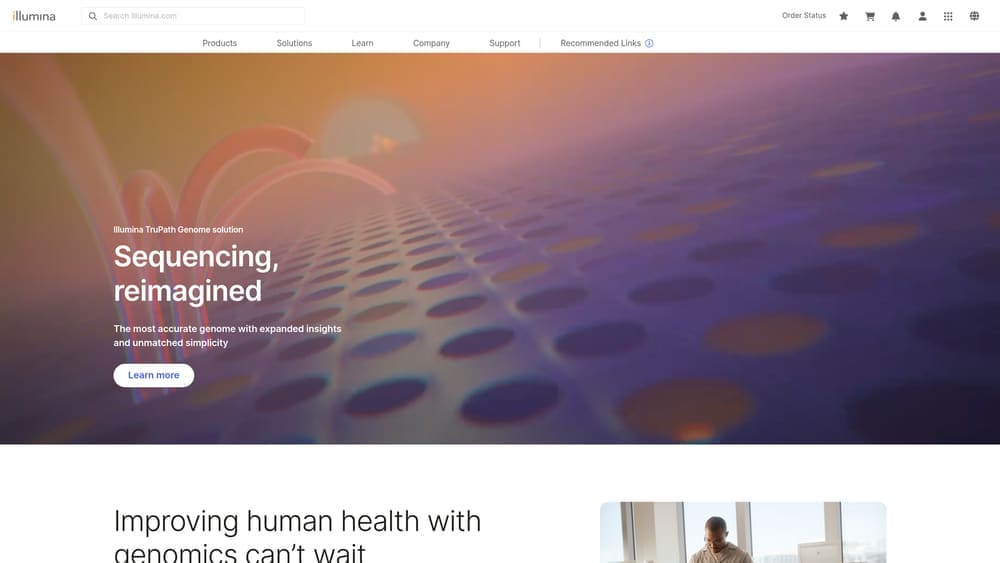
Illumina Connected Analytics is a cloud-based analytics platform integrated directly with Illumina’s sequencing ecosystem.
Where This Platform Shines
If you’re running Illumina sequencers, Connected Analytics eliminates the friction between data generation and analysis. Sequencing runs flow directly into BaseSpace workflows without manual data transfer steps that introduce errors and delays.
The DRAGEN secondary analysis pipelines deliver clinical-grade variant calling with speed and accuracy that standalone tools struggle to match. For labs where sequencing and analysis need to operate as a single continuous workflow, this integration is the platform’s defining advantage.
Key Features
Native Sequencer Integration: Direct connection to Illumina sequencing instruments eliminates manual data transfer steps.
BaseSpace Ecosystem: Comprehensive workflow management environment with pre-built and custom pipeline support.
DRAGEN Pipelines: Industry-leading secondary analysis delivers clinical-grade variant calling with exceptional speed.
Clinical Validation: Tools and workflows designed to meet clinical laboratory quality standards.
Ecosystem Apps: Large library of third-party applications extends platform capabilities without custom development.
Best For
Clinical laboratories running Illumina sequencers for diagnostic applications. Research facilities with significant Illumina infrastructure investment. Organizations requiring clinical-grade variant calling with minimal configuration. Labs seeking to minimize the gap between sequencing completion and analysis start.
Pricing
Subscription-based model with tiers based on data volume. Pricing scales with sequencing throughput—contact Illumina for quotes aligned with your sequencing capacity.
5. Terra
Best for: Academic researchers and NIH-funded projects requiring open-source infrastructure with subsidized compute
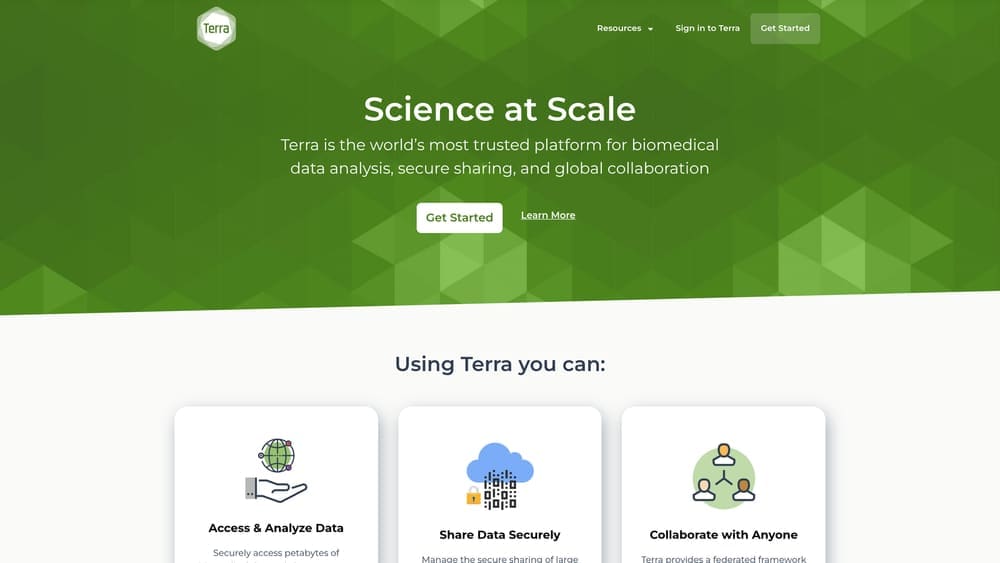
Terra is an open-source cloud platform developed by the Broad Institute for large-scale biomedical research.
Where This Platform Shines
Terra powers major NIH initiatives including NHGRI’s AnVIL and NHLBI’s BioData Catalyst. This positioning gives NIH-funded researchers access to subsidized compute resources and pre-loaded datasets that would cost thousands to replicate independently.
The open-source foundation means no vendor lock-in. Workflows written in WDL run anywhere Cromwell runs. The strong academic community contributes tools and pipelines that accelerate research without licensing fees. For teams with budget constraints and technical expertise, Terra delivers enterprise capabilities at academic prices.
Key Features
NIH Initiative Infrastructure: Powers AnVIL and BioData Catalyst, providing access to major government research datasets.
Google Cloud Foundation: Built on GCP infrastructure with all associated security certifications and global availability.
WDL Workflow Support: Cromwell-based execution ensures workflow portability and reproducibility.
Open-Source Architecture: Community-driven development eliminates vendor lock-in and reduces total cost of ownership.
Subsidized Research Access: NIH-funded researchers receive compute credits and reduced-cost access to platform resources.
Best For
Academic research teams with NIH funding seeking subsidized compute resources. Bioinformaticians comfortable with command-line tools and workflow development. Projects requiring access to AnVIL or BioData Catalyst datasets. Organizations prioritizing open-source infrastructure over commercial support.
Pricing
Pay-as-you-go cloud compute costs on Google Cloud Platform. NIH-funded researchers receive subsidized access through specific programs—check eligibility for reduced-cost compute credits.
6. Flywheel
Best for: Imaging-genomics integration and research programs requiring FAIR data management principles
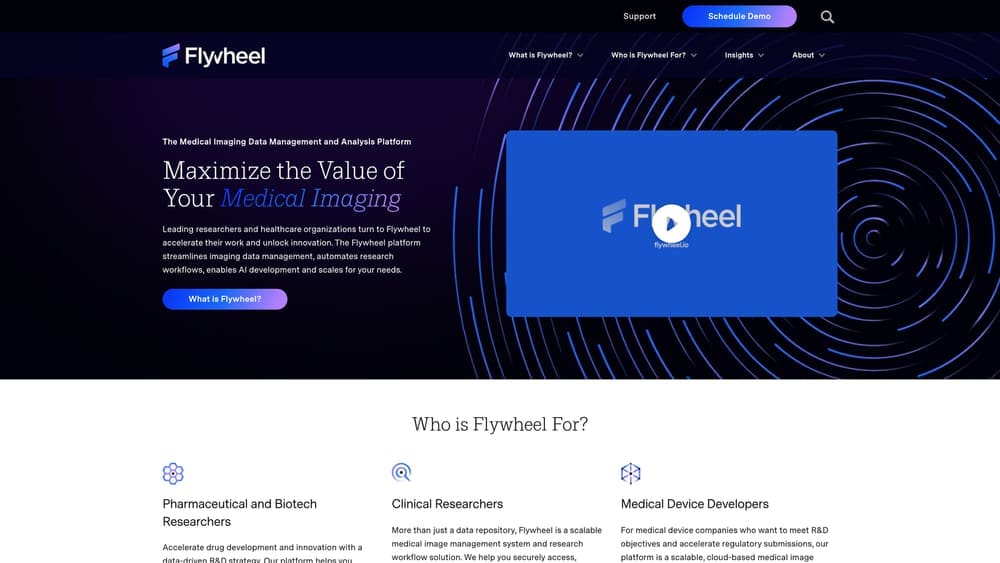
Flywheel is a research data platform specializing in imaging-genomics integration and FAIR data management.
Where This Platform Shines
Flywheel excels where genomics meets imaging. Neuroimaging studies, radiology-genomics correlations, and multi-modal research benefit from the platform’s ability to manage both data types with equal sophistication.
The automated de-identification pipelines handle the complex regulatory requirements of imaging data—where a single MRI slice can contain identifying information in dozens of metadata fields. Complete audit trails satisfy compliance teams while FAIR principles ensure data remains findable and reusable long after initial analysis.
Key Features
Imaging-Genomics Integration: Unified platform manages neuroimaging, radiology, and genomic data with equal capability.
Automated De-identification: Handles complex PHI removal across imaging metadata and genomic data simultaneously.
Complete Audit Trails: Every data access and modification tracked for regulatory compliance and reproducibility.
FAIR Principles Built-In: Data management follows Findable, Accessible, Interoperable, Reusable standards from day one.
Multi-Modal Research Support: Purpose-built for studies correlating imaging phenotypes with genomic variants.
Best For
Neuroimaging research centers studying brain disorders with genetic components. Radiology departments integrating genomic data into imaging studies. Multi-modal research programs correlating imaging phenotypes with genetic variants. Organizations requiring FAIR-compliant data management for long-term research value.
Pricing
Enterprise licensing model. Contact Flywheel for pricing based on your data volume, user count, and specific integration requirements.
7. Benchling
Best for: R&D labs requiring integrated lab informatics with molecular biology and genomics workflows
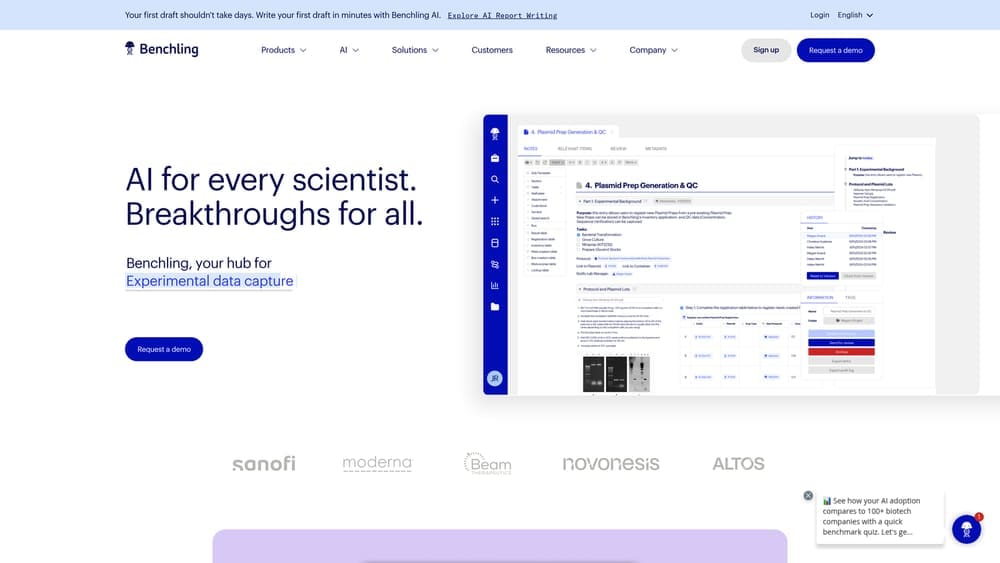
Benchling is an R&D cloud platform combining lab informatics with molecular biology and genomics workflows.
Where This Platform Shines
Benchling bridges the gap between lab bench and computational analysis. The integrated ELN, LIMS, and molecular biology tools mean researchers design CRISPR experiments, track samples, and analyze sequencing results in a single environment.
This continuity eliminates the data silos that plague most research organizations. When your synthetic biology team designs a construct in the morning and analyzes validation sequencing in the afternoon, Benchling maintains the connection between experimental design and genomic results. The 21 CFR Part 11 compliance capabilities make it viable for regulated environments.
Key Features
Integrated Lab Informatics: ELN, LIMS, and molecular biology tools in unified environment eliminate data transfer friction.
CRISPR and Synthetic Biology: Specialized tools for gene editing experiments and synthetic construct design.
Lab-to-Analysis Continuity: Experimental design connects directly to sequencing analysis without manual data transfer.
21 CFR Part 11 Compliance: Capabilities for regulated environments requiring electronic signature and audit trail validation.
Molecular Biology Focus: Tools optimized for cloning, plasmid design, and sequence annotation workflows.
Best For
Biotech R&D teams working on CRISPR and gene editing projects. Synthetic biology labs designing and validating genetic constructs. Research organizations seeking to eliminate silos between experimental design and genomic analysis. Labs requiring 21 CFR Part 11 compliance for regulated research.
Pricing
Per-user licensing with enterprise tiers available. Pricing scales with team size and feature requirements—contact Benchling for quotes based on your lab’s needs.
8. Google Cloud Life Sciences
Best for: Organizations with GCP expertise seeking infrastructure services for custom genomics solutions
Google Cloud Life Sciences is Google Cloud’s genomics and life sciences infrastructure services suite.
Where This Platform Shines
Google Cloud Life Sciences provides infrastructure building blocks rather than a complete platform. Variant Transforms handles petabyte-scale genomic data loading into BigQuery. The Healthcare API with FHIR support bridges clinical and genomic data. Vertex AI enables custom ML model development on genomic datasets.
This approach works when you have engineering resources to build custom solutions. The integration with Google’s broader cloud ecosystem—BigQuery for analytics, Vertex AI for machine learning, Cloud Storage for data lakes—creates powerful combinations that pre-built platforms can’t match. But you’re building, not buying.
Key Features
Variant Transforms: Tools for loading and querying large-scale genomic variant data in BigQuery.
Healthcare API with FHIR: Bridges clinical data standards with genomic analysis workflows.
BigQuery Integration: Leverage Google’s analytics engine for genomic data queries at petabyte scale.
Vertex AI Platform: Develop custom machine learning models on genomic datasets with Google’s ML infrastructure.
Cloud Ecosystem Integration: Native connection to Google’s full cloud service portfolio for custom solution building.
Best For
Organizations with strong GCP expertise and engineering resources. Teams building custom genomics solutions rather than adopting pre-built platforms. Research programs requiring tight integration with Google’s analytics and ML infrastructure. Projects where infrastructure flexibility outweighs platform convenience.
Pricing
Pay-as-you-go cloud pricing across compute, storage, and service usage. Costs vary significantly based on architecture decisions—requires GCP expertise to estimate accurately.
9. AWS HealthOmics
Best for: AWS-native organizations requiring purpose-built omics data storage and workflow execution
AWS HealthOmics is AWS’s purpose-built service for storing, querying, and analyzing genomic and other omics data.
Where This Platform Shines
AWS HealthOmics optimizes omics data storage at petabyte scale with compression and indexing specifically designed for genomic file formats. Ready-to-run bioinformatics workflows eliminate the infrastructure setup that typically delays analysis starts.
The SageMaker integration brings AWS’s machine learning capabilities to genomic datasets. For organizations already operating in AWS environments, HealthOmics provides native services that integrate with existing cloud infrastructure. HIPAA eligibility means it meets healthcare compliance requirements without additional configuration.
Key Features
Optimized Omics Storage: Purpose-built storage with compression and indexing designed for genomic data at petabyte scale.
Ready-to-Run Workflows: Pre-configured bioinformatics pipelines reduce time from data generation to analysis start.
SageMaker Integration: Native connection to AWS machine learning infrastructure for genomic AI model development.
HIPAA Eligible Service: Meets healthcare compliance requirements for protected health information handling.
AWS Ecosystem Integration: Seamless connection to broader AWS cloud services for custom solution development.
Best For
Healthcare organizations already operating AWS infrastructure. Teams requiring petabyte-scale omics data storage with optimized performance. Research programs leveraging AWS machine learning services for genomic analysis. Organizations prioritizing AWS-native services for compliance and integration reasons.
Pricing
Pay-per-use model for storage, compute, and workflow execution. Costs scale with data volume and analysis frequency—use AWS pricing calculators for estimates based on your workload.
Making the Right Choice
The right secure genomic data analysis platform depends on your specific constraints. If you’re building national-scale programs where data cannot leave sovereign boundaries, federated platforms like Lifebit eliminate the security-versus-access tradeoff entirely. Data stays where it lives. Analysis happens anyway. No compromises.
For pharma collaborations requiring multi-site analysis, DNAnexus and Seven Bridges offer proven enterprise deployments. These platforms have handled the scale and complexity that breaks less mature solutions. Academic teams with budget constraints will find Terra’s open-source model compelling—NIH-funded researchers get subsidized access to infrastructure that would cost thousands monthly otherwise.
Labs with significant Illumina infrastructure benefit from Connected Analytics’ seamless sequencer integration. The continuity from sequencing run to variant calling eliminates manual steps that introduce delays and errors. Organizations working at the intersection of imaging and genomics need Flywheel’s multi-modal capabilities—generic platforms can’t match the domain expertise.
The critical question isn’t which platform has the most features. It’s which one matches your compliance requirements, data residency needs, and research velocity targets. Start with your constraints, not your wishlist.
Security isn’t a feature you add later. It’s the foundation everything else builds on. Genomic data breaches expose information that can’t be changed—you can’t issue patients new genomes like you’d issue new credit cards. Choose platforms where security is native, not retrofitted.
Evaluate based on real deployments, not marketing claims. Which government agencies trust this platform? Which pharma companies bet their pipelines on it? Which academic consortia chose it for population-scale studies? These validation signals matter more than feature lists.
Ready to see how federated analysis works in practice? Get started for free and experience secure genomic analysis without data movement.