

8 Best Secure Genomic Data Collaboration Platforms in 2026

Genomic data is among the most sensitive, regulated, and scientifically valuable data on earth. Collaborating across institutions, borders, and cloud environments without compromising security or compliance is one of the hardest infrastructure problems in modern life sciences and government health programs.
The wrong platform means months of data harmonization, compliance gaps, or worse: data breaches involving patient genomes. The right platform means federated analysis, real-time collaboration, and research that actually moves.
Each platform in this list was evaluated on security architecture, compliance coverage, federation capability, ease of data harmonization, and suitability for enterprise or national-scale deployments. Whether you’re running a national precision medicine program, accelerating a biopharma pipeline, or managing multi-site academic research, here are the top secure genomic data collaboration platforms available in 2026.
1. Lifebit
Best for: National health programs, biopharma R&D, and regulated multi-site genomic research requiring federated analysis without data movement.
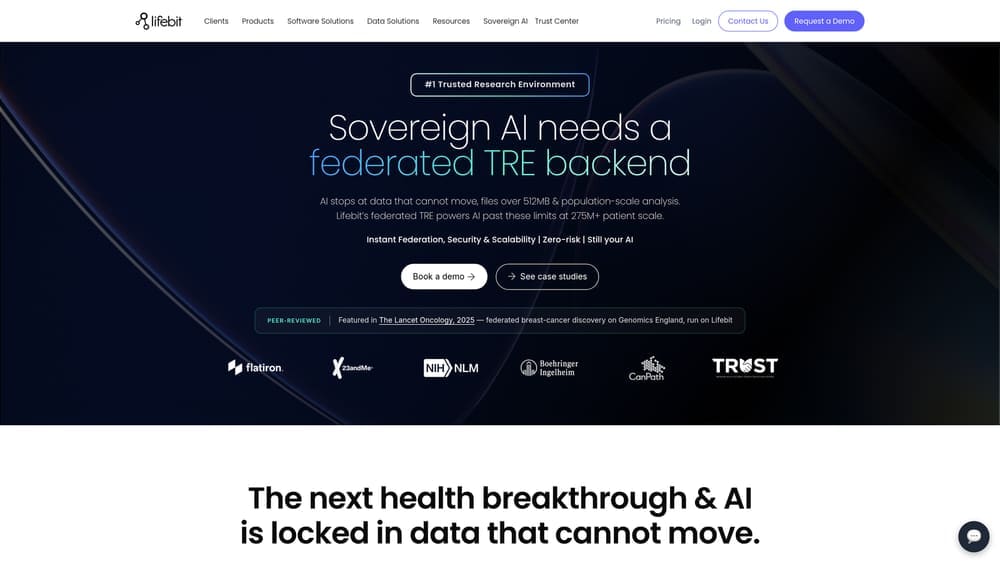
Lifebit is an enterprise federated genomic data platform that enables secure, compliant analysis without moving data, with AI-powered harmonization and a first-of-its-kind AI-Automated Airlock for governed data exports.
Where This Tool Shines
Lifebit’s core architectural decision sets it apart from most platforms: data never moves. Instead of centralizing sensitive genomic records, Lifebit brings the compute to the data. This federated model is critical for cross-border research programs operating under GDPR, HIPAA, and national data sovereignty laws.
The platform is deployed in your own cloud environment, meaning you retain full control with no vendor lock-in. Lifebit has publicly documented deployments with Genomics England, the NIH, and Singapore’s Ministry of Health, making it one of the few platforms with verified national-scale government credentials.
Key Features
Federated Data Platform: Analyze data across sites and borders without physically moving it, preserving data residency and sovereignty compliance.
Trusted Data Factory (TDF): AI-driven harmonization to OMOP, FHIR, and custom schemas in 48 hours, replacing what typically takes months of manual bioinformatics work.
Trusted Research Environment (TRE): Secure, compliant cloud workspaces deployed in your own cloud infrastructure, with full audit trails and role-based access control.
AI-Automated Airlock: A first-of-its-kind governance system for auditable, policy-enforced data exports, solving one of the most persistent compliance gaps in genomic research workflows.
Trusted TargetID (TTID): AI-powered target discovery across linked genomic and clinical datasets, purpose-built for biopharma R&D acceleration.
Compliance-ready from day one: FedRAMP, HIPAA, GDPR, and ISO 27001 certifications are built into the platform, not bolted on afterward.
Best For
Government health agencies building national precision medicine programs, biopharma R&D teams that need to accelerate target discovery across siloed datasets, and academic consortia managing regulated multi-site genomic research. Lifebit is particularly well-suited for organizations that cannot afford to move data across borders but need real research velocity.
Pricing
Enterprise pricing; contact for a custom quote at lifebit.ai/get-a-quote. Pricing reflects deployment scale, compliance requirements, and federation complexity.
2. DNAnexus
Best for: Biopharma organizations and clinical research teams needing FDA-grade compliance and scalable cloud genomics pipelines.
DNAnexus is a cloud-based genomic data management and analysis platform with deep regulatory compliance heritage, widely used across biopharma and clinical research organizations.
Where This Tool Shines
DNAnexus has built a strong reputation in regulated pharmaceutical environments where audit trails and FDA submission support are non-negotiable. Its collaborative workspace model allows multi-site teams to work on shared genomic projects with clear access controls and data lineage tracking.
The platform is well-known for powering the UK Biobank Research Analysis Platform, giving it credibility at population-scale genomic research. For biopharma teams that need to move from raw sequencing data to submission-ready analysis, DNAnexus offers a mature, well-documented path.
Key Features
Secure collaborative workspaces: Multi-site genomic research with role-based access, project isolation, and full audit trails.
FDA submission support: Audit trail capabilities and compliance documentation designed for regulated clinical and pharmaceutical workflows.
Scalable pipeline execution: Supports WDL, Nextflow, and CWL workflow formats for flexible bioinformatics pipeline deployment.
Pharma-grade security posture: HIPAA and ISO 27001 compliant with a compliance track record built across major pharmaceutical clients.
UK Biobank Research Analysis Platform: A publicly known large-scale deployment demonstrating population genomics capability at national scale.
Best For
Biopharma R&D teams and clinical research organizations with FDA submission requirements, and research programs needing a proven, compliance-first cloud genomics environment. Less suited for organizations requiring true federated analysis without data centralization.
Pricing
Enterprise pricing; contact DNAnexus directly for a custom quote based on storage volume and compute requirements.
3. Terra (Broad Institute / Microsoft)
Best for: Academic researchers and NIH-funded consortia needing open, collaborative access to large genomic datasets.
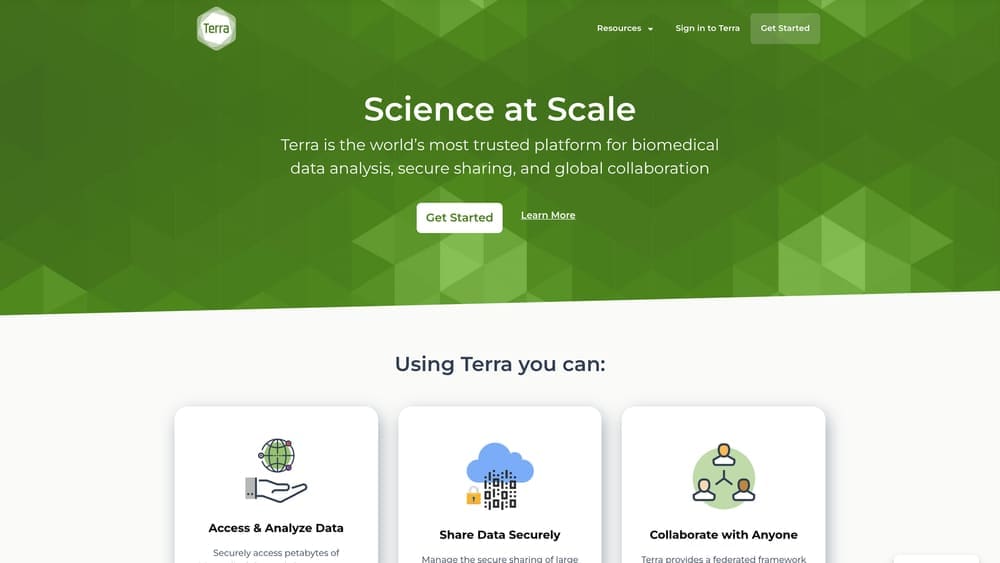
Terra is an open, cloud-native platform for collaborative genomic research, powering NIH’s AnVIL initiative and widely adopted across the academic life sciences community.
Where This Tool Shines
Terra’s greatest strength is its deep integration with the NIH ecosystem. As the infrastructure behind AnVIL (the NHGRI Analysis, Visualization, and Informatics Lab-space), Terra provides academic researchers with governed access to large-scale genomic datasets alongside the compute environment to analyze them. This makes it a natural choice for NIH-funded projects where data access and analysis need to happen in the same governed workspace.
The platform supports both Google Cloud and Microsoft Azure backends, giving institutions some flexibility in their cloud provider choice. Its integration with GATK best practices pipelines makes it particularly strong for variant calling and population genomics workflows.
Key Features
NIH AnVIL integration: Direct access to NHGRI-managed datasets with compliant workspace environments for authorized researchers.
GATK best practices pipelines: Native support for the Broad Institute’s gold-standard variant calling workflows.
Multi-cloud backend: Runs on Google Cloud and Microsoft Azure, with WDL workflow support across both environments.
dbGaP data access: Streamlined integration with NIH’s controlled-access genomic data repository for authorized research use.
Open collaborative workspaces: Share analysis environments, workflows, and results across research teams with configurable access controls.
Best For
Academic researchers, NIH-funded consortia, and open science initiatives where cost-accessible compute and community-driven tooling matter more than enterprise compliance customization. Less suited for national government deployments or highly regulated biopharma environments requiring dedicated infrastructure.
Pricing
No platform license fee for basic access. Researchers pay cloud compute and storage costs directly through Google Cloud or Azure, making costs variable based on workload scale.
4. Seven Bridges / CAVATICA
Best for: Pediatric genomic research programs and NIH data commons ecosystems requiring GA4GH-standards compliance.
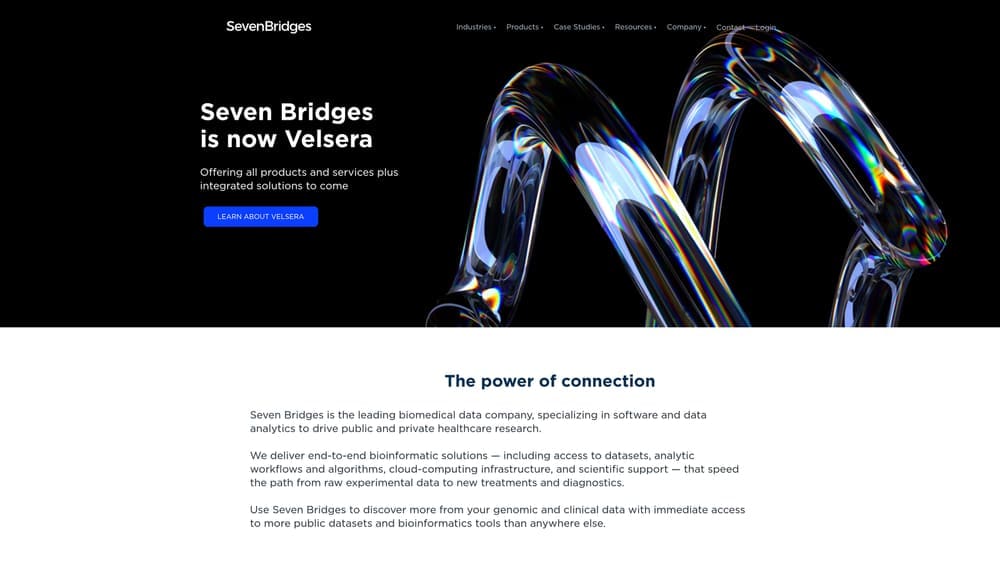
Seven Bridges is a genomic data analysis platform with strong data commons infrastructure, including CAVATICA for pediatric research and the NHLBI BioData Catalyst ecosystem for heart, lung, blood, and sleep research.
Where This Tool Shines
Seven Bridges has carved out a strong niche in NIH-funded data commons programs. CAVATICA, developed in partnership with Children’s Hospital of Philadelphia, is purpose-built for pediatric genomic research and provides a compliant, collaborative environment for one of the most sensitive research populations in genomics.
The platform’s commitment to GA4GH open standards (DRS, WES, Passport) makes it highly interoperable with other national and international genomic data ecosystems. This is particularly valuable for researchers who need to pull data from multiple federated sources into a single analysis environment.
Key Features
CAVATICA platform: A dedicated pediatric genomic research environment built in partnership with CHOP and NIH, with purpose-built data governance for sensitive pediatric data.
NHLBI BioData Catalyst: Powers the NIH ecosystem for heart, lung, blood, and sleep research data, enabling large-scale cross-study analysis.
GA4GH standards compliance: Full implementation of DRS, WES, and Passport standards for interoperability across federated data ecosystems.
Role-based access control: Collaborative workspaces with granular permissions for multi-institution research teams.
Multi-workflow support: Supports CWL, WDL, and Nextflow workflow formats for flexible pipeline deployment.
Best For
Pediatric genomics researchers, NIH-funded data commons participants, and consortia that need strong GA4GH interoperability. Organizations outside the NIH ecosystem may find the platform’s strengths less directly applicable to their workflows.
Pricing
Enterprise pricing for commercial use; contact Seven Bridges for a quote. CAVATICA offers NIH-funded access tiers for qualifying research programs.
5. Illumina Connected Analytics (ICA)
Best for: Genomics labs already operating within the Illumina instrument ecosystem needing seamless sequencing-to-analysis workflows.
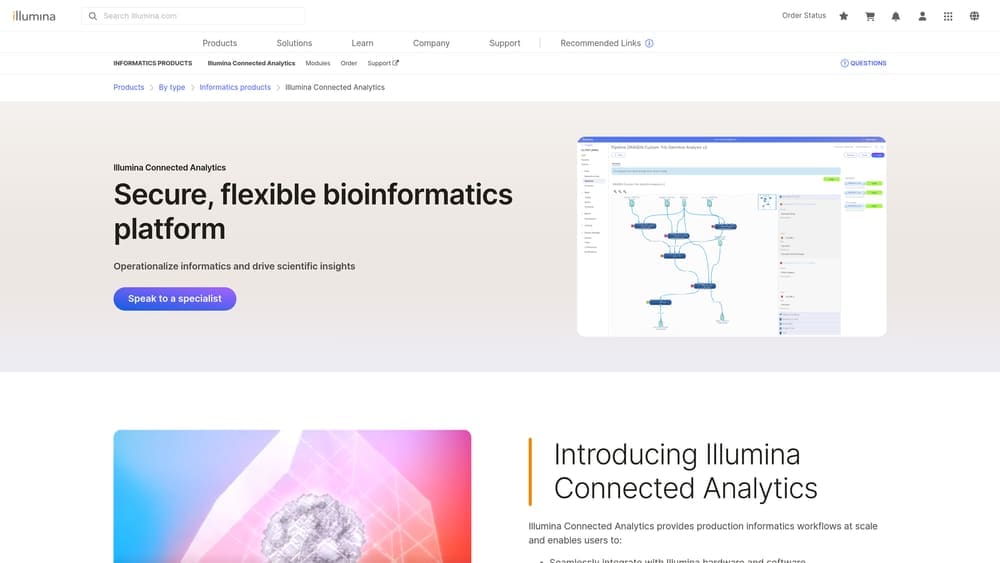
Illumina Connected Analytics (ICA) is Illumina’s cloud platform for managing sequencing data from instrument to analysis, tightly integrated with DRAGEN processing pipelines.
Where This Tool Shines
If your lab runs Illumina sequencers, ICA offers a frictionless path from raw sequencing output to secondary analysis. The direct instrument integration means data flows automatically into the cloud environment without manual transfer steps, and DRAGEN’s managed pipeline execution handles the computationally intensive secondary analysis in a consistent, validated environment.
For clinical genomics labs and sequencing core facilities, this tight vertical integration reduces the operational overhead of managing separate data transfer and analysis infrastructure. The ICA marketplace also allows integration of tertiary analysis applications from third-party developers.
Key Features
Direct instrument integration: Automated data ingestion from Illumina sequencing instruments into the cloud analysis environment.
Managed DRAGEN pipelines: Cloud-executed DRAGEN secondary analysis for variant calling, RNA-seq, methylation, and other standard genomics workflows.
Project-based collaboration: Secure data storage with project-level access controls for team-based genomics work.
ICA marketplace: Integration of third-party tertiary analysis applications for downstream interpretation and reporting.
HIPAA-compliant infrastructure: Cloud environment meets HIPAA requirements for clinical genomics use cases.
Best For
Clinical genomics labs, sequencing core facilities, and research groups with Illumina instrument investments who want a streamlined sequencing-to-analysis workflow. Less suited for cross-institutional federated research or organizations using non-Illumina sequencing platforms.
Pricing
Subscription-based; pricing is often bundled with Illumina instrument agreements. Contact Illumina for standalone ICA pricing.
6. Azure Health Data Services (Microsoft)
Best for: Health systems and integrated delivery networks bridging genomic data with clinical EHR records in a compliant cloud environment.
Azure Health Data Services is Microsoft’s FHIR-native health data platform on Azure, enabling organizations to unify genomic data with clinical records in a compliant, enterprise cloud environment.
Where This Tool Shines
Azure Health Data Services is not a purpose-built genomics platform, but it occupies an important role for organizations that need to link genomic data with clinical records at scale. Its native FHIR, DICOM, and MedTech service integration makes it one of the most capable environments for building genomics-informed clinical applications where the EHR context matters as much as the sequencing data.
For organizations already operating within the Microsoft Azure ecosystem, Health Data Services provides a natural extension into genomic data management without requiring a separate platform investment. The deep integration with Azure ML and Synapse Analytics enables downstream research and population health analytics on linked datasets.
Key Features
FHIR, DICOM, and MedTech services: Natively integrated health data standards for clinical and genomic data unification.
Genomics and EHR integration: Single compliant environment for linking sequencing results with clinical records and longitudinal health data.
Enterprise compliance coverage: FedRAMP High, HIPAA, HITRUST, and ISO 27001 certified across the Azure platform.
Microsoft Genomics API: Managed cloud execution of BWA and GATK pipelines for secondary analysis within the Azure environment.
Azure ML and Synapse integration: Downstream machine learning and analytics on linked genomic and clinical datasets using familiar Azure tooling.
Best For
Health systems, integrated delivery networks, and organizations with existing Azure infrastructure that need to connect genomic data with clinical records. Requires significant engineering investment to operationalize as a standalone genomics collaboration platform.
Pricing
Azure consumption-based pricing with no separate platform license. Costs depend on data volume, compute usage, and specific services enabled within the Azure environment.
7. AWS HealthOmics
Best for: Organizations with strong AWS expertise needing purpose-built omics data storage and scalable workflow execution within the AWS ecosystem.
AWS HealthOmics is Amazon’s purpose-built omics data storage and workflow service, designed for large-scale genomic and multi-omics data processing within the AWS cloud ecosystem.
Where This Tool Shines
AWS HealthOmics addresses a real infrastructure gap: generic cloud storage and compute services were not designed for the specific data types and access patterns of genomic research. By providing dedicated sequence stores, reference stores, and variant stores, HealthOmics optimizes storage costs and query performance for omics-specific workloads in ways that general-purpose S3 buckets cannot.
For US federal health programs, AWS GovCloud support gives HealthOmics a compliance posture that meets the requirements of government agencies operating under FedRAMP. The pay-per-use model also removes the upfront infrastructure commitment that historically made large-scale genomics infrastructure cost-prohibitive for smaller programs.
Key Features
Purpose-built omics data stores: Dedicated sequence store, reference store, and variant store optimized for genomic data types and access patterns.
Managed workflow execution: Supports Nextflow, WDL, and CWL workflows with managed infrastructure provisioning and scaling.
AWS GovCloud support: Compliance posture for US federal health programs operating under FedRAMP and related government security requirements.
Deep AWS ecosystem integration: Native connectivity with S3, SageMaker, and Lake Formation for data lake architectures and downstream ML workflows.
Pay-per-use pricing: Storage and compute priced separately with no upfront infrastructure commitment, enabling cost-efficient scaling.
Best For
Organizations with existing AWS infrastructure and strong cloud engineering teams who need scalable omics data management. HealthOmics is an infrastructure service, not a turnkey collaboration platform: expect significant build effort to create a researcher-facing collaboration environment on top of it.
Pricing
Pay-per-use: storage and compute are priced separately and billed through the standard AWS console. Costs scale with data volume and workflow execution frequency.
8. GA4GH Federated Genomics Ecosystem (EGA Federated / ELIXIR / CanDIG)
Best for: International consortia and national programs needing cross-border genomic data access under data residency and sovereignty constraints.
The GA4GH Federated Genomics Ecosystem is a standards-based collection of federated platforms implementing Global Alliance for Genomics and Health open standards, enabling cross-border data discovery and access without centralizing sensitive genomic records.
Where This Tool Shines
This entry is different from the others on this list because it represents an ecosystem of interoperable platforms rather than a single commercial product. GA4GH’s open standards (Passport, Beacon, DRS, WES) form the technical foundation that allows national genomic programs to federate with each other while each country retains data sovereignty and control over its own records.
The EGA Federated Network connects European national genome archives under a common access framework. ELIXIR provides pan-European life science data infrastructure with genomics as a core focus. CanDIG implements these standards for Canada’s national federated genomics program. Together, they represent the most mature open-standards approach to cross-jurisdictional genomic data sharing currently in operation.
Key Features
GA4GH Passport and Beacon standards: Open protocols for federated data discovery and controlled access across participating national nodes without centralizing data.
EGA Federated Network: European Genome-phenome Archive with national nodes in multiple countries, enabling cross-border access under GDPR-compliant data governance.
ELIXIR infrastructure: Pan-European life science data platform with genomics services, training, and interoperability tools for research communities.
CanDIG: Canada’s federated genomics platform implementing GA4GH standards for national-scale data sharing across provincial programs.
Open-source foundation: All core standards and many platform implementations are open-source, enabling national programs to build and customize without vendor dependency.
Best For
International research consortia, national genomic programs in Europe and Canada, and organizations that need cross-border data access under strict data residency requirements. Requires institutional technical capacity to implement and operate; this is not a plug-and-play commercial solution.
Pricing
Open-source standards with no licensing fees. Institutional hosting, operational infrastructure, and implementation costs vary significantly by national program and deployment scope.
Choosing the Right Platform for Your Program
The right platform depends almost entirely on who you are and what you’re trying to accomplish. Here’s a direct breakdown by buyer type.
Government health agencies and national precision medicine programs: Lifebit is the strongest fit. Its federated architecture, verified national-scale deployments (Genomics England, NIH, Singapore MOH), and built-in compliance coverage (FedRAMP, HIPAA, GDPR, ISO 27001) make it purpose-built for programs that cannot move data across borders but need real research velocity. The GA4GH ecosystem is a strong complement for programs that need to interoperate with European or Canadian national nodes.
Biopharma R&D teams: Lifebit’s Trusted TargetID and 48-hour data harmonization capability are purpose-built for pipeline acceleration. DNAnexus is a strong alternative for teams with FDA submission requirements and existing pharma-grade compliance workflows.
Academic researchers and NIH-funded consortia: Terra and Seven Bridges/CAVATICA are natural fits, particularly for programs operating within the NIH data commons ecosystem. The pay-per-compute model keeps costs accessible for research budgets.
Health systems integrating genomics with clinical data: Azure Health Data Services offers the most mature FHIR-native environment for linking genomic results with EHR records. Lifebit’s TRE is also well-suited for health systems that need a governed research environment without moving patient data.
Illumina-centric sequencing labs: ICA offers the most frictionless path from instrument to cloud analysis for labs already in the Illumina ecosystem.
AWS-native organizations with engineering capacity: AWS HealthOmics provides the infrastructure foundation, but plan for significant build effort to create a researcher-facing collaboration layer.
If you’re evaluating platforms for a national program, biopharma pipeline, or regulated multi-site deployment and want to see what federated genomic analysis without data movement actually looks like in practice, Get-Started for Free and explore Lifebit’s platform firsthand.
Related Lifebit reading
Continue with these pillar guides:
- The complete guide to Trusted Research Environments — what a TRE is, the Five Safes framework, and why federated architectures became the procurement default after the UK Biobank incident.
- Federated learning in healthcare — how machine-learning models train across hospitals and biobanks without the data ever leaving its source.
- The biomedical data lakehouse — the open-format storage layer that powers clinical, research, and AI workloads from one copy of the data.
- Federated data governance — how each data custodian retains control while participating in multi-institution research and AI.
- Lifebit’s federated biomedical data platform — see how Genomics England, Singapore Synapxe, NIH, and Boehringer Ingelheim use Lifebit to run Sovereign AI on federated health data.