

The Future of Treatment: Exploring GLP-1 Clinical Trial Outcomes

Why GLP-1 Clinical Trials Matter for the Future of Obesity Treatment
GLP-1 clinical trials are fundamentally altering the landscape of metabolic medicine. For decades, obesity was viewed primarily through the lens of behavioral modification, but the emergence of glucagon-like peptide-1 receptor agonists (GLP-1 RAs) has shifted the paradigm toward a biological understanding of weight regulation. These studies test powerful new medications that help patients lose significant weight by targeting hormones that control appetite, blood sugar, and metabolism. The latest trials show that next-generation drugs can help people lose 20-30% of their body weight in less than 18 months—a level of efficacy that was previously only achievable through invasive bariatric surgery.
To understand the significance of current trials, one must look at the evolution of the field. The journey began with the discovery of GLP-1 in the 1980s and the subsequent development of exenatide, derived from the venom of the Gila monster. However, early iterations required twice-daily injections and offered modest weight loss. The current era of glp-1 clinical trials is defined by “multi-agonism”—the ability of a single molecule to stimulate multiple hormone receptors simultaneously, creating a synergistic effect that resets the body’s metabolic set point.
Key facts about current GLP-1 clinical trials:
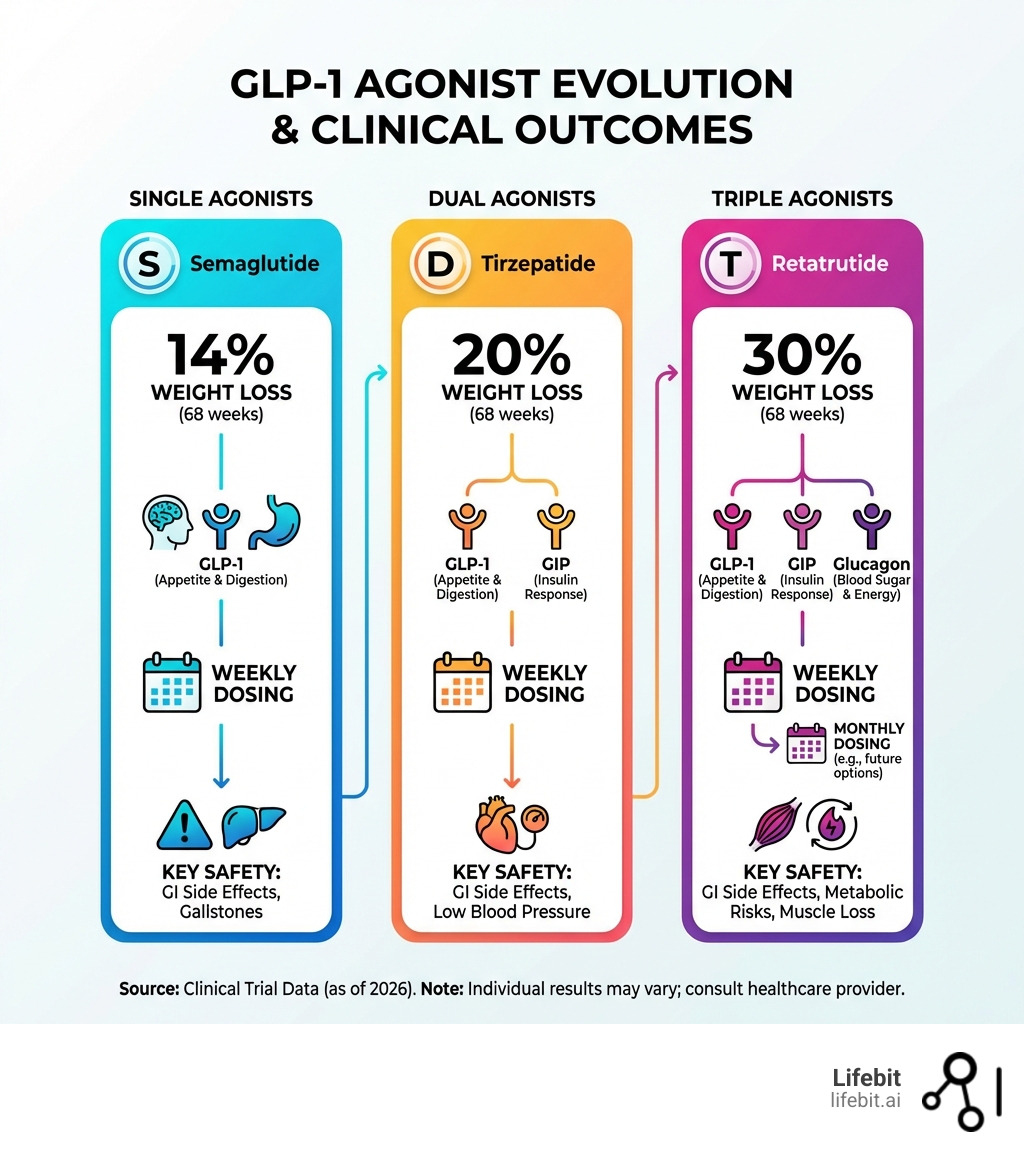
- Single agonists (like semaglutide/Wegovy): These drugs mimic the GLP-1 hormone alone. In the landmark STEP 1 trial, they delivered approximately 14.9% weight loss over 68 weeks compared to 2.4% in the placebo group.
- Dual agonists (like tirzepatide/Zepbound): These target both GLP-1 and GIP (glucose-dependent insulinotropic polypeptide) receptors. The SURMOUNT-1 trial demonstrated that these achieve roughly 20.9% weight loss in similar timeframes, showing the power of metabolic synergy.
- Triple agonists (like retatrutide): Currently in Phase 3, these target GLP-1, GIP, and glucagon receptors. Early Phase 2 data suggests they produce nearly 30% weight loss in 68 weeks, effectively “normalizing” weight for many participants.
- Monthly dosing options (like PF-08653944): New trials are moving away from weekly injections. Pfizer’s latest data shows 12.3% placebo-adjusted weight loss at 28 weeks with a once-monthly regimen, significantly improving patient convenience and adherence.
- Expanded Indications: Trials are no longer limited to weight and diabetes. Researchers are now investigating benefits for MASH (liver disease), chronic kidney disease (CKD), and even neurodegenerative conditions like Alzheimer’s.
When Terra Field started taking Wegovy for weight loss in 2022, she finally understood what true satiety felt like. Her lifelong food cravings—often described as “food noise”—disappeared, and she lost over 100 pounds. But when her weight loss plateaued, she switched to Zepbound—a dual agonist—and the weight came off again. This phenomenon of “switching” is now a major focus of clinical research, as scientists try to determine the optimal sequence of therapies for long-term maintenance.
Stories like Terra’s highlight both the promise and complexity of GLP-1 therapies. Each new generation of drugs activates different hormone receptors, creating more powerful effects. But they also raise important questions about safety, accessibility, and the long-term impact of staying on these medications for a lifetime. As we move into 2026, the focus of glp-1 clinical trials is shifting from “how much weight can we lose?” to “how can we maintain this weight loss safely and affordably?”
How these drugs work:
The newest medications don’t just mimic one hormone—they activate multiple pathways simultaneously. GLP-1 (glucagon-like peptide-1) reduces appetite by acting on the brain’s reward centers and slows digestion by delaying gastric emptying. GIP (glucose-dependent insulinotropic polypeptide) improves insulin response and appears to buffer some of the gastrointestinal side effects of GLP-1. Glucagon helps regulate blood sugar and increases energy expenditure (thermogenesis). By targeting all three, triple agonists deliver unprecedented results by attacking obesity from three distinct physiological angles.
Current trials also test these drugs for conditions beyond obesity. Research shows that circulating GLP-1 and GIP concentrations protect against metabolic liver disease, with odds ratios as low as 0.168 for disease risk. Pfizer plans to launch 10 Phase 3 trials in 2026 for their monthly GLP-1 drug alone, while Novo Nordisk seeks FDA approval for combination therapies that include amylin analogues.
However, the rapid pace of development brings risks. Trial data reveals increased rates of gallstones, muscle loss (sarcopenia), and dangerously low blood pressure—especially in older adults. Nearly a quarter of patients in some trials don’t respond to these drugs at all, or they drop out due to intolerable side effects at lower doses. This “non-responder” group is a key area of study for precision medicine.
I’m Maria Chatzou Dunford, CEO and Co-founder of Lifebit, where we help pharmaceutical organizations and research institutions accelerate drug discovery through secure, federated data analysis—including support for GLP-1 clinical trials and biomedical research that powers precision medicine. Throughout my 15+ years in computational biology and health-tech, I’ve worked to make complex genomic and clinical data accessible for breakthrough treatments like these. Our goal is to help researchers understand why certain patients respond to GLP-1 therapies while others do not, using large-scale multi-omic data.
Glp-1 clinical trials terms to learn:
The Next Generation: How glp-1 clinical trials Are Redefining Obesity Care
We are currently witnessing a “gold rush” in metabolic research. The first generation of GLP-1 receptor agonists (RAs) proved that obesity is a treatable biological condition rather than a failure of willpower. However, the next generation of glp-1 clinical trials is pushing the boundaries of what is possible, moving from simple weight management to what some researchers call “weight normalization.” This shift is driven by the understanding that the human body has a “set point” for weight, and these drugs work by lowering that set point in the hypothalamus.

The most exciting advancement lies in triple agonists like retatrutide. While early drugs like semaglutide hit one target, retatrutide hits three. Recent trial results released in late 2025 showed that participants on the highest dose lost nearly 30% of their body weight over 68 weeks. This level of efficacy begins to rival bariatric surgery, but with the relative ease of a subcutaneous injection. Furthermore, retatrutide showed significant improvements in skin-fold thickness and visceral fat reduction, which are critical markers for long-term cardiovascular health.
Another major player in the pipeline is CagriSema, a combination therapy from Novo Nordisk. By blending semaglutide with cagrilintide (an amylin analogue), this “drug cocktail” addresses weight loss through multiple neurological pathways. Amylin is a hormone co-secreted with insulin that signals fullness to the brain. By combining it with GLP-1, researchers hope to achieve greater weight loss with fewer side effects, as the two hormones work on different parts of the brain’s satiety circuitry.
Mechanism of Dual and Triple Agonists
Why is “more” better in hormone receptors? It’s all about metabolic synergy and the “incretin effect.” In a healthy individual, eating food triggers the release of incretin hormones that tell the pancreas to release insulin. In people with obesity or Type 2 diabetes, this effect is often blunted.
- GLP-1 Receptors: Primarily reduce appetite, slow gastric emptying, and increase insulin secretion in a glucose-dependent manner. They also reduce “food noise” by modulating the brain’s dopamine-driven reward system.
- GIP Receptors: While once thought to be less important, GIP is now known to improve insulin secretion and may help protect against the nausea often associated with GLP-1. It also plays a role in how fat is stored and utilized in adipose tissue.
- Glucagon Receptors: These increase energy expenditure by stimulating thermogenesis in brown adipose tissue. They also help the liver regulate glucose more effectively, preventing the “sugar crashes” that can lead to binge eating.
In a landmark NEJM study comparing tirzepatide and semaglutide, the dual agonist (tirzepatide) showed roughly 20% drops in weight, outperforming the 14% seen with the single agonist. By activating both GLP-1 and GIP, these drugs provide a “double whammy” that appears to reset the body’s metabolic thermostat more effectively than targeting a single pathway. This has led to the development of the “SYNERGY” trial program, which is currently looking at how these dual agonists affect sleep apnea and fatty liver disease.
Overcoming the Weight Loss Plateau
One of the biggest frustrations for patients is the “plateau”—the point where the body fights back against weight loss by slowing the metabolism and increasing hunger hormones like ghrelin. This is an evolutionary survival mechanism designed to prevent starvation. This is where amylin receptors and glucagon agonism come into play. Novo Nordisk trial data for CagriSema shows that participants lost about 23% of their body weight in 68 weeks, with many successfully breaking through plateaus that had stalled their progress on earlier medications. By targeting the amylin pathway, CagriSema provides a different satiety signal that the body hasn’t yet adapted to, allowing for continued progress.
Monthly Dosing Breakthroughs: Efficacy and Safety of PF-08653944
While efficacy is the primary driver of drug development, convenience is the queen of patient adherence. Most current treatments require weekly injections, which can be a significant barrier for many patients due to “needle fatigue” or the logistical challenges of traveling with refrigerated medication. We are closely following the progress of PF-08653944 (PF’3944), Pfizer’s ultra-long-acting GLP-1 RA, which represents a major leap forward in drug delivery technology.
The Phase 2b VESPER-3 study investigated a switch from weekly to monthly maintenance dosing. This trial was specifically designed to see if the weight loss achieved during an initial weekly titration phase could be maintained—or even increased—with a once-monthly injection. The topline results announced by Pfizer were impressive: the study met its primary endpoint, demonstrating a statistically significant 12.3% mean placebo-adjusted weight loss at week 28 for the highest dose group.
Efficacy of Monthly Maintenance Dosing
The VESPER-3 data suggests that patients can maintain continuous weight loss without hitting an early plateau when switching to monthly regimens. This is a game-changer for long-term obesity management, which many experts now believe will require lifelong treatment. The trial used specific titration steps—gradually increasing the dose over several months—to ensure the body could handle the ultra-long-acting nature of the drug. Pfizer is so confident in these results that they plan to test even higher dosing regimens (up to 9.6 mg monthly) in upcoming Phase 3 trials, aiming to match the 20%+ weight loss seen with weekly dual agonists.
Technically, the challenge with monthly dosing is maintaining a steady concentration of the drug in the bloodstream. If the levels drop too low at the end of the month, hunger returns; if they are too high at the beginning, side effects become intolerable. PF-08653944 uses a “biased signaling” approach, where the molecule is engineered to activate the pathways responsible for weight loss more strongly than the pathways that trigger nausea.
Safety Profile and Tolerability
Safety is always our primary concern in glp-1 clinical trials, particularly with long-acting formulations where the drug cannot be quickly cleared from the system if a patient has a bad reaction. According to safety data from ClinicalTrials.gov, the gastrointestinal (GI) events for PF-08653944 were predominantly mild or moderate. Crucially, there was no more than one instance of severe nausea or vomiting in any dose group, and no reports of severe diarrhea. This suggests that the “biased” nature of the molecule allows it to target weight loss pathways while minimizing the signals that lead to severe GI distress. Researchers are also monitoring for “injection site reactions,” which can be more common with the larger volumes required for monthly doses, but so far, the data remains encouraging.
Beyond Weight Loss: New Therapeutic Targets
The success of these drugs is opening doors to treating a variety of other conditions that share a common metabolic root. We are seeing a shift where glp-1 clinical trials are no longer just “obesity trials”—they are metabolic health trials that aim to treat the whole person. This “pleiotropic” effect—where one drug has multiple beneficial effects—is the holy grail of pharmacology.
One of the most promising areas is the treatment of Metabolic Dysfunction-Associated Steatotic Liver Disease (MASLD) and its more severe form, MASH (formerly known as NASH). Genetic evidence for GLP-1 and GIP targets shows that these receptors have direct hepatoprotective effects, meaning they protect liver cells from damage caused by fat accumulation and inflammation.
Breakthroughs in glp-1 clinical trials for Liver Disease
In clinical research, circulating 2-hour GLP-1 and GIP concentrations measured during glucose tests showed a significant reduction in MASLD risk. Specifically, the odds ratio (OR) for GLP-1 was 0.168, meaning higher levels were strongly associated with lower liver disease risk. This protection appears to be both direct (acting on liver cells to reduce lipogenesis) and indirect (via weight loss and improved glycemic control). The SYNERGY-NASH trial for tirzepatide recently showed that up to 74% of participants achieved MASH resolution without worsening of fibrosis, a result that has stunned the hepatology community.
Expanding Pipelines for Comorbidities
Pharmaceutical giants like Eli Lilly and Novo Nordisk are not stopping at the liver. McGill University expert insights suggest that the next frontier for GLP-1 RAs includes:
- Addiction: Early-stage trials are investigating if GLP-1s can reduce cravings for alcohol, nicotine, and even opioids by modulating the brain’s reward circuitry. Patients have reported a “disinterest” in addictive behaviors while on the medication.
- Neurodegenerative Diseases: There is growing evidence that GLP-1s have neuroprotective effects. The EVOKE and EVOKE+ trials are currently testing oral semaglutide in patients with early Alzheimer’s disease to see if it can slow cognitive decline by reducing neuroinflammation.
- Cardiovascular and Renal Health: The SELECT trial proved that Wegovy reduces the risk of major adverse cardiovascular events (MACE) by 20%. Meanwhile, the FLOW trial was stopped early because semaglutide showed such clear benefits in preventing the progression of chronic kidney disease in patients with Type 2 diabetes.
- Sleep Apnea: The SURMOUNT-OSA trial recently showed that tirzepatide significantly reduced the severity of obstructive sleep apnea, likely through a combination of weight loss and reduced upper-airway inflammation.
The Risks of Rapid Success: Safety and Ethical Challenges
With great power comes great responsibility—and significant risks. Rapid weight loss, while desirable for metabolic health, can lead to unintended health consequences that we must monitor closely through rigorous glp-1 clinical trials. The speed at which these drugs have been adopted has sometimes outpaced our understanding of their long-term effects on specific populations.
The World Obesity Atlas 2025 warns that while these drugs are a vital tool, they are not a “magic pill” without cost. One of the most significant concerns is sarcopenia (muscle loss). When people lose weight rapidly, up to 40% of that loss can come from lean muscle mass rather than fat. This is particularly dangerous for older adults, as it increases the risk of falls, frailty, and a lowered basal metabolic rate, which makes weight regain more likely if the drug is stopped. New trials are now combining GLP-1s with myostatin inhibitors to try and preserve muscle during weight loss.
Other risks identified in trials include gallstones—a common side effect of rapid weight loss—and “starvation-level” low blood pressure (hypotension). There are also ongoing investigations into the risk of gastroparesis (stomach paralysis) and suicidal ideation, though current FDA and EMA reviews have not found a definitive causal link.
Accessibility and Insurance Barriers
Even the best drug is useless if patients cannot afford it. The AMA obesity policy highlights the growing “gray market” for these drugs. Because insurance coverage is often limited and out-of-pocket costs can exceed $1,000 per month, many patients turn to unofficial or compounded versions of the drugs. These compounded versions may not have the same safety oversight, purity standards, or precise dosing as the medications used in formal glp-1 clinical trials, leading to a rise in hospitalizations due to dosing errors.
Long-term Health and Societal Impact
We must also consider the societal implications of a “medicated” solution to a systemic problem. The WHO obesity fact sheet notes that over 2.9 billion people will be living with overweight or obesity by 2030. While these drugs can reduce weight stigma by framing obesity as a medical condition, there is a risk that they could also fuel unhealthy body image standards. Furthermore, the “rebound effect”—where patients regain weight after stopping the medication—suggests that these may be lifelong commitments, raising questions about the economic sustainability of treating billions of people indefinitely.
Future Outlook: Pipelines and Regulatory Status
The pipeline for obesity treatments is more robust than ever, with over 100 molecules currently in various stages of clinical development. Pfizer, for instance, is planning an expansive program with over 20 trials slated for 2026. This includes a heavy focus on combination therapies, oral formulations (to replace injections), and specialized dosing for patients with comorbidities like heart failure with preserved ejection fraction (HFpEF).
For those looking to understand the underlying biology of these treatments, you can explore more info about Lifebit pharma target identification services, which help researchers pinpoint exactly which genetic variants respond best to these therapies. This is the future of the field: moving away from a “one-size-fits-all” approach to a precision medicine model where a patient’s genetic profile determines which hormone receptor agonist will be most effective for them.
Current Status of Phase 3 glp-1 clinical trials
As of early 2026, several key drugs are entering the final stages of the regulatory gauntlet. According to the ClinicalTrials.gov registry, there are currently 10 Phase 3 trials planned for PF-08653944 alone. These trials will focus on:
- Obesity in patients with and without Type 2 diabetes: Ensuring the drug is effective across different metabolic backgrounds.
- Long-term cardiovascular outcomes: Following patients for 3-5 years to see if the weight loss translates into fewer heart attacks and strokes.
- Monthly maintenance dosing efficacy: Comparing the 12.3% weight loss seen in Phase 2 to longer-term results over 64+ weeks.
- Pediatric Trials: Investigating the safety and efficacy of these drugs in adolescents, a group where obesity rates are climbing most rapidly.
The Role of AI in Accelerating Trial Outcomes
At Lifebit, we believe that the future of glp-1 clinical trials lies in data. The traditional model of clinical trials is slow and siloed. By using our federated AI platform, researchers can access massive multi-omic datasets (genomics, proteomics, and clinical records) without moving the data itself. This is crucial for maintaining patient privacy while allowing for global collaboration.
Our platform enables real-time analytics and advanced pharmacovigilance—monitoring for rare side effects across global populations that might not show up in a standard 2,000-person trial. For example, AI can help identify the genetic markers of “non-responders”—the 25% of patients who don’t see results—allowing pharmaceutical companies to refine their inclusion criteria and develop alternative therapies for those individuals. This data-driven approach is what will ultimately make these life-changing drugs safer and more accessible to everyone.
Frequently Asked Questions about glp-1 clinical trials
What is the most effective drug currently in GLP-1 clinical trials?
Based on current data, retatrutide (a triple agonist) is the most effective, showing nearly 30% weight loss in Phase 2 trials. CagriSema is also a top contender with roughly 23% weight loss and a unique mechanism for breaking plateaus by combining GLP-1 with amylin agonism.
How does monthly dosing compare to weekly injections?
Monthly dosing, such as with PF-08653944, offers significantly higher convenience and may improve long-term adherence. While the weight loss (12.3% in 28 weeks) is currently slightly lower than some weekly dual agonists, the reduced “needle burden” and more stable blood concentrations make it a highly attractive option for long-term maintenance therapy.
What are the primary side effects observed in next-generation trials?
The most common side effects remain gastrointestinal, including mild to moderate nausea, vomiting, and constipation. However, next-generation trials are also watching for muscle loss (sarcopenia), gallstones, and potential impacts on bone density. Researchers are also investigating “Ozempic face”—the loss of facial fat that can lead to a prematurely aged appearance.
Can these drugs be used for conditions other than weight loss?
Yes. Clinical trials are currently proving their efficacy in treating MASH (liver disease), sleep apnea, chronic kidney disease, and heart failure. There are also ongoing studies into their potential to treat Alzheimer’s disease and various forms of addiction.
Why do some people not lose weight on GLP-1 drugs?
Approximately 15-25% of patients are “non-responders.” This can be due to genetic variations in the GLP-1 receptor, differences in gut microbiome composition, or the body’s compensatory mechanisms (like a drastic drop in metabolic rate). Precision medicine trials are currently working to identify these patients before they start treatment.
Conclusion
The evolution of obesity management is moving at breakneck speed. From the early days of single-target agonists to the current breakthroughs in triple agonists and monthly dosing, the landscape of glp-1 clinical trials is focused on providing more effective, convenient, and patient-centric care. We are moving toward a future where obesity is managed as a chronic biological condition, much like hypertension or asthma.
However, the journey is far from over. The integration of AI and secure data collaboration will be essential to ensure these drugs are used safely and effectively. By analyzing multi-omic data at scale, we can move closer to a future of precision medicine where every patient receives the exact treatment their biology requires, minimizing side effects and maximizing health outcomes.
Secure your biomedical research data with Lifebit to join the forefront of this medical revolution and help us unlock the next generation of metabolic breakthroughs.