

The Global Data Highway: A Guide to Cross-Border Data Flows

Why Cross Border Data Drives the Digital Economy
Cross border data refers to the movement of digital information between servers, systems, and organizations located in different countries. It powers everything from cloud computing and AI development to global trade and scientific collaboration. In the era of the Fourth Industrial Revolution, data has become the lifeblood of the global economy, acting as a primary factor of production alongside labor and capital. The ability to move this data seamlessly across jurisdictions is what allows a developer in Bangalore to update a server in New York, or a doctor in London to consult on a genomic sequence stored in a database in Tokyo.
Key facts about cross border data flows:
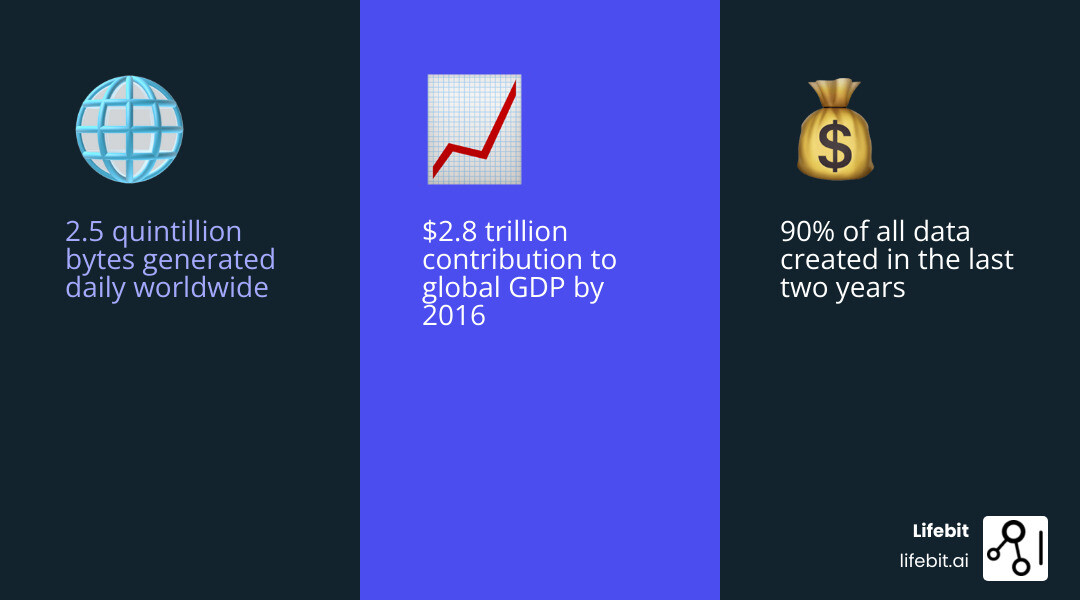
- Economic impact: Data flows contributed $2.8 trillion to global GDP by 2016, overtaking the value of physical goods trade. Recent estimates suggest that by 2025, the digital economy will account for over 25% of global GDP, driven largely by the interconnectivity of data.
- Scale: The world produces 2.5 quintillion bytes of data daily, with 90% created in just the last two years. This exponential growth is fueled by the Internet of Things (IoT), 5G expansion, and the proliferation of high-performance computing.
- Growth: The public cloud services market reached $186.4 billion in 2018, up from $153.5 billion in 2017. As of 2024, this market has surpassed $600 billion, reflecting a massive shift toward decentralized, cross-border infrastructure.
- Regulation: 107 countries have data protection legislation, but approaches vary widely across jurisdictions. This regulatory fragmentation creates a complex “compliance tax” for multinational enterprises.
Cross border data enables remote work, telemedicine, scientific research, and international commerce. However, the rapid acceleration of these flows has outpaced the development of international legal frameworks. This has led to significant concerns regarding privacy protection, national security, and regulatory compliance. When information crosses a border, it enters a new legal jurisdiction where the rights of the data subject may not be recognized or enforced. This tension between the economic necessity of data movement and the sovereign duty to protect citizens’ privacy is the central challenge of modern digital policy.
Different countries take different approaches to governing these flows. The EU requires adequacy decisions or safeguards like Standard Contractual Clauses (SCCs). Canada relies on PIPEDA and provincial laws with notice requirements. Australia and New Zealand use accountability models that shift responsibility based on recipient protections. Meanwhile, emerging economies are increasingly looking toward data localization—requiring data to be stored on physical servers within their borders—as a means of asserting digital sovereignty.
I’m Maria Chatzou Dunford, CEO and Co-founder of Lifebit, where I’ve spent over a decade building federated platforms that enable secure cross border data sharing for biomedical research across compliant, distributed environments. In my experience, the most successful organizations are those that view data governance not as a hurdle, but as a strategic advantage. Understanding how to steer these complex regulatory frameworks is essential for any organization working with global data, particularly in highly sensitive fields like healthcare and finance.
Cross border data definitions:
What is Data Free Flow with Trust (DFFT) and Why It Matters
In the modern digital economy, the concept of Data Free Flow with Trust (DFFT) has become the North Star for international policy. Originally proposed by Japan during its 2019 G20 Presidency, DFFT is a framework designed to ensure that the global digital environment remains open and interoperable while keeping personal information, intellectual property, and national security interests safe. It is a direct response to the rise of “digital protectionism,” where countries implement restrictive data localization laws that can stifle innovation and create barriers to trade.
The OECD plays a pivotal role in advancing this concept. In 2023, the G7 leaders endorsed the establishment of the Institutional Arrangement for Partnership (IAP) to operationalize DFFT. This initiative aims to bring together governments, private sector stakeholders, and civil society to develop practical tools for cross-border data sharing. Without a unified approach, we risk “digital fragmentation,” where data is trapped behind national borders, preventing the aggregation of large datasets necessary for training advanced AI models or conducting global health surveillance.
For us at Lifebit, DFFT is not just a policy term; it’s the foundation of how we enable researchers to access diverse datasets without compromising security. The “Trust” element of DFFT is achieved through a combination of legal safeguards (like contracts and treaties) and technical safeguards (like encryption and federated architectures). By building trust into the infrastructure itself, we can move away from the binary choice of “sharing data” versus “protecting privacy.”
Balancing Movement and Protection in Cross Border Data
The OECD uses a DFFT Expert Community to tackle the practical challenges of international data movement. This includes empirical mapping of regulations to see how different laws impact the ability of businesses to operate globally. One of the key focus areas is the “Declaration on Government Access to Personal Data Held by Private Sector Entities,” which seeks to establish common principles for how law enforcement and national security agencies can access data in a way that respects individual rights.
By understanding these regulatory impacts, stakeholders can develop trust-based frameworks that allow cross border data to flow where it is needed most. For example, in the field of precision medicine, a researcher in the UK might need to compare the genomic profile of a rare disease patient with similar cases in the US and Germany. Under a DFFT framework, this data can be analyzed across borders using secure protocols, ensuring that life-saving genomic insights can be shared between research hubs without the data ever leaving its original, secure environment. This balance is critical for maintaining the pace of scientific discovery while upholding the highest standards of data ethics.
Navigating Global Regulations for Cross Border Data
Navigating the patchwork of global laws can feel like driving through a maze of toll booths, each with its own currency and entry requirements. The European Union’s General Data Protection Regulation (GDPR) is often seen as the “gold standard” for privacy, but its rules on international data transfers are among the strictest in the world. Under Chapter V of the GDPR, any transfer of personal data to a “third country” (a country outside the EEA) is prohibited unless specific conditions are met to ensure that the level of protection guaranteed by the GDPR is not undermined.
To move data out of the European Economic Area (EEA), organizations typically rely on a few specific mechanisms:
- Adequacy Decisions: The EU Commission confirms a third country has “equivalent” protection. This is the most seamless method, currently enjoyed by countries like Canada, Israel, New Zealand, Japan, and the UK. It allows data to flow as if it were staying within the EU.
- Standard Contractual Clauses (SCCs): These are pre-approved contract templates that commit the data importer to EU standards. Following the 2021 update, SCCs now use a modular approach (Controller-to-Controller, Controller-to-Processor, Processor-to-Processor, and Processor-to-Controller) to cover various business relationships.
- Binding Corporate Rules (BCRs): These are internal codes of conduct for multinational groups, allowing them to transfer data between their global branches. They require approval from a lead Data Protection Authority (DPA) and are often used by large tech firms.
- Codes of Conduct & Certification: Newer tools introduced in the 2016 reform to help businesses demonstrate compliance. While still maturing, these tools aim to provide a more flexible, industry-specific way to prove data protection standards.
The Impact of Schrems II on Cross Border Data Transfers
The legal landscape shifted dramatically with the Schrems II decision (C-311/18) by the Court of Justice of the European Union (CJEU). The court invalidated the Privacy Shield—the previous EU-US data transfer agreement—due to concerns over US surveillance laws (such as Section 702 of the FISA and Executive Order 12333) and the lack of judicial redress for EU citizens. This sent shockwaves through the global tech industry, as thousands of companies relied on the Privacy Shield for daily operations.
This decision forced organizations to conduct rigorous Transfer Impact Assessments (TIAs). A TIA requires the data exporter to evaluate the laws of the destination country to determine if they provide a level of protection essentially equivalent to that of the EU. If a country’s laws allow government access that undermines GDPR protections, companies must implement “supplementary measures.” These can be technical (e.g., end-to-end encryption where the provider doesn’t hold the keys), organizational (e.g., strict internal policies on government requests), or legal.
In 2023, the new EU-US Data Privacy Framework (DPF) was adopted to replace the Privacy Shield, providing a new legal basis for transfers. However, legal experts warn that it may face similar challenges in court. In cases where no other tool works, organizations might look at derogations and Article 49, but these are “last resort” exceptions for non-repetitive transfers and require a strict necessity test, making them unsuitable for most routine business activities.
Canadian Privacy Landscape: PIPEDA, Quebec’s Bill 64, and Provincial Laws
In Canada, the rules for cross border data are a unique blend of federal and provincial requirements that emphasize accountability over strict localization. The primary federal law, the Personal Information Protection and Electronic Documents Act (PIPEDA), does not strictly prohibit transfers of data outside Canada. However, the federal privacy guidelines stipulate that organizations must use contractual or other means to provide a “comparable level of protection” while the information is being processed by a third party. Furthermore, individuals must be notified that their data may be sent abroad and could be accessed by foreign courts or law enforcement.
The landscape is becoming significantly more complex with recent provincial updates and proposed federal reforms:
- Quebec’s Bill 64 (Law 25): This landmark legislation has introduced EU-style “equivalency” requirements. Before sending personal data outside Quebec, organizations must conduct a Privacy Impact Assessment (PIA) to ensure the destination provides adequate protection. This is a major shift toward the GDPR model and places a heavy administrative burden on companies operating in Quebec.
- Alberta PIPA: This provincial law uniquely requires prior notice for outsourcing transfers. Organizations must inform individuals of the purpose of the transfer and provide the position name or title of a person who can answer questions about the transfer on behalf of the organization.
- Public Sector Laws: Provinces like British Columbia and Nova Scotia have historically had even stricter “data residency” requirements for public sector data (e.g., health and education records). While some rules have recently been modernized to allow for cloud usage, the default expectation for public data often remains that it stays within Canadian borders.
Canada is also looking toward international interoperability to facilitate trade. There is an ongoing consultation on Global CBPR Forum certifications. The Global Cross-Border Privacy Rules (CBPR) system is a government-backed certification that helps Canadian businesses prove their privacy credentials on a global stage, including in markets like Singapore, Mexico, and the USA. This system is designed to bridge the gap between different regulatory regimes through a common set of privacy principles.
Compliance Requirements for Canadian Organizations
For organizations to stay compliant in Canada, the focus must remain on the principle of accountability. The Office of the Privacy Commissioner (OPC) emphasizes that the transferring organization remains responsible for the data, regardless of where it is stored. This means having iron-clad contractual clauses that ensure the recipient handles the information with the same care required by Canadian law. These contracts should include provisions for auditing the recipient’s security practices, breach notification requirements, and limitations on how the data can be used. Assessments must also consider data sensitivity—for example, health data or financial records require much higher safeguards and more rigorous encryption than a simple marketing email list.
International Accountability: Australia, New Zealand, and Convention 108+
Beyond North America and Europe, other jurisdictions have developed sophisticated models for cross border data management that prioritize the “accountability” of the data exporter. This model is designed to be more flexible than the EU’s adequacy model while still ensuring a high level of protection for individuals.
| Feature | Australia (APP 8) | New Zealand (IPP 12) | EU (GDPR) |
|---|---|---|---|
| Primary Model | Accountability | Accountability/Prescribed Countries | Adequacy/Safeguards |
| Responsibility | Originating entity stays liable | Can shift if “substantially similar” | Stays with Controller |
| Consent | Exception if informed | Exception if informed | Strict Derogation |
| Localization | Minimal (except Health) | Minimal | Minimal (but strict transfer rules) |
In Australia, Australian Privacy Principle (APP) 8 generally holds the Australian entity accountable for any privacy breaches by the overseas recipient. This means if a US-based cloud provider loses Australian customer data, the Australian company is legally responsible as if it had lost the data itself. However, this accountability can shift if the entity “reasonably believes” the recipient is subject to laws or binding schemes substantially similar to Australia’s. New Zealand’s 2020 Privacy Act update follows a similar logic, introducing a list of “prescribed countries” to simplify the process for businesses, effectively creating a mini-adequacy system.
The Rise of Asian and Global Frameworks
In Asia, the landscape is rapidly evolving. China’s Personal Information Protection Law (PIPL) has introduced some of the world’s most stringent cross-border requirements, including mandatory security assessments by the Cyberspace Administration of China (CAC) for certain volumes of data. Conversely, the ASEAN Model Contractual Clauses (MCCs) provide a voluntary framework to harmonize data transfers across Southeast Asia, promoting regional digital integration.
On a broader scale, Convention 108+ acts as a global bridge. It is the only binding international treaty on data protection, open to any country in the world. By aligning with Convention 108+, countries can create a baseline of international data transfer rules that make it easier to achieve EU adequacy and build trust with global partners. As of 2024, dozens of countries outside of Europe have signed or ratified the convention, signaling a move toward a more unified global standard for data privacy.
Practical Steps for Secure and Compliant Data Transfers
If your organization is handling cross border data, you need a repeatable, defensible process to ensure you don’t fall foul of the law. Compliance is not a one-time event but an ongoing cycle of assessment and mitigation. As data flows become more complex, involving multiple cloud providers and third-party APIs, the risk of a “compliance gap” increases.
We recommend these six essential steps for any global data strategy:
- Map Your Flows: You cannot protect what you cannot see. Create a comprehensive data inventory that tracks exactly where your data is going, which countries it passes through, and which subprocessors are involved. This should include “shadow IT”—unauthorized apps or services used by employees that might be moving data across borders without oversight.
- Identify Your Legal Tool: Determine the legal basis for each transfer. Are you relying on an Adequacy Decision, SCCs, or the new EU-US Data Privacy Framework? Ensure that your contracts are up to date with the latest versions of these tools (e.g., the 2021 EU SCCs).
- Conduct a Transfer Impact Assessment (TIA): Evaluate the legal and political climate of the destination country. Is there a risk of disproportionate government surveillance? Document this assessment thoroughly, as it will be your primary defense in the event of a regulatory audit.
- Apply Supplementary Measures: If the TIA reveals risks, you must implement additional safeguards. This might include end-to-end encryption where the keys are held by the data exporter, pseudonymization (removing identifying traits before transfer), or adopting federated architectures. Federated models are particularly powerful because they allow data to stay in its home jurisdiction while still being “analyzable” by remote teams.
- Review Subprocessor Contracts: Your compliance is only as strong as your weakest link. Ensure your providers (like cloud hosts, CRM systems, and analytics tools) are bound by the same strict privacy standards you are. This includes the right to audit their security practices and clear protocols for data breach notification.
- Maintain Transparency and Audits: Publish transparency reports detailing any government requests for data you have received. Audit your security standards (ISO 27001, SOC2, or HIPAA) annually and ensure your Privacy Policy clearly explains how and why data is moved across borders. Transparency builds trust with both regulators and customers.
Frequently Asked Questions about Cross-Border Data
What are the main challenges of cross-border data flows?
The primary challenges are data localization laws (which force data to stay within a country), privacy fragmentation (different rules in every country), and the conflict between national security laws and individual privacy rights. These factors increase compliance costs, create legal uncertainty, and can significantly slow down international research and development. For small and medium enterprises (SMEs), these hurdles can be so high that they prevent expansion into new international markets.
How does the US Patriot Act and CLOUD Act affect data transfers?
The US Patriot Act and the more recent CLOUD Act allow US law enforcement to request data held by US-based companies, even if that data is stored on servers located outside the United States. This creates a “conflict of laws” where a company might be ordered by a US court to hand over data, while the EU’s GDPR or Canada’s PIPEDA forbids it. This jurisdictional reach is why TIAs are so critical for any transfer involving US-linked companies, as it forces organizations to consider the risk of foreign government access.
What is the difference between Data Residency and Data Sovereignty?
While often used interchangeably, they have different meanings. Data Residency refers to the physical or geographic location where an organization’s data is stored. Data Sovereignty is the idea that data is subject to the laws of the country in which it is located. For example, a company might have a data residency requirement to store data in Canada to ensure it is subject to Canadian data sovereignty, protecting it from foreign legal discovery processes.
What is a Travel History Report in Canada?
Managed by the Canada Border Services Agency (CBSA), a Travel History Report is a record of a traveler’s entries and exits. While this is personal information, it is often shared between the US and Canada for border security and immigration purposes. You can participate in the travel history survey to help the government understand how this data is accessed and used. These reports are typically retained for 15 years and are a prime example of cross-border data sharing for public safety.
Conclusion
The future of the global economy depends on our ability to share data across borders without sacrificing the privacy of the individuals behind that data. As we move further into the age of AI and big data, the traditional model of moving massive datasets to a central server is becoming increasingly unsustainable—both from a technical and a regulatory perspective. We are seeing a definitive shift away from “moving data to the code” toward “moving the code to the data”—a concept known as federation.
As we steer future trends like AI-driven research, personalized medicine, and increased data sovereignty, the “Global Data Highway” must be built on a foundation of trust and technical innovation. Organizations that embrace Privacy-Enhancing Technologies (PETs) and federated learning will be best positioned to navigate the complex regulatory landscape of the coming decade.
Lifebit provides a next-generation federated AI platform enabling secure, real-time access to global biomedical and multi-omic data, ensuring compliant research across borders without moving sensitive information. By keeping data in its original jurisdiction, we help organizations bypass the most difficult regulatory problems of cross border data transfers while still unlocking the insights that will define the next century of medicine. The goal is clear: a world where data can be used to solve the world’s most pressing challenges, without ever compromising the fundamental right to privacy.