

8 Best Open Source EMR Systems in 2026: OpenEMR, OpenMRS, GNU Health + More

Why Open Source EMR Is Replacing Proprietary Systems in 2025
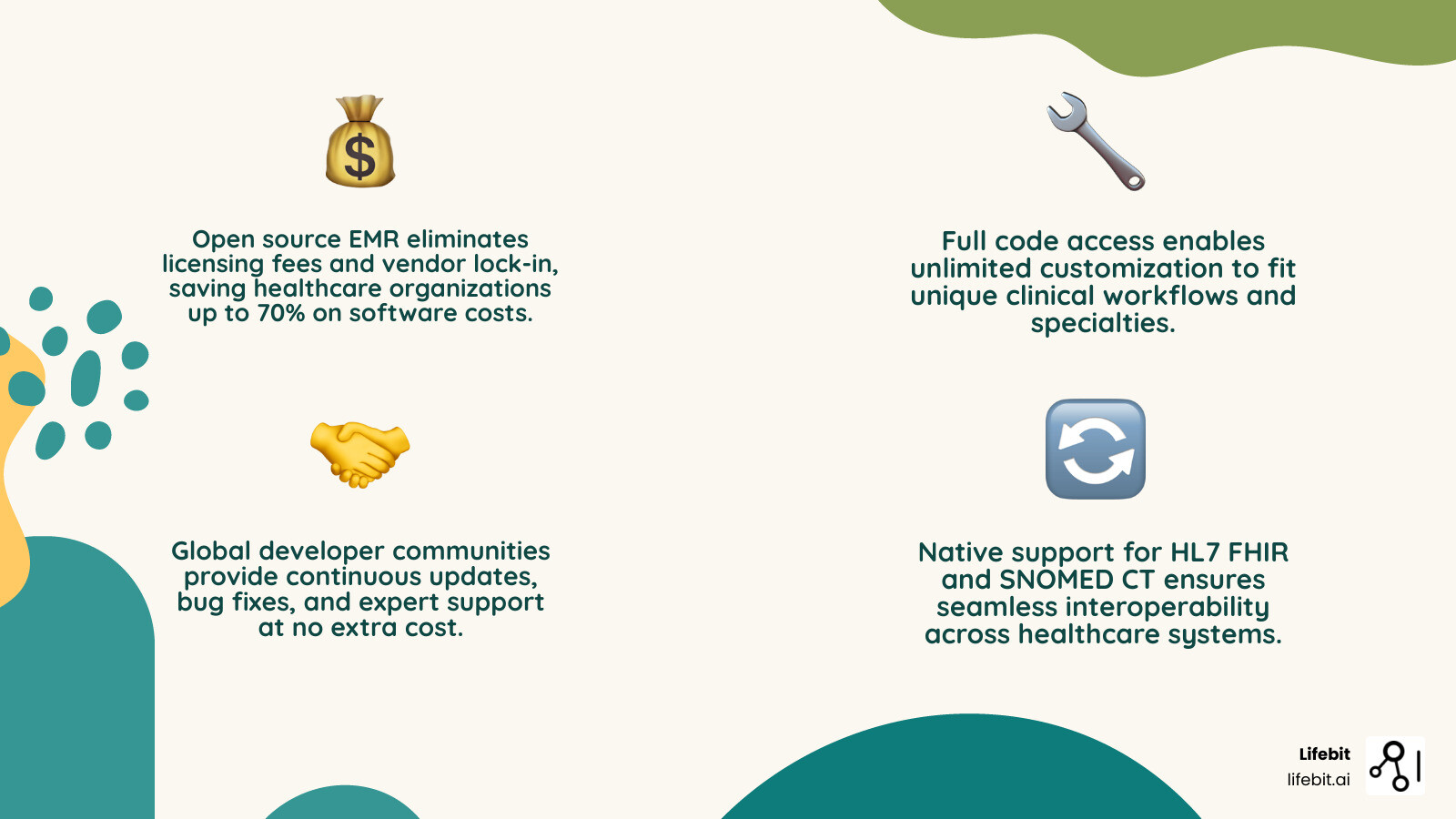
Open source EMR software gives healthcare organizations free, customizable, and community-supported tools to manage patient records — without vendor lock-in or licensing fees. As we move through 2025, the shift toward these platforms has accelerated, driven by a global demand for data sovereignty and the rising costs of proprietary “black box” systems.
Historically, the adoption of Electronic Medical Records (EMR) was hampered by high entry costs and rigid architectures. However, the emergence of Digital Public Goods (DPG) has changed the landscape. Open source solutions are no longer just “alternatives”; they are often the primary choice for national health ministries and innovative private practices alike. These systems allow for a level of clinical autonomy that proprietary vendors simply cannot match, enabling providers to modify the software to reflect their specific diagnostic protocols and administrative workflows.
Here are the most widely used open source EMR platforms right now:
| Platform | Best For | Key Stat |
|---|---|---|
| OpenMRS | Global/low-resource settings | 8,000+ facilities, 70+ countries |
| OpenEMR | Practice management | ONC Certified, multi-platform |
| Bahmni | Low-resource hospitals | 500+ sites, 50+ countries |
| GNU Health | Population health | ICD-10, team collaboration |
| NOSH | Solo/small practices | Lightweight, easy to deploy |
More than 95% of US hospitals already use some form of EMR. The global EMR market is projected to hit $45.9 billion by 2033. Yet many healthcare organizations — especially in resource-limited settings — are still paying too much for rigid, proprietary systems that don’t fit their workflows. The economic burden of annual licensing fees, which can reach hundreds of thousands of dollars for mid-sized facilities, is becoming unsustainable.
Open source changes that equation entirely. By shifting the budget from “renting” software to “investing” in local technical capacity and customization, hospitals can achieve a higher Return on Investment (ROI) while ensuring their data remains accessible and portable.
These platforms are built by global communities of developers, clinicians, and governments. They support modern standards like HL7 FHIR and SNOMED CT. And they run on everything from cloud servers to a Raspberry Pi in a rural clinic. This versatility is critical in an era where healthcare must be delivered both in high-tech urban centers and remote, off-grid locations.
The question isn’t whether open source EMR is ready for serious healthcare. It’s which platform fits your needs.
I’m Maria Chatzou Dunford, CEO and Co-founder of Lifebit, with over 15 years of experience in computational biology, biomedical data integration, and health-tech — including deep work with open source EMR ecosystems and federated data platforms. In this guide, I’ll walk you through the top open source EMR options available today, what sets them apart, and how to choose the right one for your organization.
Key Open source EMR vocabulary:
EMR vs. EHR: Choosing the Right Architecture for Your Facility
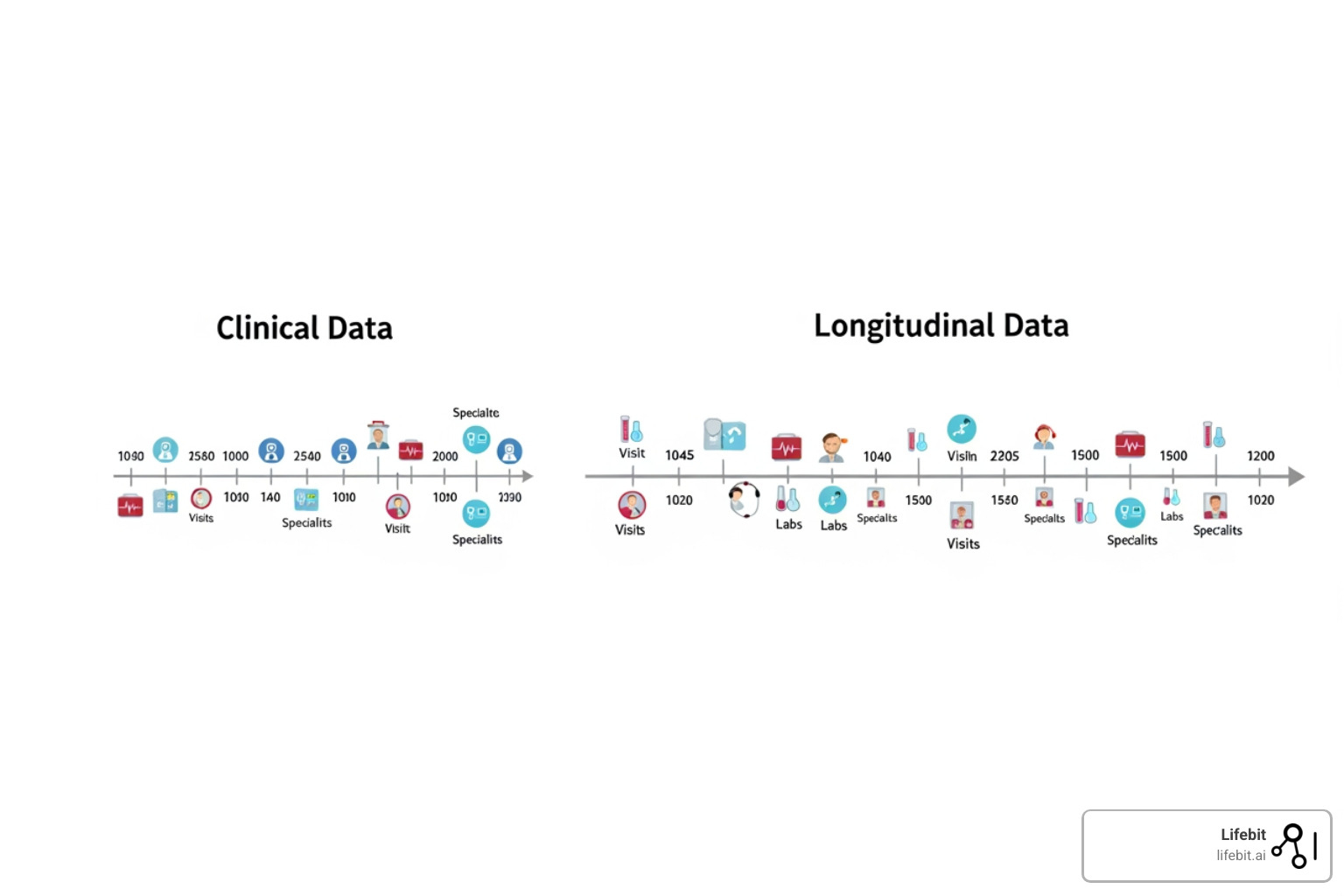
When we talk about digital patient records, the terms EMR and EHR are often used interchangeably, but they serve different architectural purposes. An Electronic Medical Record (EMR) is essentially a digital version of a paper chart in a clinician’s office. It contains the medical and treatment history of the patients in one practice. It is the primary tool for day-to-day clinical documentation, order entry, and local patient management.
In contrast, an Electronic Health Record (EHR) is designed to go beyond standard clinical data collected in a single provider’s office and is inclusive of a broader view of a patient’s care. EHRs are built to share information with other healthcare providers, such as laboratories and specialists, so they contain information from all the clinicians involved in the patient’s care. This longitudinal record follows the patient across different health systems, ensuring that a surgeon in a different city has access to the patient’s allergy list and recent lab results. For a deeper dive into these differences, you can explore our EHRs Complete Guide.
Modern Electronic Medical Record Systems are increasingly blurring these lines by incorporating interoperability features. However, choosing between an EMR-centric or EHR-centric approach depends on whether your priority is internal clinical workflows or seamless data exchange across a regional network. For many organizations, the goal is to start with a robust EMR and gradually expand its capabilities to function as a node within a larger EHR ecosystem.
Why Open Source EMR Systems Win on Flexibility
The “secret sauce” of an Open source EMR is the lack of vendor lock-in. With proprietary software, you are often stuck with whatever features the vendor decides to build. If you need a specific module for a local malaria program or a unique billing requirement in Singapore, you might wait years for an update. This “feature lag” can directly impact patient outcomes if the software cannot adapt to emerging health crises or new clinical guidelines.
Open source systems allow for total customization. Because the source code is public, we can modify the software to fit exact clinical needs. This is supported by vibrant global communities that provide peer-to-peer support, frequent updates, and a library of pre-built modules. You can find more about these community-driven Electronic Medical Records Programs in our dedicated resources. This flexibility also extends to the user interface; clinicians can streamline screens to reduce “click fatigue,” a major contributor to physician burnout in the digital age.
Scalability for Small Clinics vs. Large Hospital Networks
One of the biggest myths we encounter is that open source is only for “small” projects. In reality, these systems are highly modular. A solo practitioner can run a lightweight version of NOSH on a single laptop, while a national health ministry can deploy OpenMRS across thousands of facilities. The scalability is achieved through containerization (like Docker) and microservices architectures that allow different components of the EMR to scale independently based on load.
The shift toward cloud-native architectures means these systems can now handle millions of records with ease. However, for organizations dealing with Harmonizing Disparate Electronic Health Records, the ability to deploy on-premise remains a critical feature for maintaining data sovereignty and operating in areas with intermittent internet. This hybrid approach—where data is collected locally and synced to a central cloud repository when connectivity allows—is a hallmark of modern open-source health informatics.
Top 7 Open Source EMR Platforms for 2025-2026
The market for digital health is expanding rapidly. The global EHR market is projected to reach $40.39 billion by 2027, and open source players are taking a significant slice of that pie. Below is a comparison of the heavy hitters, reflecting their current capabilities and technical stacks.
| Feature | OpenEMR | OpenMRS | Bahmni |
|---|---|---|---|
| Primary Focus | Practice Management | Clinical Documentation | Full Hospital System |
| Certification | ONC Certified | Community Standard | Digital Public Good |
| Architecture | LAMP Stack | Java/Spring | Modular (OpenMRS + ELIS) |
| Lab Integration | Yes | Via Modules | Built-in (OpenELIS) |
Choosing from the Best Electronic Medical Records Companies often leads back to these community-led giants because of their proven track records and massive install bases. Let’s look closer at the specific advantages of each.
OpenEMR: The Global Leader in Practice Management
OpenEMR is arguably the most popular open-source medical practice management solution. It’s a powerhouse that includes fully integrated electronic health records, scheduling, and electronic billing. It has been translated into over 30 languages and is used by a diverse range of providers, from small clinics to large multi-specialty groups.
What makes it a standout is its ONC Certification, meaning it meets the high standards required for meaningful use in the US. For providers concerned about regulatory hurdles, it is a highly HIPAA Compliant EMR that supports e-prescribing, CMS reporting, and lab integration out of the box. Its support for the LAMP stack (Linux, Apache, MySQL, PHP) makes it accessible to a wide pool of web developers, ensuring that finding technical talent for maintenance is relatively easy.
OpenMRS: Community-Driven Clinical Documentation
OpenMRS was born out of the need to manage medical records in resource-constrained environments, specifically for HIV and TB programs in Africa. Today, it has evolved into the world’s leading open-source EMR system, used by organizations like Partners In Health and various national governments.
Its core strength is the “concept dictionary.” Instead of hard-coding medical terms, OpenMRS uses a flexible dictionary that allows clinicians to define exactly what data they want to collect without needing a developer to change the database schema. This makes it incredibly powerful for research and longitudinal tracking of complex diseases. With robust REST and FHIR APIs, it is a favorite for researchers and developers building custom front-end applications or mobile health (mHealth) extensions.
Bahmni: The Integrated Solution for Low-Resource Settings
Bahmni is more than just an EMR; it is a complete Hospital Information System (HIS). It manages to stay “lightweight” by cleverly integrating existing open-source tools into a single, cohesive user experience:
- OpenMRS for clinical data and patient records.
- OpenELIS for laboratory management and results tracking.
- Odoo (formerly OpenERP) for billing, inventory, and human resources.
- PACS/DICOM for medical imaging and radiology workflows.
Recognized as a Digital Public Good, Bahmni is specifically designed to be infrastructure-appropriate. It features an offline-first capability, meaning it can run on a local area network in rural hospitals and sync with a central server when a connection becomes available. This resilience is vital for maintaining continuity of care in regions with unstable power or internet.
Specialized Options: NOSH, Solismed, and GNU Health
Beyond the “Big Three,” several specialized platforms offer unique advantages for specific clinical environments:
- NOSH (New Open Source Health): Built by a primary care physician, it features an incredibly intuitive interface designed to minimize the time spent on documentation. It integrates with the FDA drug database and supports ICD-10 coding, making it a favorite for solo practitioners who want a modern feel without the complexity of enterprise systems.
- Solismed: This platform focuses heavily on team collaboration and patient engagement. It offers an intelligent dashboard that highlights critical patient tasks and includes secure messaging features to facilitate communication between providers and patients.
- GNU Health: A multidisciplinary system that excels in population health and socio-economics. It is built on the Tryton ERP kernel and is ideal for government-level public health monitoring. It includes modules for epidemiology, genetics, and even veterinary medicine, reflecting a “One Health” approach to community well-being.
- Hospital OS: Widely used in Southeast Asia, particularly Thailand, this system is optimized for small to medium-sized hospitals and focuses on high-volume outpatient workflows and efficient pharmacy management.
Ensuring Security and Interoperability Standards
In 2025, a medical record system that can’t “talk” to other systems is a liability. Interoperability is the backbone of modern healthcare, enabling the seamless flow of information that reduces medical errors and improves diagnostic accuracy. Open source systems have been early adopters of global standards because their communities demand it to avoid the silos created by proprietary vendors.
Leading platforms now natively support HL7 FHIR (Fast Healthcare Interoperability Resources) and SNOMED CT. This ensures that data can move securely between an EMR and a research platform or a national health exchange. For organizations looking to move away from older tech, Legacy EHR Warehouses to FHIR conversions are becoming a standard part of the deployment process, allowing historical data to be revitalized and made useful for modern analytics.
Advanced Data Management with HIP CDR
For large-scale enterprises, we often look toward solutions like the HIP Clinical Data Repository (CDR). Built on the openEHR framework, it uses EHRbase to store clinical data as vendor-neutral “archetypes.” This separates the data from the application, ensuring that patient records remain readable for decades, regardless of which software version you are using. This “future-proofing” is essential for long-term clinical research and longitudinal care.
Furthermore, these systems leverage Keycloak for enterprise-grade Identity and Access Management (IAM). This supports multi-factor authentication (2FA), LDAP integration, and role-based access control (RBAC), ensuring that only authorized personnel can access sensitive patient information. In an era of increasing cyber threats, these robust security layers are non-negotiable.
Supporting Global Standards for Data Exchange
The integration of SNOMED CT within platforms like Bahmni is a game-changer for data portability. By using a standardized clinical terminology, a diagnosis recorded in a rural clinic in India can be perfectly understood by a specialist in London. This level of semantic interoperability is essential for national health exchanges and large-scale clinical research, where data from disparate sources must be aggregated and analyzed to identify health trends and treatment efficacy.
Moreover, the use of open standards facilitates the integration of third-party tools, such as decision support systems and AI-driven diagnostic aids. Because the data structures are transparent and standardized, developers can build “plug-and-play” modules that enhance the EMR’s capabilities without requiring deep modifications to the core codebase.
Implementation Strategy: From Pilot to Full-Scale Deployment
Moving to an Open source EMR isn’t just about downloading software; it’s about changing workflows and organizational culture. We’ve seen that the most successful deployments follow a phased approach that prioritizes user adoption and data integrity. A common mistake is treating EMR implementation as a pure IT project, rather than a clinical transformation project.
- Needs Assessment: Map your existing clinical workflows in detail. Identify where paper processes are currently failing and where digital tools can provide the most immediate relief. This stage should involve clinicians, nurses, and administrative staff to ensure all perspectives are considered.
- Pilot Phase: Deploy the system in one department or a single clinic first. This allows you to identify “friction points” in a controlled environment. Use this phase to refine templates, adjust user permissions, and gather feedback from early adopters.
- Data Migration: This is often the most technical hurdle. Ensure your old records (whether paper or legacy digital) are cleaned and mapped correctly to the new system’s data structures. It is often better to migrate only active patient records and archive the rest to avoid cluttering the new system with “dirty” data.
- Training and Support: Administrative efficiency only improves if the staff feels confident using the tool. Training should be ongoing, not a one-time event. Establish a “super-user” program where tech-savvy clinicians can provide immediate, peer-to-peer support to their colleagues.
The Role of AI and Future-Ready Open Source EMR
The next frontier for open source EMR is the integration of Artificial Intelligence. We are already seeing initiatives like the EMR4All kit, which uses a Raspberry Pi 5 to run an offline Large Language Model (LLM). This allows clinicians to use natural language to ask questions like, “Show me all patients with uncontrolled diabetes in this cohort,” without needing complex SQL queries. This democratizes data access, allowing clinicians to perform their own population health analysis at the point of care.
This “future-readiness” is a core part of why organizations are choosing open source. You can integrate a new AI model for radiology screening or a predictive analytics tool for sepsis much faster than you could with a closed, proprietary system. The open API architecture of these platforms acts as a foundation for continuous innovation.
Real-World Success Stories and Efficiency Gains
The impact of these systems is measurable and profound. For example, some organizations have reported a 60% improvement in administrative efficiency and a 40% reduction in patient onboarding time after switching to a customized HMS. In other cases, operational costs were cut by as much as 35% by eliminating expensive licensing fees and reducing the hardware requirements through optimized, lightweight software.
In rural settings, the ability to run a full EMR on low-cost hardware like a Raspberry Pi has enabled digital record-keeping in places that previously relied entirely on paper. This has led to better follow-up care for chronic conditions like HIV and TB, as automated alerts can notify health workers when a patient misses a scheduled visit or a medication refill. These small technical wins translate into significant improvements in community health outcomes.
Frequently Asked Questions about Open Source EMR
Is open source EMR actually free to use?
The software itself is free to download and has no licensing fees, which is a massive advantage over proprietary systems. However, you should budget for the “Total Cost of Ownership” (TCO). This includes hardware (servers or local devices), hosting (cloud or on-premise), implementation services, data migration, and ongoing technical support. While the TCO is typically 40-60% lower than proprietary systems over five years, it is not zero.
How do open source systems ensure HIPAA and GDPR compliance?
Platforms like OpenEMR and OpenMRS have built-in security features including role-based access control (RBAC), data encryption at rest and in transit, and ATNA audit trails. Compliance, however, is a shared responsibility. It depends on how you configure the server, your network security protocols, and your internal data handling policies. Many organizations use managed hosting providers who specialize in HIPAA-compliant open-source deployments to mitigate these risks.
Can I customize an open source system for a specialty clinic?
Yes! This is the primary advantage of open source. Whether you need specific templates for oncology, pediatric growth charts, or unique billing codes for a specific region, the modular nature of these systems allows for extensive customization. You can either use existing community modules or hire a developer to build a custom plugin that meets your exact clinical requirements.
What happens if the community stops supporting a platform?
This is a common concern, but for major platforms like OpenMRS or OpenEMR, the risk is low due to their massive global install base and backing by international health organizations. Furthermore, because you have the source code, you are never truly “stranded.” You can always hire independent developers to maintain your specific instance, a luxury you do not have with proprietary software if the vendor goes out of business.
Do I need a large IT team to run an open source EMR?
Not necessarily. While a large hospital network will need a dedicated team, a small clinic can often rely on a single part-time administrator or a managed service provider. The key is to choose a platform that matches your internal technical capacity; for example, OpenEMR is generally easier for standard web developers to manage than the more complex Java-based OpenMRS.
Conclusion: Stop Paying for Rigid Software. Start Building Better Health.
The era of the “black box” EMR is coming to an end. Healthcare providers in 2025 and 2026 need systems that are as dynamic as the medicine they practice. By choosing an Open source EMR, you gain vendor neutrality, massive cost savings, and the ability to innovate at your own pace. You are no longer a passive consumer of software; you are an active participant in a global movement to improve health through better data.
At Lifebit, we believe that secure, interoperable data is the key to the next generation of medical breakthroughs. Our federated AI platform is designed to work alongside these modern data standards, enabling secure research and real-time insights across global data ecosystems without compromising patient privacy.
Ready to take control of your clinical data and join the open-source revolution? The tools are ready, the community is waiting, and the benefits for your patients are clear. Start your data transformation with Lifebit today.