

9 Best Trusted Research Environment Software Platforms in 2026

Sensitive health data analysis shouldn’t require moving data across borders or compromising compliance. Trusted Research Environments (TREs) solve this—secure, compliant workspaces where researchers access data without it ever leaving its source.
But not all TREs are equal.
Some take months to deploy. Others lock you into vendor infrastructure. A few actually deliver on the promise of speed, security, and sovereignty.
We evaluated top TRE platforms based on deployment flexibility, compliance certifications, data harmonization capabilities, and real-world scale. Here’s what we found.
1. Lifebit Trusted Research Environment
Best for: National health programs requiring federated analysis with AI-powered data harmonization
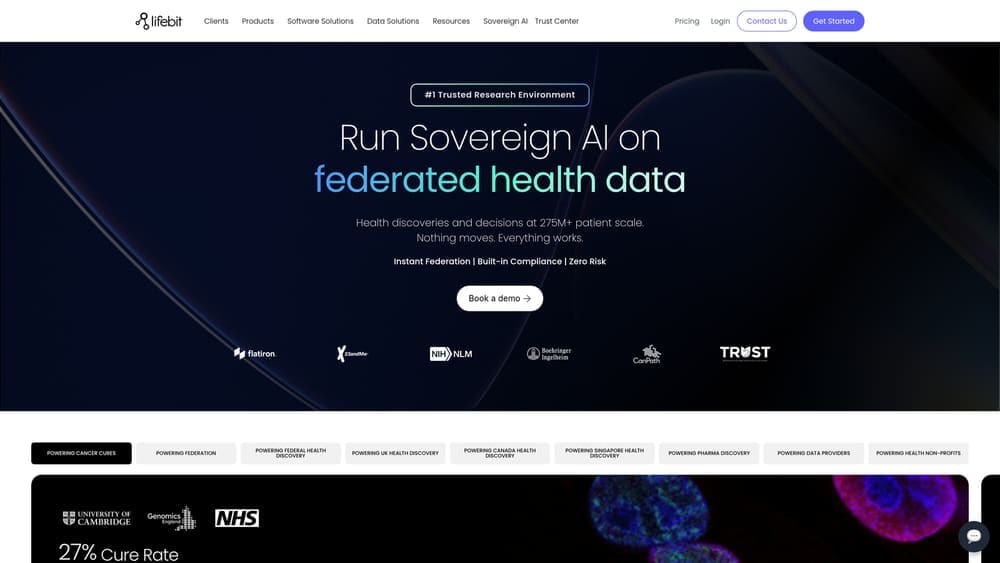
Lifebit Trusted Research Environment is a cloud-agnostic TRE platform that deploys in your infrastructure with no vendor lock-in.
 Trusted Research Environment website” loading=”lazy” style=”max-width: 100%;height: auto;border-radius: 8px” />
Where This Tool Shines
Lifebit stands out for its federated architecture—data never moves from its source. You analyze across siloed datasets without transferring records across jurisdictions. This matters when you’re managing national precision medicine programs or multi-country research consortia.
The platform’s AI-powered data harmonization claims to standardize heterogeneous datasets in 48 hours, not the 12-month timelines typical of manual approaches. Trusted by NIH, Genomics England, and Singapore Ministry of Health, it manages over 275 million records globally.
Key Features
Cloud-Agnostic Deployment: Deploy on AWS, Azure, GCP, or on-premise infrastructure—you own and control it.
AI-Powered Data Harmonization: Automated standardization of clinical, genomic, and imaging data in 48 hours.
Federated Analysis: Analyze data where it lives without moving it across borders or systems.
AI-Automated Airlock: First-of-its-kind governance system for secure, compliant data exports with automated review.
Comprehensive Compliance: FedRAMP, HIPAA, GDPR, ISO 27001 certifications built-in from day one.
Best For
Government health agencies building national precision medicine programs, biopharma R&D teams needing rapid access to harmonized real-world data, and academic consortia managing sensitive data across multiple institutions or countries.
Pricing
Custom enterprise pricing based on deployment scale and data volume. Contact for tailored quote.
2. Aridhia DRE
Best for: UK NHS-focused research with strong ecosystem integration requirements
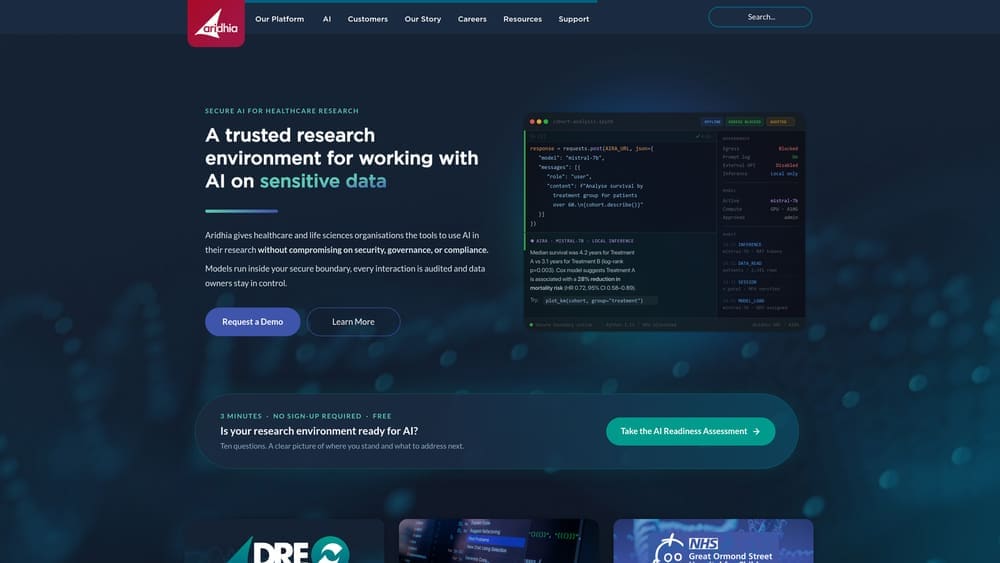
Aridhia DRE is a digital research environment built for the UK health research ecosystem with deep NHS partnerships.
Where This Tool Shines
Aridhia has established credibility within UK health research circles. If you’re working with NHS data or collaborating with UK academic institutions, this platform integrates naturally into existing governance frameworks.
The platform’s strength lies in its collaborative workspace features and NHS DSP Toolkit compliance. It’s designed for teams who need to work together on sensitive health data within UK regulatory boundaries.
Key Features
NHS DSP Toolkit Compliance: Pre-configured for NHS data security and protection requirements.
Integrated Analytics Workbench: Built-in tools for statistical analysis and data visualization.
UK Health Research Partnerships: Established relationships with major UK research institutions.
Collaborative Workspaces: Multi-user environments with granular access controls.
ISO 27001 Certification: Information security management standards compliance.
Best For
UK academic researchers working with NHS data, health research consortia based in the UK, and organizations prioritizing NHS ecosystem integration over global deployment flexibility.
Pricing
Custom pricing model. Contact Aridhia for project-specific quotes based on data volume and user requirements.
3. DNAnexus Apollo
Best for: Population-scale genomic analysis with extensive bioinformatics pipeline needs
DNAnexus Apollo is an enterprise genomics platform with proven scale from its UK Biobank partnership.
Where This Tool Shines
DNAnexus built its reputation on handling massive genomic datasets. The platform powers the UK Biobank Research Analysis Platform, which tells you everything about its scale capabilities.
If your research centers on genomics—whole genome sequencing, GWAS studies, variant analysis—this platform comes with battle-tested bioinformatics tools. The extensive pipeline library means you’re not building workflows from scratch.
Key Features
Population-Scale Genomics: Proven architecture for biobank-level genomic data analysis.
UK Biobank Platform: Powers one of the world’s largest genomic research resources.
AWS and Azure Deployment: Multi-cloud support with optimized genomics compute.
Bioinformatics Tool Library: Pre-built pipelines for variant calling, annotation, and analysis.
HIPAA and GDPR Compliance: Healthcare data protection standards built-in.
Best For
Biobanks managing population-scale genomic data, biopharma companies running large-scale genetic studies, and research institutions with genomics-heavy workloads requiring extensive pipeline support.
Pricing
Usage-based pricing model with enterprise agreements available for large-scale deployments. Contact for detailed cost estimates.
4. Microsoft Azure Trusted Research Environment
Best for: Organizations already committed to Azure infrastructure seeking native integration
Microsoft Azure Trusted Research Environment is an Azure-native TRE solution with open-source Terraform deployment templates.
Where This Tool Shines
If you’re already in the Microsoft ecosystem, this TRE integrates seamlessly with your existing Azure services. The open-source Terraform templates mean you can customize deployment to your specific requirements.
Azure’s native security and compliance features carry over—you get the benefit of Microsoft’s enterprise-grade infrastructure without reinventing governance frameworks. This matters for organizations with established Azure commitments.
Key Features
Native Azure Integration: Seamless connection with existing Azure services and security controls.
Open-Source Terraform Templates: Customizable deployment configurations for tailored environments.
Azure Security Features: Inherits Azure’s security, identity, and compliance capabilities.
Microsoft Ecosystem Fit: Natural choice for organizations standardized on Microsoft infrastructure.
Enterprise Support: Access to Microsoft’s enterprise support infrastructure.
Best For
Healthcare organizations with existing Azure investments, IT teams with strong Microsoft infrastructure expertise, and enterprises seeking TRE capabilities within their current cloud strategy.
Pricing
Azure consumption-based pricing plus TRE deployment costs. Actual costs depend on compute, storage, and service usage within your Azure environment.
5. Flywheel
Best for: Medical imaging research requiring DICOM-native workflows and radiology integration
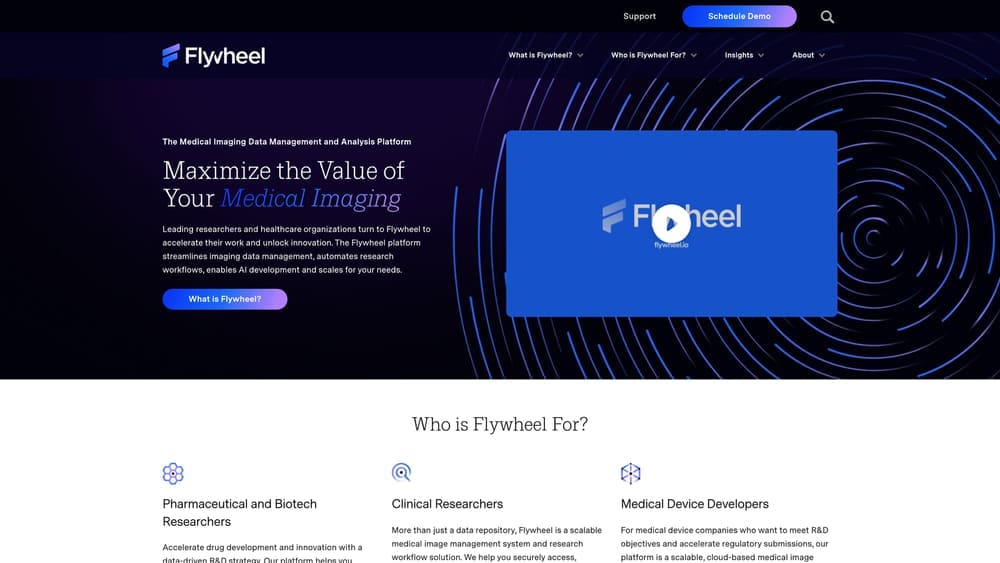
Flywheel is a research data platform specializing in medical imaging workflows with DICOM-native architecture.
Where This Tool Shines
Flywheel built its platform around imaging data from the ground up. If your research involves MRI, CT, PET scans, or other medical imaging modalities, this platform handles DICOM data natively without conversion headaches.
The automated de-identification features matter when you’re managing thousands of imaging studies. Flywheel understands the unique compliance challenges of imaging research—where a single scan contains identifiable information in multiple metadata fields.
Key Features
DICOM-Native Architecture: Purpose-built for medical imaging data without conversion requirements.
Neuroimaging and Radiology Focus: Specialized tools for brain imaging and radiology research workflows.
HIPAA and GDPR Compliance: Healthcare data protection standards for imaging research.
Automated De-Identification: Removes identifying information from imaging metadata automatically.
Imaging Analytics Integration: Connect to common neuroimaging and radiology analysis tools.
Best For
Academic medical centers conducting imaging research, radiology departments managing research PACS, and neuroscience consortia working with brain imaging datasets.
Pricing
Subscription-based pricing model. Contact Flywheel for enterprise pricing based on data volume and user count.
6. Terra (Broad Institute)
Best for: Academic genomics research teams seeking open-source flexibility on a budget
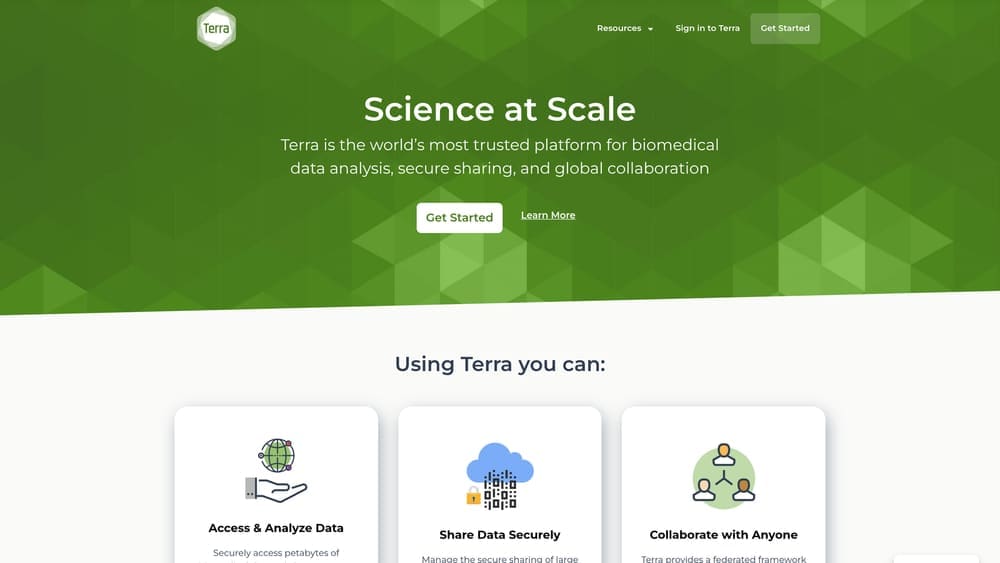
Terra is an open-source, Google Cloud-based platform popular in academic genomics research with strong community workflows.
Where This Tool Shines
Terra’s open-source model creates a collaborative ecosystem where researchers share workflows and pipelines. If you’re in academic genomics, chances are someone in your field has already built the workflow you need.
The platform offers a free tier for academic users, which matters when grant budgets are tight. You pay only for Google Cloud compute—no platform licensing fees. This makes it accessible for smaller research groups.
Key Features
Open-Source Platform: Community-driven development with transparent codebase and workflows.
Google Cloud Infrastructure: Built on GCP with optimized genomics compute capabilities.
Workflow Sharing: Reuse and adapt community-contributed analysis pipelines.
Free Academic Tier: No platform fees for qualifying academic researchers.
Genomics Tool Integration: Pre-configured access to common genomics analysis tools.
Best For
Academic genomics researchers with limited budgets, research groups seeking community-developed workflows, and institutions comfortable with Google Cloud infrastructure.
Pricing
Free tier available for academic users. Pay only for Google Cloud compute, storage, and egress costs based on actual usage.
7. SAIL Databank
Best for: Welsh population health research requiring longitudinal NHS Wales data access
SAIL Databank is the UK Secure Anonymized Information Linkage databank specializing in Welsh population health data research.

Where This Tool Shines
SAIL provides access to longitudinal population health data from NHS Wales—primary care records, hospital episodes, mortality data, and more. If your research requires Welsh population data, this is the established pathway.
The platform’s anonymization protocols have been refined over years of operation. The academic governance model ensures research access while protecting patient privacy through established review processes.
Key Features
NHS Wales Data Access: Established pathway to Welsh population health datasets.
Longitudinal Population Data: Linked health records spanning multiple care settings over time.
Academic Governance Model: Research proposal review process ensuring appropriate data use.
Established Anonymization: Proven protocols for protecting patient identity in linked datasets.
Collaborative Research Support: Infrastructure for multi-institutional Welsh health research.
Best For
Researchers studying Welsh population health, academic institutions collaborating on UK health research, and epidemiological studies requiring longitudinal NHS Wales data.
Pricing
Project-based access fees for approved research proposals. Costs vary based on data complexity and analysis requirements.
8. OpenSAFELY
Best for: Transparent NHS primary care analysis with fully auditable open-source methodology
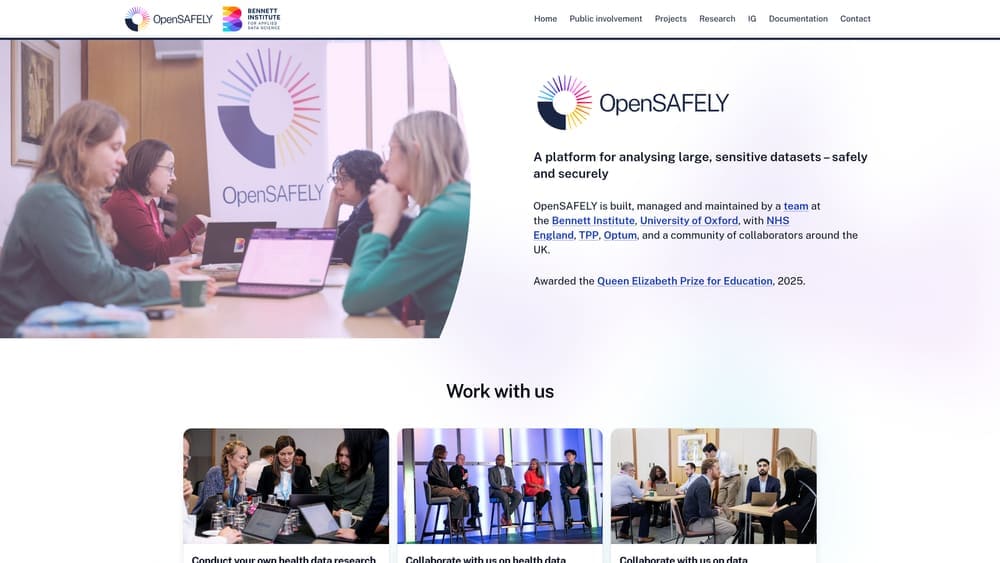
OpenSAFELY is an open-source platform for NHS data analysis where code runs to data with full public audit trails.
Where This Tool Shines
OpenSAFELY’s “code to data” model means your analysis scripts run inside the secure environment—data never moves. Every analysis is fully auditable and open-source, which builds public trust in health data research.
The platform gained prominence during COVID-19 research, demonstrating its capability for rapid, transparent analysis of NHS primary care data. The governance model prioritizes public benefit and research transparency.
Key Features
Code to Data Model: Analysis runs where data lives—records never leave the secure environment.
Fully Open-Source: All analysis code is public and auditable for research transparency.
NHS Primary Care Strength: Optimized for GP practice data and COVID-19 research datasets.
Transparent Governance: Public-benefit research model with clear access criteria.
Rapid Deployment: Proven capability for time-sensitive health research questions.
Best For
NHS primary care researchers prioritizing transparency, public health studies requiring rapid analysis, and research teams committed to open-source methodology.
Pricing
Free for approved NHS research projects that meet public benefit criteria. No platform fees for qualifying research.
9. TriNetX
Best for: Clinical trial feasibility and real-world evidence generation across federated networks
TriNetX is a global health research network focused on clinical trial feasibility and real-world evidence generation.
Where This Tool Shines
TriNetX operates a large federated healthcare network—multiple institutions contribute data without sharing actual records. This matters when you’re assessing clinical trial feasibility across diverse patient populations.
The platform’s strength lies in protocol optimization and real-world evidence capabilities. Pharma companies use it to identify patient populations, refine inclusion criteria, and generate real-world evidence for regulatory submissions.
Key Features
Federated Healthcare Network: Access to patient data across multiple institutions without data sharing.
Clinical Trial Optimization: Tools for refining protocols and assessing patient population feasibility.
Real-World Evidence: Generate RWE for regulatory submissions and comparative effectiveness research.
Pharma Partnership Focus: Platform designed for industry-academic collaboration models.
De-Identified Analytics: Query capabilities across network without exposing individual records.
Best For
Biopharma companies planning clinical trials, CROs conducting feasibility studies, and academic medical centers participating in industry-sponsored research.
Pricing
Subscription-based model with enterprise licensing. Pricing varies based on network access level and query volume.
Making the Right Choice
The right TRE depends on your data types, compliance requirements, and deployment preferences.
For national-scale programs with sovereignty requirements—Lifebit delivers federated analysis without data movement, AI-powered harmonization, and deployment in your own cloud. For UK NHS academic collaborations—Aridhia or SAIL provide established ecosystem integration. For genomics-heavy biobank work—DNAnexus brings proven population-scale capabilities.
For imaging research—Flywheel’s DICOM-native architecture eliminates conversion headaches. For academic genomics on a budget—Terra offers open-source flexibility with a free tier. For transparent NHS analysis—OpenSAFELY prioritizes public auditability. For clinical trial feasibility—TriNetX connects you to federated networks.
If you need federated access across borders without moving data, AI-powered harmonization in 48 hours instead of 12 months, and deployment in your own cloud with no vendor lock-in—that’s where Lifebit leads.
The platform manages over 275 million records globally for organizations like NIH, Genomics England, and Singapore Ministry of Health. It’s built for CIOs, Chief Data Officers, and Translational Research Heads managing siloed, sensitive data under increasing regulatory pressure.
Ready to deploy a TRE that actually delivers on speed, security, and sovereignty? Get started for free and see how federated analysis works in your environment.