

9 Best Pharmaceutical Data Platforms for R&D Teams in 2026

Pharma R&D teams are sitting on some of the most valuable data in the world. The problem? It’s scattered across clinical trial systems, genomic databases, real-world evidence repositories, imaging archives, and claims feeds — often in different countries, different formats, and under different regulatory frameworks. Moving it creates risk. Leaving it siloed kills velocity.
The right pharmaceutical data platform changes that equation. It brings your data together without compromising compliance, accelerates harmonization from months to days, and lets researchers actually do science instead of wrestling with infrastructure. Here are the top platforms purpose-built or purpose-adapted for pharma R&D challenges, evaluated on harmonization speed, compliance coverage, federated capabilities, multi-modal data support, and deployment flexibility.
1. Lifebit
Best for: Federated analysis of sensitive clinical and genomic data across institutions and borders without moving data
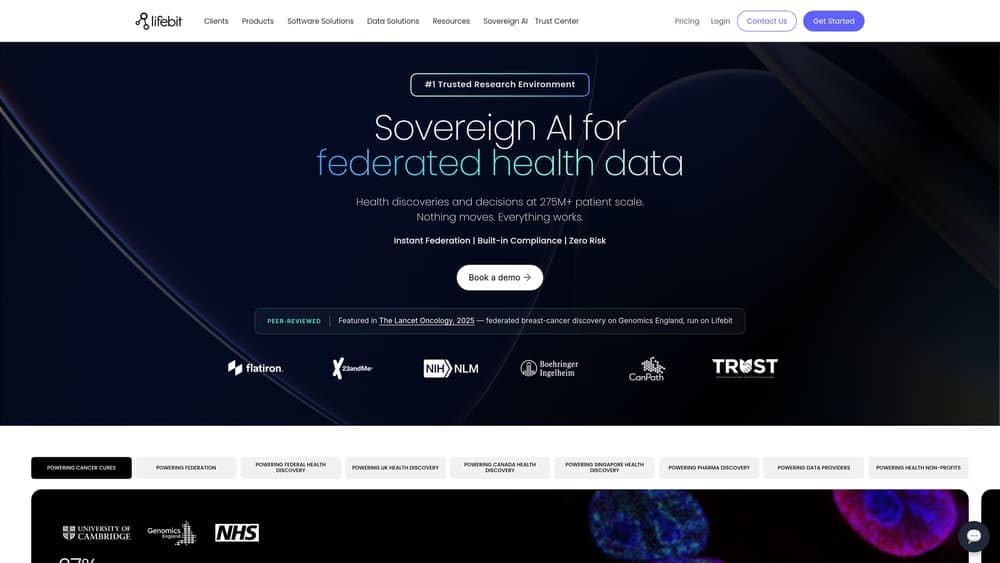
Lifebit is a federated data platform purpose-built for pharma, biotech, and government health programs that need to analyze sensitive data where it lives — no data movement, no compliance shortcuts, no tradeoffs between speed and security.
Where This Tool Shines
Lifebit’s core value proposition is deceptively simple: your data stays put, and your researchers still get answers. This matters enormously in a world where GDPR, data sovereignty laws, and institutional data governance agreements make moving patient data across borders legally complex and operationally painful. Lifebit dissolves that problem with federated infrastructure that runs analysis at the source.
What separates Lifebit from horizontal platforms adapted for life sciences is that compliance and governance are built into the architecture from day one, not bolted on afterward. The AI-Automated Airlock — a first-of-its-kind governed export system — means every data release is auditable, controlled, and policy-enforced automatically. For teams running multi-site genomic studies or cross-border RWE programs, this is the difference between a six-month compliance review and a same-day export.
Key Features
Federated Analysis: Run queries and analytics across institutions and geographies without centralizing data, preserving data sovereignty and governance agreements.
Trusted Data Factory (TDF): AI-powered harmonization that standardizes multi-modal pharma data — genomic, clinical, RWE — in as little as 48 hours instead of months.
Trusted Research Environments (TRE): Secure, compliant cloud workspaces with full audit trails, role-based access, and configurable controls that your team owns and operates.
AI-Automated Airlock: Governed data export system that enforces policy automatically, replacing manual review processes with auditable, rule-based releases.
Built-in Compliance: FedRAMP, HIPAA, GDPR, and ISO 27001 compliant from deployment day one, supporting over 275 million records across 30-plus countries.
Best For
Pharma R&D leaders running multi-site clinical or genomic studies, government health agencies building national precision medicine programs, and biopharma teams that need to collaborate across institutional boundaries without triggering data transfer agreements. Particularly strong for teams operating under strict data sovereignty requirements.
Pricing
Custom pricing based on deployment scale and modules selected. Contact Lifebit directly for a quote tailored to your infrastructure and data volume requirements.
2. Palantir Foundry
Best for: Large pharma enterprises needing unified operational models across complex, siloed data ecosystems
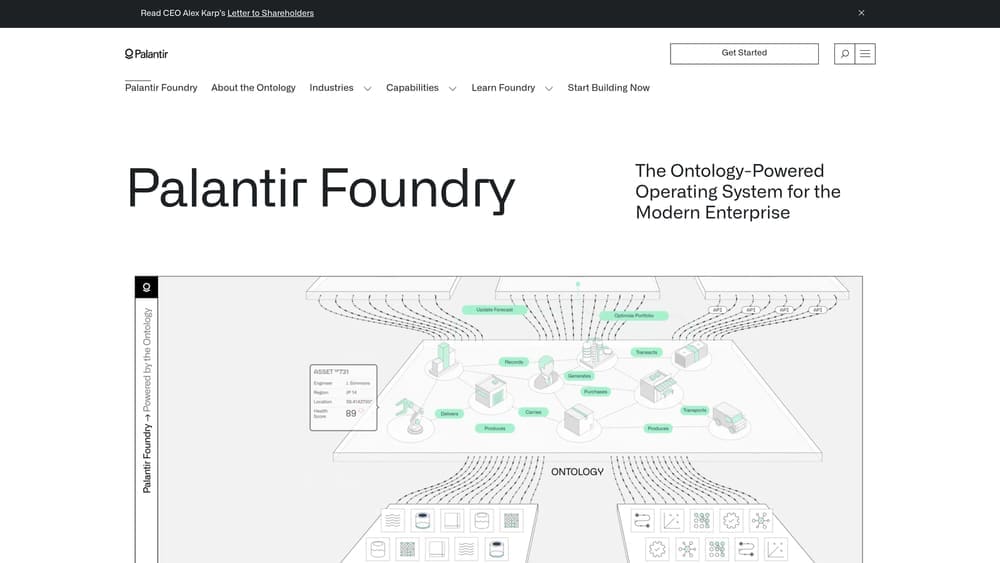
Palantir Foundry is an enterprise data integration and analytics platform used by large pharmaceutical organizations to connect disparate data sources into coherent operational models.
Where This Tool Shines
Foundry’s ontology-based approach is its defining characteristic. Rather than treating data as raw tables, Foundry models your organization’s data as interconnected objects — patients, trials, compounds, sites — making it easier for non-technical stakeholders to work with complex datasets. For pharma organizations managing dozens of data sources across clinical, manufacturing, and commercial functions, this abstraction layer reduces friction significantly.
The platform is particularly strong for operational decision-making: supply chain optimization, trial operations monitoring, and cross-functional reporting. Where Foundry can feel heavy is in initial implementation. Deployments are complex and typically require significant professional services investment before teams see value.
Key Features
Ontology-Based Data Modeling: Connects siloed datasets through a unified semantic layer that makes data accessible to both technical and business users.
Pipeline Builder: Visual ETL tooling for building complex data transformation pipelines across diverse pharma data types.
Role-Based Access and Audit Logging: Granular access controls and complete audit trails for compliance and governance requirements.
Operational Dashboards: Decision-making interfaces designed for real-time operational visibility across trial and commercial functions.
Flexible Deployment: Supports cloud, on-premises, and hybrid deployment models to accommodate varied enterprise infrastructure requirements.
Best For
Large pharma enterprises with significant IT resources, complex multi-system data environments, and a need for unified operational intelligence across clinical, manufacturing, and commercial functions. Less suited to smaller teams or those prioritizing speed of initial deployment.
Pricing
Enterprise pricing only; contracts typically range from high six figures to seven figures annually. Expect a significant professional services component on top of licensing costs.
3. Databricks for Life Sciences
Best for: Data engineering and AI/ML teams building custom genomic, clinical, and RWE pipelines at scale
Databricks is a lakehouse platform combining data engineering, collaborative analytics, and AI/ML in a single environment, widely adopted by pharma data science teams working with large-scale multi-modal datasets.
Where This Tool Shines
Databricks excels when your team has strong data engineering capabilities and needs maximum flexibility. The Delta Lake architecture handles the scale demands of genomic data — whole genome sequencing files, variant call formats, biobank-scale datasets — reliably and cost-effectively. MLflow integration means your data scientists can track experiments, version models, and deploy ML pipelines without leaving the platform.
The collaborative notebook environment is a genuine productivity driver for cross-functional R&D teams mixing bioinformaticians, statisticians, and data engineers. The tradeoff is that Databricks is a foundation, not a finished solution. You get powerful primitives but you build the pharma-specific workflows yourself, which requires skilled engineering resources.
Key Features
Delta Lake Architecture: Reliable, ACID-compliant data storage that handles the scale and schema variability common in pharma multi-modal datasets.
Native ML/AI Pipelines: MLflow integration for experiment tracking, model versioning, and deployment across genomic and clinical data models.
Collaborative Notebooks: Shared Python, R, and SQL environments enabling cross-functional data science collaboration.
Compliance-Ready Deployments: HIPAA and SOC 2 compliant configurations available for regulated pharma environments.
Open Ecosystem: Strong integrations with major cloud providers, bioinformatics tools, and partner solutions across the life sciences stack.
Best For
Pharma data science and engineering teams with strong technical capabilities who need a flexible, scalable foundation for custom analytics and ML workflows. Best when paired with life sciences-specific tooling for domain-specific needs.
Pricing
Usage-based pricing via Databricks Units (DBUs); pay-as-you-go entry with enterprise plans available for committed spend. Costs scale with compute usage and can grow significantly at research-scale data volumes.
4. IQVIA Connected Intelligence
Best for: Pharma teams needing access to one of the world’s largest proprietary real-world healthcare datasets
IQVIA Connected Intelligence is an analytics and real-world data platform backed by one of the largest proprietary healthcare datasets globally, covering claims, electronic medical records, and prescription data across hundreds of millions of patient records.
Where This Tool Shines
IQVIA’s primary competitive advantage is data. Few organizations can match the breadth and depth of their proprietary RWD assets, which makes Connected Intelligence particularly powerful for clinical trial feasibility, site selection, and regulatory-grade evidence generation. If your program depends on understanding patient populations, treatment patterns, or care pathways at scale, IQVIA’s underlying data assets are a significant differentiator.
The platform also covers the commercial side of pharma — market access intelligence, launch analytics, and competitive benchmarking — making it valuable across the full drug development lifecycle. The dependency on IQVIA’s proprietary data is both the strength and the limitation: you get unparalleled breadth, but you’re working within their ecosystem rather than on your own data infrastructure.
Key Features
Proprietary RWD Access: Hundreds of millions of patient records spanning claims, EMR, and prescription data for population-level analytics.
Trial Design and Feasibility: Analytics for protocol optimization, patient population sizing, and clinical site selection.
Regulatory-Grade Evidence: RWE generation capabilities designed to meet regulatory standards for label expansion and post-market commitments.
Commercialization Intelligence: Market access, launch readiness, and competitive analytics for the commercial phase.
Managed Analytics Services: Consulting and delivery services for teams that need analytical output rather than platform access.
Best For
Pharma medical affairs, clinical development, and commercial teams that need large-scale RWE capabilities and are willing to work within a managed data ecosystem. Strong fit for late-stage development and post-market programs.
Pricing
Custom enterprise pricing based on data access scope, modules selected, and services engagement. Expect significant investment; IQVIA typically operates on multi-year enterprise contracts.
5. Veeva Vault Platform
Best for: Clinical operations, regulatory submissions, and GxP-compliant quality management in life sciences
Veeva Vault is the industry-standard cloud platform for life sciences operational data management, covering clinical data, regulatory submissions, quality systems, and commercial operations in a unified, validated environment.
Where This Tool Shines
Veeva’s strength is deep regulatory compliance and industry adoption. Vault CDMS is widely used for EDC and clinical data management; Vault RIM handles regulatory information and submission management; Vault Quality covers GxP workflows. The platform is built to the specific operational requirements of pharma and biotech, which means less configuration burden compared to horizontal platforms adapted for life sciences use.
The unified architecture across clinical, regulatory, and commercial functions is a genuine operational advantage for mid-to-large pharma organizations. The limitation is that Veeva is primarily an operational and compliance platform, not a research analytics or data science environment. For advanced genomic or RWE analytics, you’ll need to integrate with specialized tools.
Key Features
Vault CDMS: End-to-end clinical data management including electronic data capture, medical coding, and data review workflows.
Vault RIM: Regulatory information management covering submissions, registrations, and agency correspondence globally.
Vault Quality: GxP-compliant quality management workflows for documents, training, audits, and deviations.
Unified Platform: Single cloud environment spanning clinical, regulatory, and commercial functions, reducing integration overhead.
21 CFR Part 11 Compliance: Full audit trails and electronic signature capabilities meeting FDA and international regulatory requirements.
Best For
Clinical operations, regulatory affairs, and quality teams at pharma and biotech companies of all sizes. Essential for organizations managing IND/NDA submissions and GxP-regulated workflows. Not the right fit as a primary research analytics platform.
Pricing
Subscription-based pricing by module and user count. Contact Veeva for a quote; pricing varies significantly based on which Vault applications you deploy and organizational scale.
6. DNAnexus
Best for: Large-scale genomic and multi-omic data analysis in secure, compliance-ready cloud environments
DNAnexus is a cloud platform purpose-built for genomic data at scale, with deep integrations into major biobanks and a compliance posture designed for regulated research environments.
Where This Tool Shines
DNAnexus is one of the few platforms genuinely built around the computational demands of genomics from the ground up. Processing whole genome sequencing data at biobank scale requires infrastructure decisions that most horizontal platforms weren’t designed for — and DNAnexus has made those decisions thoughtfully. Its integrations with UK Biobank, the All of Us Research Program, and other major genomic resources make it a natural choice for pharma teams working with population-scale genomic data.
The collaborative workspace model supports multi-site research programs where different institutions need controlled access to shared datasets. For pharma teams running genomics-driven target discovery or pharmacogenomics programs, DNAnexus removes significant infrastructure complexity.
Key Features
Scalable Genomic Processing: Optimized pipelines for WGS, WES, RNA-seq, and other high-throughput sequencing data types at population scale.
Biobank Integrations: Direct access to UK Biobank, All of Us, and other major genomic research resources within a governed environment.
Compliance Certifications: FedRAMP, HIPAA, and ISO 27001 compliant, meeting the requirements of most regulated pharma research programs.
Collaborative Workspaces: Multi-site research environments with controlled access, enabling consortium-style genomic research programs.
Bioinformatics App Library: Pre-built tools for common genomic analysis workflows, reducing time-to-analysis for standard pipelines.
Best For
Pharma genomics, translational research, and precision medicine teams working with large-scale sequencing data. Particularly strong for programs that need access to major biobank datasets or are running population-scale pharmacogenomics studies.
Pricing
Usage-based pricing with enterprise plans offering committed spend discounts. Costs scale with compute and storage demands, which can be substantial at whole-genome sequencing scale.
7. Flywheel.io
Best for: Imaging-heavy pharma research programs integrating DICOM data with clinical and omics datasets
Flywheel is a biomedical research data platform specializing in imaging data management, with growing support for multi-modal integration across clinical, imaging, and omics data types.
Where This Tool Shines
Medical imaging data is notoriously difficult to manage at research scale. DICOM files are large, heterogeneous, and require specialized curation before they’re useful for AI/ML applications. Flywheel automates much of that curation work — de-identification, provenance tracking, quality checks — which dramatically reduces the manual effort that typically bottlenecks imaging-based pharma studies.
For oncology programs, neurological disease research, or any therapeutic area where imaging endpoints matter, Flywheel provides infrastructure that most general-purpose platforms simply don’t offer. The platform’s AI/ML capabilities for training and deploying models on imaging data are increasingly relevant as pharma teams explore imaging biomarkers and digital pathology applications.
Key Features
Automated Imaging Pipelines: DICOM and NIfTI data ingestion with automated curation, quality control, and metadata extraction.
AI/ML on Imaging Data: Model training and deployment capabilities specifically designed for medical imaging applications and biomarker development.
Multi-Modal Integration: Support for combining imaging data with clinical records and omics datasets for comprehensive phenotyping.
HIPAA-Compliant Infrastructure: Cloud infrastructure meeting HIPAA requirements for protected health information in imaging data.
De-identification and Provenance: Automated de-identification workflows and complete data lineage tracking for regulatory and governance requirements.
Best For
Pharma and academic research teams running imaging-intensive studies in oncology, neurology, or other imaging-driven therapeutic areas. Strong fit for groups developing imaging biomarkers or AI-based diagnostic tools as part of their drug development programs.
Pricing
Custom pricing based on data volume and features required. Contact Flywheel for a quote tailored to your imaging data scale and research program needs.
8. TriNetX
Best for: Clinical trial feasibility, cohort analysis, and RWE studies using federated health system data
TriNetX is a global health research network that provides federated, real-time query access to de-identified patient data from a network of health systems, without requiring data to leave the contributing institutions.
Where This Tool Shines
TriNetX occupies a specific and valuable niche: fast, federated access to real-world patient data for protocol feasibility and cohort analysis. If your clinical team needs to know whether a given patient population exists in sufficient numbers to support a trial, TriNetX can answer that question in hours rather than weeks of manual site outreach. The federated model means health systems participate without exposing patient-level data externally, which drives broader network participation.
The self-service analytics interface is designed for clinical teams rather than data engineers, which is a meaningful differentiator. Medical directors and clinical scientists can run cohort queries without relying on a data team, accelerating early-stage feasibility work considerably.
Key Features
Federated Health System Network: Real-time query access across a global network of health systems without centralizing patient data.
Cohort Analysis Tools: Protocol feasibility and patient population sizing tools designed for clinical team use without requiring technical expertise.
Privacy-Preserving Architecture: De-identified, federated access model that keeps patient data within contributing health systems.
Regulatory-Grade RWE: Evidence generation capabilities supporting label expansion applications and post-market study requirements.
Self-Service Interface: Analytics environment accessible to clinical and medical affairs teams without data engineering support.
Best For
Clinical development and medical affairs teams at pharma and biotech companies conducting trial feasibility assessments, site identification, and RWE studies. Particularly valuable for teams that need fast answers on patient population size and characteristics without data engineering resources.
Pricing
Subscription-based network access; pricing varies based on use case, query volume, and data scope. Contact TriNetX for pricing specific to your program requirements.
9. Snowflake Health Data Cloud
Best for: Secure data sharing and governed collaboration between pharma companies, CROs, and health systems
Snowflake Health Data Cloud is a cloud data platform enabling privacy-preserving collaboration, governed data sharing, and clean room analytics across pharma, CRO, and health system partners.
Where This Tool Shines
Snowflake’s data clean room capability is its most distinctive contribution to pharma data collaboration. Clean rooms allow two or more organizations to run joint analytics on combined datasets without either party exposing their underlying data to the other. For pharma companies exploring partnership analytics, CRO data sharing, or health system collaborations, this is a compelling privacy-preserving architecture.
The platform’s near-zero maintenance model and auto-scaling compute are operationally attractive for pharma IT teams that want powerful data infrastructure without significant ongoing engineering overhead. The growing health and life sciences data marketplace also creates opportunities to enrich internal datasets with third-party health data assets through governed commercial agreements.
Key Features
Data Clean Rooms: Privacy-preserving collaborative analytics environments enabling joint analysis without exposing underlying datasets to partners.
Governed Data Sharing: Share live data with partners without copying or moving datasets, maintaining governance and access controls throughout.
Auto-Scaling Infrastructure: Near-zero maintenance compute that scales automatically to demand, reducing operational overhead for pharma IT teams.
Compliance Certifications: HIPAA, HITRUST, and SOC 2 compliant for regulated health data environments.
Health Data Marketplace: Growing ecosystem of health and life sciences data providers accessible through governed commercial agreements within the platform.
Best For
Pharma data engineering and IT teams building collaborative data infrastructure with CRO, health system, or industry partners. Strong fit for organizations prioritizing data sharing and partnership analytics over primary research compute needs.
Pricing
Usage-based pricing combining storage and compute costs; enterprise plans with volume discounts available. Costs are predictable at steady state but can spike with intensive compute workloads.
Which Platform Is Right for Your Team?
No single platform wins across every pharma data use case — the right choice depends on what your team actually needs to accomplish and where your data lives today.
For teams running multi-site clinical or genomic studies across institutional and geographic boundaries, Lifebit is the strongest purpose-built option. The federated architecture, 48-hour AI harmonization, and built-in compliance across FedRAMP, HIPAA, GDPR, and ISO 27001 mean you can move fast without creating regulatory exposure. It’s the platform of choice when data sovereignty is non-negotiable and harmonization speed matters. If that’s your situation, get started with Lifebit to see how it fits your program.
For genomics-first R&D programs working with biobank-scale sequencing data, DNAnexus offers infrastructure specifically designed for that challenge. For enterprise data integration across complex operational environments, Palantir Foundry provides the ontology-based modeling that large pharma organizations often need. For clinical operations and regulatory submissions, Veeva Vault remains the industry standard.
RWE programs have two strong options depending on their approach: IQVIA Connected Intelligence for teams that want access to a massive proprietary dataset, and TriNetX for teams that need federated, self-service feasibility analytics across a health system network. For data engineering flexibility and AI/ML pipelines, both Databricks and Snowflake offer powerful foundations — Databricks for compute-intensive analytics and ML, Snowflake for governed collaboration and data sharing. And for imaging-heavy programs in oncology or neurology, Flywheel fills a gap that most other platforms on this list don’t address.
The common thread across the best-performing pharma data programs: they stop treating data infrastructure as an IT problem and start treating it as a competitive advantage. The platform you choose determines how fast your researchers get to insights — and in drug development, speed is everything.